Gwinnett board hears legislative update; FY27 signings could shrink district revenue in coming years
May 14, 2026 | Gwinnett County, School Districts, Georgia
This article was created by AI summarizing key points discussed. AI makes mistakes, so for full details and context, please refer to the video of the full meeting. Please report any errors so we can fix them. Report an error »
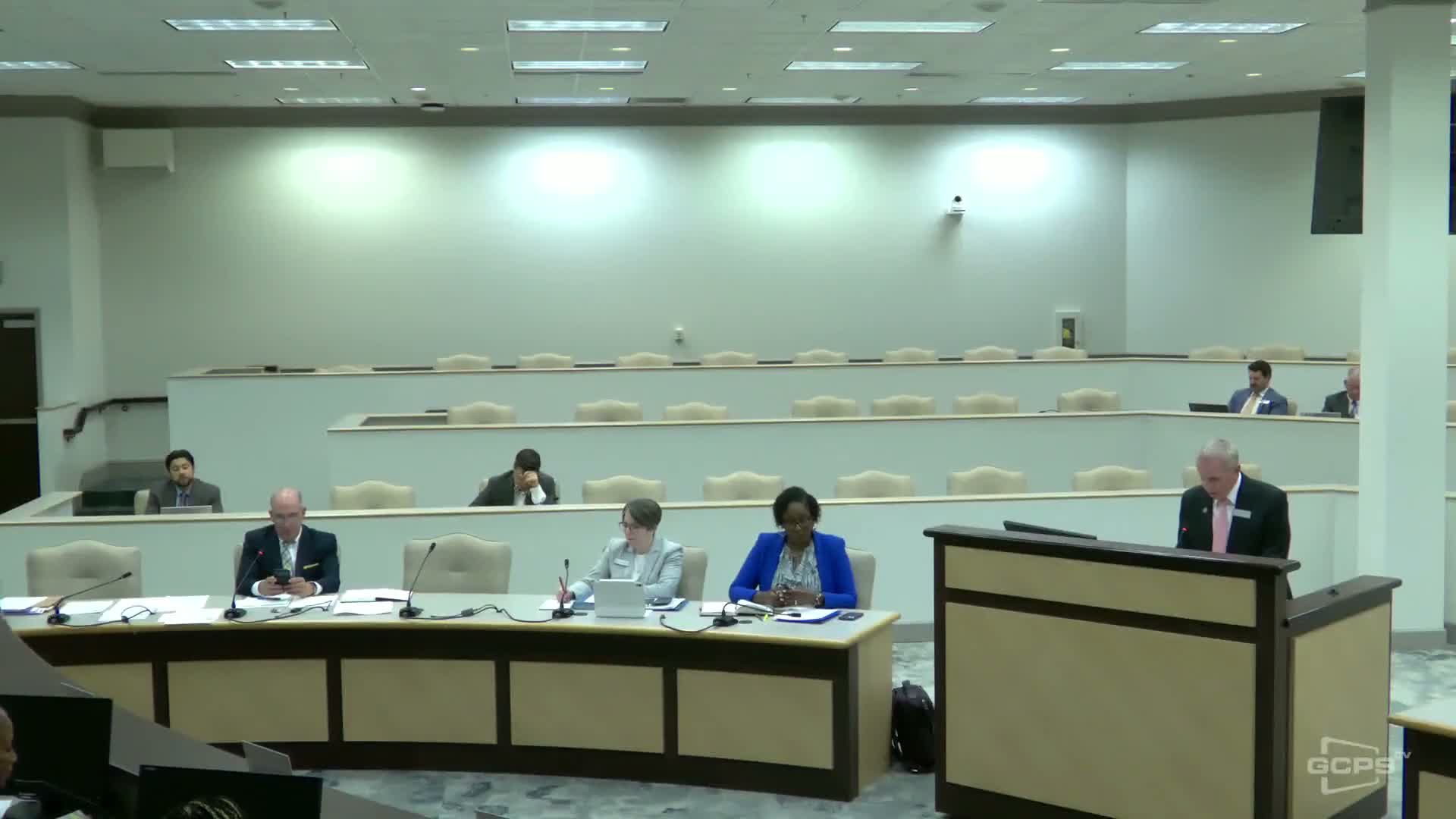
The Gwinnett County Board of Education received a legislative update on May 12 as the governor reached the statutory deadline to sign or veto bills from the 2026 session.
Dr. David Goldie, the district’s legislative and policy administrator, told the board the legislative update was current as of early evening on May 12 and that staff will distribute detailed impact analyses to division chiefs now that bills have been signed. Goldie said several bills were confirmed signed on the governor’s website and that a short list of measures remained in the “gray area” awaiting final action.
Goldie summarized that the governor signed the FY27 budget and an income‑tax bill that reduced state revenues by removing certain growth assumptions. He said the governor removed roughly $300 million in newly proposed spending from the FY27 budget and is banking on revenue growth and reserve use to close the remainder — with further adjustments to be made in the amended FY27 budget next spring.
A district finance official told the board the combination of enacted tax changes and the homestead‑exemption measures could reduce local school revenue in coming years. “You’re looking maybe 2, 3, 4 percent,” the official said when describing expected digest growth rates; staff provided an illustrative estimate that the district could lose about $35 million per year over time, even after typical growth.
Board members pressed staff for details about House Bill 540 — a homestead‑exemption ballot question intended to expand an exemption for public‑service workers to include all GCPS employees — and asked whether it will appear on the November ballot. Goldie said the elections office had omitted HB540 from the May primary ballot in an oversight and that he will follow up to confirm placement on the November 3 general election ballot so the provision can take effect Jan. 1, 2027.
Members raised equity concerns about the long‑term impact on Title I and historically underserved schools if revenues decline. Staff noted options the state could use to offset some losses, including revisions to the equalization grant and changes to fund‑balance caps that were raised in law to 25 percent from a previous 15 percent.
Next steps: staff will produce detailed operational and financial impact analyses for the board and division chiefs, and will confirm the elections office’s placement of the HB540 ballot question for November.
Dr. David Goldie, the district’s legislative and policy administrator, told the board the legislative update was current as of early evening on May 12 and that staff will distribute detailed impact analyses to division chiefs now that bills have been signed. Goldie said several bills were confirmed signed on the governor’s website and that a short list of measures remained in the “gray area” awaiting final action.
Goldie summarized that the governor signed the FY27 budget and an income‑tax bill that reduced state revenues by removing certain growth assumptions. He said the governor removed roughly $300 million in newly proposed spending from the FY27 budget and is banking on revenue growth and reserve use to close the remainder — with further adjustments to be made in the amended FY27 budget next spring.
A district finance official told the board the combination of enacted tax changes and the homestead‑exemption measures could reduce local school revenue in coming years. “You’re looking maybe 2, 3, 4 percent,” the official said when describing expected digest growth rates; staff provided an illustrative estimate that the district could lose about $35 million per year over time, even after typical growth.
Board members pressed staff for details about House Bill 540 — a homestead‑exemption ballot question intended to expand an exemption for public‑service workers to include all GCPS employees — and asked whether it will appear on the November ballot. Goldie said the elections office had omitted HB540 from the May primary ballot in an oversight and that he will follow up to confirm placement on the November 3 general election ballot so the provision can take effect Jan. 1, 2027.
Members raised equity concerns about the long‑term impact on Title I and historically underserved schools if revenues decline. Staff noted options the state could use to offset some losses, including revisions to the equalization grant and changes to fund‑balance caps that were raised in law to 25 percent from a previous 15 percent.
Next steps: staff will produce detailed operational and financial impact analyses for the board and division chiefs, and will confirm the elections office’s placement of the HB540 ballot question for November.
View the Full Meeting & All Its Details
This article offers just a summary. Unlock complete video, transcripts, and insights as a Founder Member.
✓
Watch full, unedited meeting videos
✓
Search every word spoken in unlimited transcripts
✓
AI summaries & real-time alerts (all government levels)
✓
Permanent access to expanding government content
30-day money-back guarantee
