Finance Committee hears FY2027 budget: balanced on paper but reliant on reserves, Medicaid and city aid
May 14, 2026 | Providence School Board and Committees, School Districts, Rhode Island
This article was created by AI summarizing key points discussed. AI makes mistakes, so for full details and context, please refer to the video of the full meeting. Please report any errors so we can fix them. Report an error »
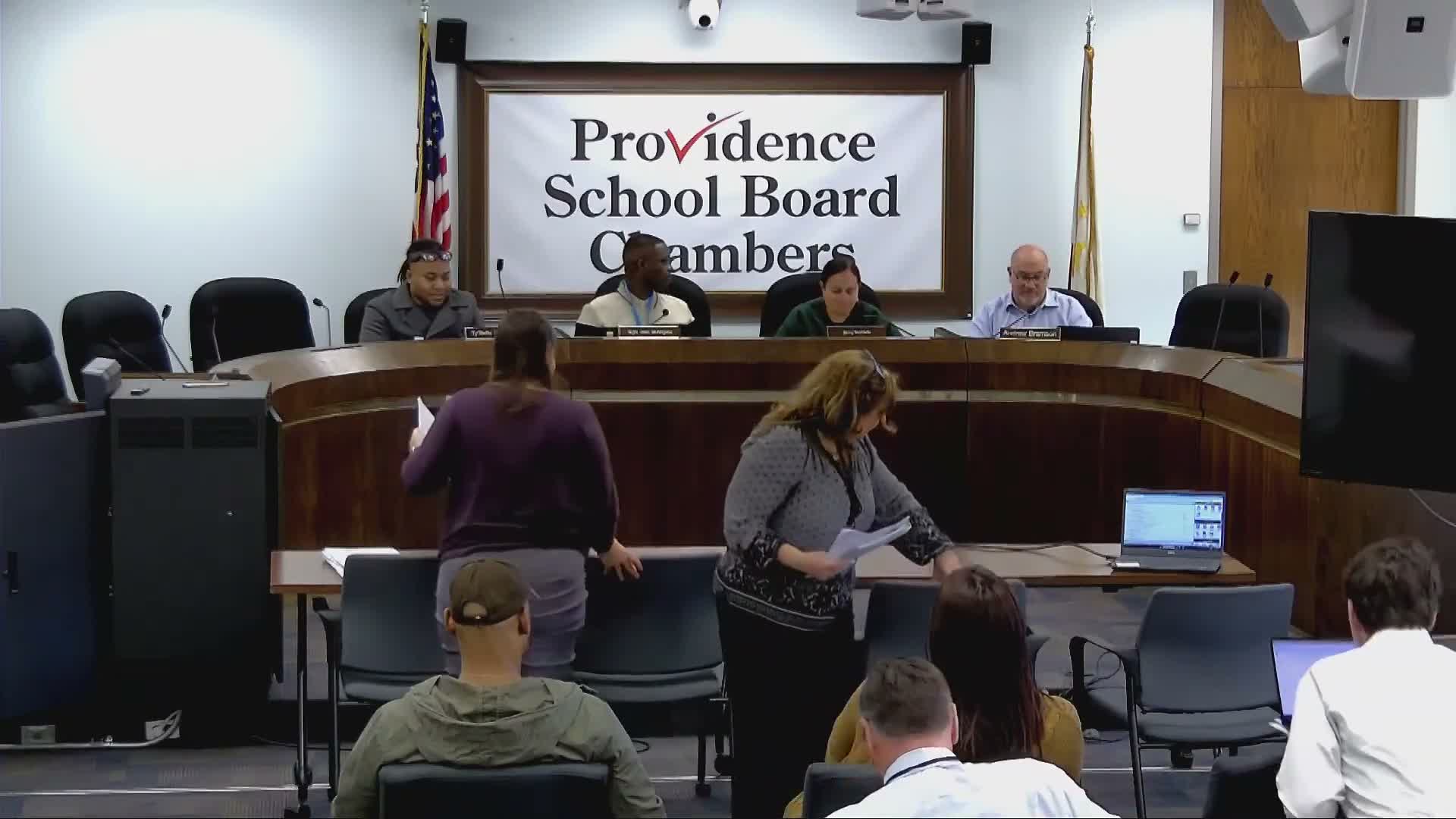
Deputy Superintendent Zach Scott and Chris Battissi, the district's executive director of finance, presented the Providence Public Schools' proposed fiscal year 2027 budget to the Finance Committee, describing a balanced plan that nevertheless depends on several uncertain revenue streams and a package of staffing and service reductions.
Scott opened by saying the administration was presenting "a balanced budget for the coming year" but cautioned it came after "a lot of challenging decisions." He identified the main revenue pressures as a projected decline in state aid driven by lower enrollment, lower free-and-reduced-lunch counts and reduced special-education categorical funds. Scott told the committee the administration expects some offset from city aid and stronger Medicaid billing and that, in total, the administration has identified about a $7 million increase in local revenue sources—much of which is contingent on Medicaid growth, city aid and the one-time use of reserves.
On the expense side, Scott highlighted several cost drivers: a projected 9% increase in active medical costs (about $3.3 million), rising special-education tuition rates, a projected 15% increase in yellow-bus transportation rates (partly offset by a reduction of roughly four bus routes), and custodial contract increases tied to a bid-reset and added square footage from a new campus. The package of proposed staffing changes includes net reductions of roughly 109 funded positions next year (a mix of central-office and school positions), targeted increases (for example, an executive director of transportation) and program consolidations in teaching-and-learning.
Committee members repeatedly pressed staff on revenue assumptions and choices. A member noted public reporting of a state budget surplus and asked about advocacy; Scott said the district would continue to pursue advocacy, including keeping the governor's originally proposed increase to the student-success factor (from 40% to 43%), and estimated that reinstating the 43% success factor would yield roughly $4,000,000 in additional state revenue. On reserves, Scott reviewed recent budget-to-actual history showing generally modest variances (hundreds of thousands of dollars in most years) but acknowledged that using reserves is a one-time fix that must be replaced in future years if recurring shortfalls remain.
Members also queried staffing decisions and new central-office positions, including an executive director of transportation, a proposed in-house labor counsel to reduce outside counsel costs, and a senior executive director for multilingual learners; staff explained rationales tied to operational complexity, cost-effectiveness and compliance needs. The administration said some higher-cost staffing additions were offset by larger net reductions elsewhere and by declines in vacancies.
Several members urged caution against relying on reserves and recommended prioritizing restoration of reserves if the state provides new revenue. Scott said the administration will present ordinances to the full board next week and to the city council later in the month, and that UCAP and other pending state items remain material risks to the FY27 plan.
Scott opened by saying the administration was presenting "a balanced budget for the coming year" but cautioned it came after "a lot of challenging decisions." He identified the main revenue pressures as a projected decline in state aid driven by lower enrollment, lower free-and-reduced-lunch counts and reduced special-education categorical funds. Scott told the committee the administration expects some offset from city aid and stronger Medicaid billing and that, in total, the administration has identified about a $7 million increase in local revenue sources—much of which is contingent on Medicaid growth, city aid and the one-time use of reserves.
On the expense side, Scott highlighted several cost drivers: a projected 9% increase in active medical costs (about $3.3 million), rising special-education tuition rates, a projected 15% increase in yellow-bus transportation rates (partly offset by a reduction of roughly four bus routes), and custodial contract increases tied to a bid-reset and added square footage from a new campus. The package of proposed staffing changes includes net reductions of roughly 109 funded positions next year (a mix of central-office and school positions), targeted increases (for example, an executive director of transportation) and program consolidations in teaching-and-learning.
Committee members repeatedly pressed staff on revenue assumptions and choices. A member noted public reporting of a state budget surplus and asked about advocacy; Scott said the district would continue to pursue advocacy, including keeping the governor's originally proposed increase to the student-success factor (from 40% to 43%), and estimated that reinstating the 43% success factor would yield roughly $4,000,000 in additional state revenue. On reserves, Scott reviewed recent budget-to-actual history showing generally modest variances (hundreds of thousands of dollars in most years) but acknowledged that using reserves is a one-time fix that must be replaced in future years if recurring shortfalls remain.
Members also queried staffing decisions and new central-office positions, including an executive director of transportation, a proposed in-house labor counsel to reduce outside counsel costs, and a senior executive director for multilingual learners; staff explained rationales tied to operational complexity, cost-effectiveness and compliance needs. The administration said some higher-cost staffing additions were offset by larger net reductions elsewhere and by declines in vacancies.
Several members urged caution against relying on reserves and recommended prioritizing restoration of reserves if the state provides new revenue. Scott said the administration will present ordinances to the full board next week and to the city council later in the month, and that UCAP and other pending state items remain material risks to the FY27 plan.
View the Full Meeting & All Its Details
This article offers just a summary. Unlock complete video, transcripts, and insights as a Founder Member.
✓
Watch full, unedited meeting videos
✓
Search every word spoken in unlimited transcripts
✓
AI summaries & real-time alerts (all government levels)
✓
Permanent access to expanding government content
30-day money-back guarantee
