Natural Resources & Energy reviews S.202 changes, renaming portable units and adding safety, landlord and appliance standards
May 14, 2026 | Natural Resources & Energy, SENATE, Committees, Legislative , Vermont
This article was created by AI summarizing key points discussed. AI makes mistakes, so for full details and context, please refer to the video of the full meeting. Please report any errors so we can fix them. Report an error »
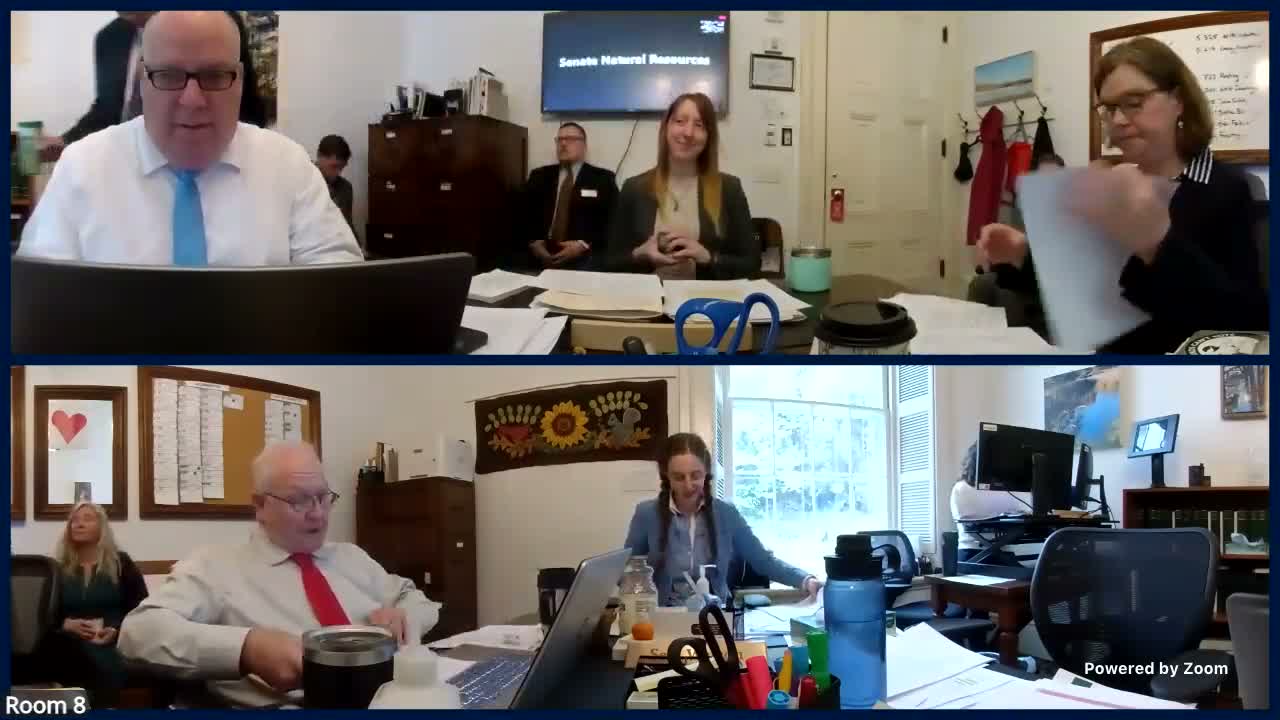
Sun, of the Natural Resources & Energy committee, opened the May 14 meeting to review House changes to S.202 and introduced legislative counsel LJ Koski to walk the committee through a side‑by‑side comparison.
Koski told the committee the House renamed the bill’s previously used term for small portable solar units to "plug‑in photovoltaic devices," removed the word "movable" to emphasize more secure installations, and added a series of safety and technical references. "They also added that they need to have a maximum divide inverter capacity of not more than 1,200 watts," Koski said, and explained the draft requires compliance with applicable UL standards and regional interconnection profiles.
The counsel summarized key substantive changes: devices that comply with the listed safety and installation provisions would not require a separate permit and would not be placed under the jurisdiction of the Public Utility Commission; utilities would be prohibited from charging fees for device installation but could recover costs tied to service overloading; and exported generation from these devices would not be compensated by the utility. Koski described the landlord‑tenant language in the House draft, saying a tenant must provide at least 10 days' notice and that a landlord must respond within 10 days with reasonable restrictions or can deny the installation.
Committee members questioned practical implications. One member noted UL and interconnection requirements could necessitate a dedicated circuit or a new plug and that the bill’s safety references could lead to rewiring in some installations. Sun said the bill’s original intent was to make installation easy and flagged concerns that added requirements could make adoption harder: "the whole point of this originally was that we are trying to make this as easy as possible, and it seems to have been made harder and maybe more expensive," Sun said.
Koski also explained the House’s insertion of an appliance‑efficiency update into S.202 that would change the state reference date for certain federal efficiency rules to 01/19/2025 and incorporate a recent federal final rule expanding the scope of regulated electric motors. Koski said stakeholder input (including from ABB) supports including the expanded motor standard while excluding motors already covered as end‑products by existing federal rules.
No committee vote was recorded during the session. Koski described a proposed floor amendment (draft 2.1, dated 5/13) from Senator Watson that would reinsert the landlord‑tenant language and the motor/appliance efficiency changes when the bill returns from the House; members indicated informal support for holding the amendment together and the meeting recessed for a short break.
The committee is expected to continue consideration of S.202 and the proposed amendments when it reconvenes.
Koski told the committee the House renamed the bill’s previously used term for small portable solar units to "plug‑in photovoltaic devices," removed the word "movable" to emphasize more secure installations, and added a series of safety and technical references. "They also added that they need to have a maximum divide inverter capacity of not more than 1,200 watts," Koski said, and explained the draft requires compliance with applicable UL standards and regional interconnection profiles.
The counsel summarized key substantive changes: devices that comply with the listed safety and installation provisions would not require a separate permit and would not be placed under the jurisdiction of the Public Utility Commission; utilities would be prohibited from charging fees for device installation but could recover costs tied to service overloading; and exported generation from these devices would not be compensated by the utility. Koski described the landlord‑tenant language in the House draft, saying a tenant must provide at least 10 days' notice and that a landlord must respond within 10 days with reasonable restrictions or can deny the installation.
Committee members questioned practical implications. One member noted UL and interconnection requirements could necessitate a dedicated circuit or a new plug and that the bill’s safety references could lead to rewiring in some installations. Sun said the bill’s original intent was to make installation easy and flagged concerns that added requirements could make adoption harder: "the whole point of this originally was that we are trying to make this as easy as possible, and it seems to have been made harder and maybe more expensive," Sun said.
Koski also explained the House’s insertion of an appliance‑efficiency update into S.202 that would change the state reference date for certain federal efficiency rules to 01/19/2025 and incorporate a recent federal final rule expanding the scope of regulated electric motors. Koski said stakeholder input (including from ABB) supports including the expanded motor standard while excluding motors already covered as end‑products by existing federal rules.
No committee vote was recorded during the session. Koski described a proposed floor amendment (draft 2.1, dated 5/13) from Senator Watson that would reinsert the landlord‑tenant language and the motor/appliance efficiency changes when the bill returns from the House; members indicated informal support for holding the amendment together and the meeting recessed for a short break.
The committee is expected to continue consideration of S.202 and the proposed amendments when it reconvenes.
View the Full Meeting & All Its Details
This article offers just a summary. Unlock complete video, transcripts, and insights as a Founder Member.
✓
Watch full, unedited meeting videos
✓
Search every word spoken in unlimited transcripts
✓
AI summaries & real-time alerts (all government levels)
✓
Permanent access to expanding government content
30-day money-back guarantee
