Sumner County Library Board approves parental-resource placement rule after heated public comment
May 14, 2026 | Sumner County, Tennessee
This article was created by AI summarizing key points discussed. AI makes mistakes, so for full details and context, please refer to the video of the full meeting. Please report any errors so we can fix them. Report an error »
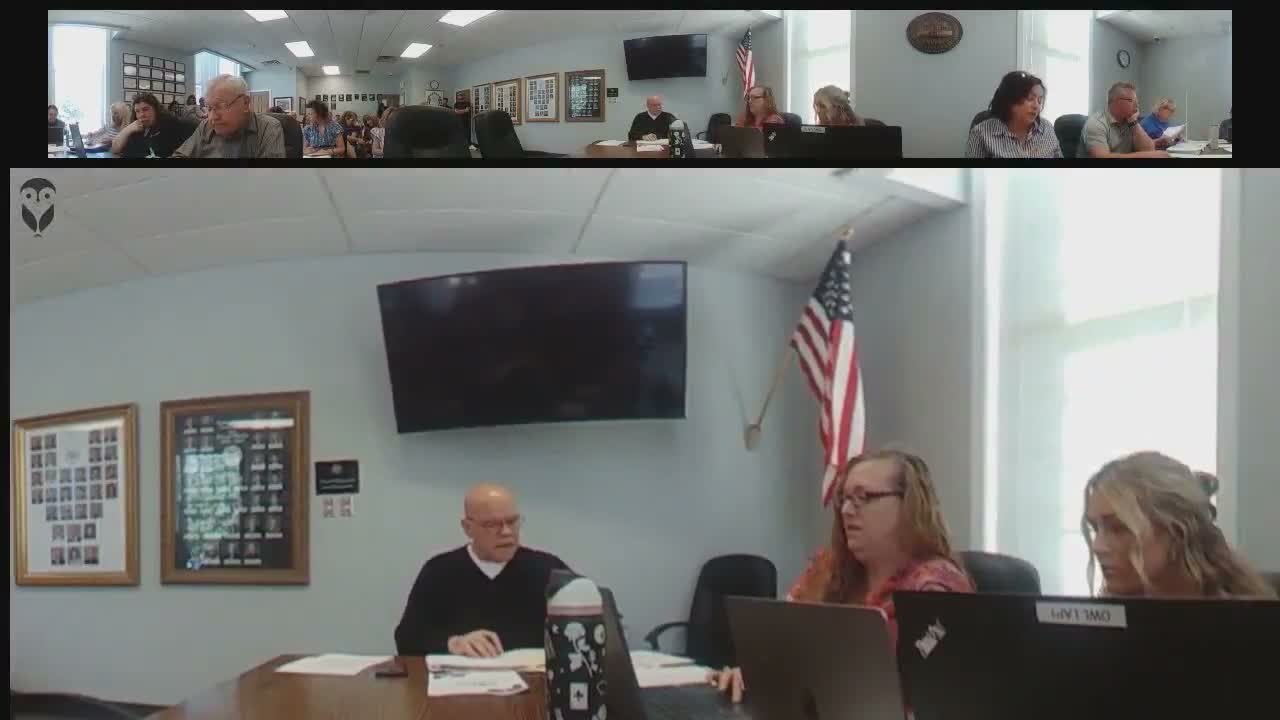
The Sumner County Library Board on voice vote approved an amendment to Board Policy 2.01 to authorize library directors to establish a parental resource section in children's collections and to set placement guidelines for "books in question." The measure passed after an extended public-comment period in which speakers urged both stricter limits and protection for intellectual freedom.
Members read and debated the paragraph that will be added to Policy 2.01, which authorizes directors "to create a parental resource section in their children's libraries to ensure parents and guardians have access to children's literature that explores potentially sensitive topics." The final approved language says, in part: "Books in question will be placed on the top shelf of a bookshelf in direct view of a library staff's desk, when possible, at director's discretion." The board approved the amendment as amended; no roll-call tally was recorded.
Public commenters sharply disagreed about the substance and aims of the change. Ginny Altoff argued that states have pursued penalties for libraries over "obscene" materials and cited the Supreme Court case Miller v. California, saying "obscene materials are not automatically protected by the First Amendment" and urging the board to prepare a policy to help librarians navigate legal risks. Emma Diaz, a clinical psychologist, urged the board not to focus on gender ideology as a proxy for child protection, warning that discriminatory policies increase risk for transgender youth: "I wonder if you would prefer to have dead children than transgender children," she said, adding that policies that make young people feel unsafe raise suicide risk.
Other speakers, including Jack Elston, pushed for compromise language that preserves both parental ability to limit access and intellectual freedom. Elston said the parental-resource approach "respects parental concerns. It preserves intellectual freedom. It allows directors to be responsive to their patrons." Board members and library directors raised practical concerns about shelf height, building layouts and Americans with Disabilities Act (ADA) accommodations; the initial draft's "higher than 6 feet" language was dropped in favor of "top shelf" and a director-discretion provision to accommodate varied furniture and staffing patterns.
Board discussion centered on implementation: whether placement should require a fixed height, how to define "direct view" of staff, and how directors should document or exercise discretion where a branch's layout prevents top-shelf placement in view of staff. The board's chair read the amended paragraph during discussion and called for the motion to approve. After procedural clarification and an amended motion, the board approved the policy change by voice vote.
Next steps: the board chair said staff will write up the adopted wording and distribute it to directors. Board members asked that the language be clear enough for directors to implement consistently but flexible enough to address ADA obligations and differing library designs.
Members read and debated the paragraph that will be added to Policy 2.01, which authorizes directors "to create a parental resource section in their children's libraries to ensure parents and guardians have access to children's literature that explores potentially sensitive topics." The final approved language says, in part: "Books in question will be placed on the top shelf of a bookshelf in direct view of a library staff's desk, when possible, at director's discretion." The board approved the amendment as amended; no roll-call tally was recorded.
Public commenters sharply disagreed about the substance and aims of the change. Ginny Altoff argued that states have pursued penalties for libraries over "obscene" materials and cited the Supreme Court case Miller v. California, saying "obscene materials are not automatically protected by the First Amendment" and urging the board to prepare a policy to help librarians navigate legal risks. Emma Diaz, a clinical psychologist, urged the board not to focus on gender ideology as a proxy for child protection, warning that discriminatory policies increase risk for transgender youth: "I wonder if you would prefer to have dead children than transgender children," she said, adding that policies that make young people feel unsafe raise suicide risk.
Other speakers, including Jack Elston, pushed for compromise language that preserves both parental ability to limit access and intellectual freedom. Elston said the parental-resource approach "respects parental concerns. It preserves intellectual freedom. It allows directors to be responsive to their patrons." Board members and library directors raised practical concerns about shelf height, building layouts and Americans with Disabilities Act (ADA) accommodations; the initial draft's "higher than 6 feet" language was dropped in favor of "top shelf" and a director-discretion provision to accommodate varied furniture and staffing patterns.
Board discussion centered on implementation: whether placement should require a fixed height, how to define "direct view" of staff, and how directors should document or exercise discretion where a branch's layout prevents top-shelf placement in view of staff. The board's chair read the amended paragraph during discussion and called for the motion to approve. After procedural clarification and an amended motion, the board approved the policy change by voice vote.
Next steps: the board chair said staff will write up the adopted wording and distribute it to directors. Board members asked that the language be clear enough for directors to implement consistently but flexible enough to address ADA obligations and differing library designs.
Don't Miss a Word: See the Full Meeting!
Go beyond summaries. Unlock every video, transcript, and key insight with a Founder Membership.
✓
Get instant access to full meeting videos
✓
Search and clip any phrase from complete transcripts
✓
Receive AI-powered summaries & custom alerts
✓
Enjoy lifetime, unrestricted access to government data
30-day money-back guarantee
