Putnam providers warn seniors and families face growing food insecurity; lawmakers propose county hunger coalition
May 14, 2026 | Putnam County, New York
This article was created by AI summarizing key points discussed. AI makes mistakes, so for full details and context, please refer to the video of the full meeting. Please report any errors so we can fix them. Report an error »
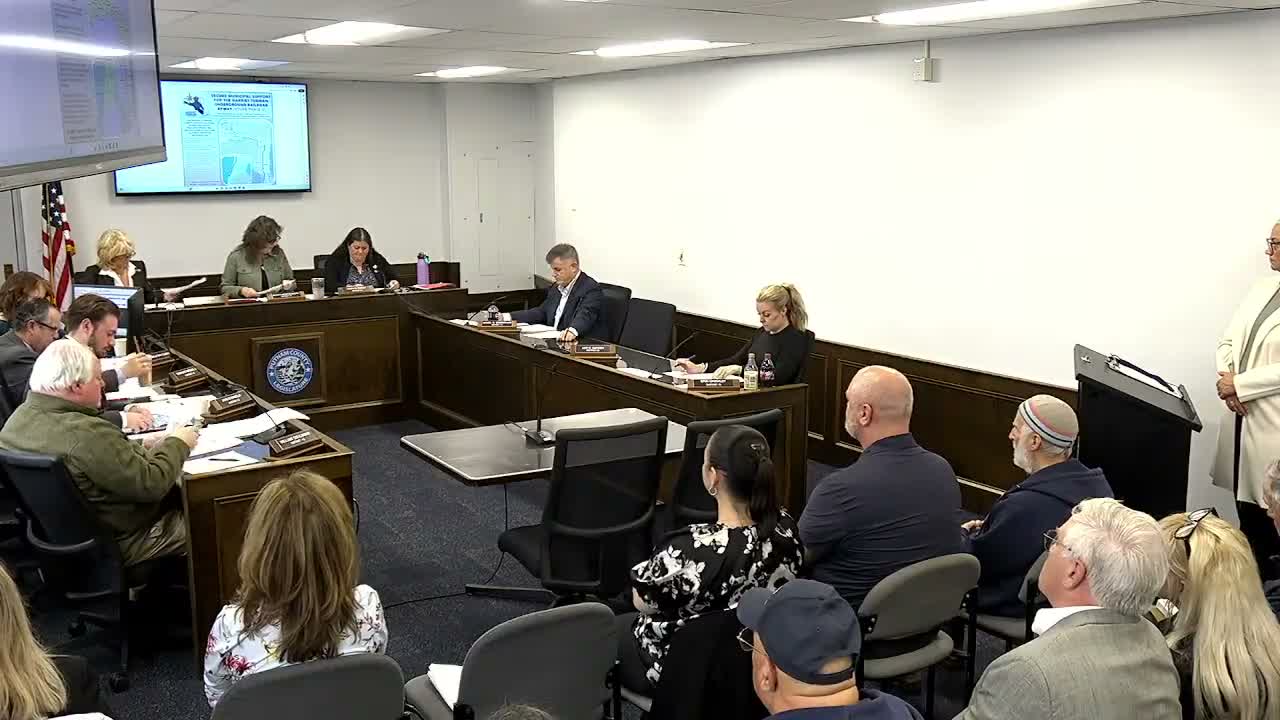
Putnam County legislators and dozens of local providers on May 13 detailed growing demand for emergency food assistance and transportation barriers that limit access — particularly for seniors and residents on the county's west side.
"For individuals on the western side of the county, they feel that their resources are difficult to get to," Sarah Servideo, Putnam County commissioner of social services, told the Social/Educational/Environmental Committee, citing denied SNAP renewals and a small county pantry that cannot meet the current gap. "Our senior and disabled residents often get denied SNAP benefits because of excess income, or they get the minimum in SNAP."
Local providers described how interruptions to federal programs and recent changes — including the suspension of a Meals on Main route — have pushed more people to pantries and meal programs. "Transportation is one of the big barriers," said Martha Elder of Second Chance Foods, which delivers community nutrition boxes and maintains freezers at senior centers and libraries to increase no‑paperwork access. "People became reliant on that schedule when it was going around."
Kiko Latu, director of the Phillipstown food pantry, reported a 41% increase in pantry utilization in early 2026 compared with the same period in 2025 and said many clients now visit weekly: "We're managing, but I'm wondering where we are in the wave of need." He urged better transport capacity and volunteer support for deliveries.
Representatives from the regional food bank said the county still faces a large "meal gap." A Hudson Valley food‑bank representative reported that 9% of the county population — roughly 8,700 people, including about 3,000 seniors — are food insecure and estimated Putnam's meal gap at about 1.6 million meals annually.
Several speakers said confusion remains about a $150,000 line the legislature approved for food‑security purposes. "I thought there was like a $150,000 contingency line for food security this year in Putnam County," one provider said. Legislators and contracted agencies explained that the appropriation had been approved for contracted agencies but that a federal program reopening delayed reimbursement processes and left some funds unencumbered.
Legislators and providers urged quicker, more transparent contracting or reimbursement mechanisms so local pantries can draw funds without lengthy administrative delays. "We would create contracts with those outside agencies ... to help the county in its mission to serve a need," one legislator said, describing a likely contractual route for distributing funds.
To keep momentum from the public meeting, Chairwoman Nancy Montgomery proposed forming a Putnam County Hunger and Food Access Coalition of social services, senior resources, community partners and neighbors; she said she would have a proposal ready by the next health committee meeting. The coalition would aim to map unmet needs, coordinate cold‑storage and mobile distribution ideas, and identify where county support — including direct food purchases or infrastructure such as a centrally located cold room or a county‑run mobile pantry — could have the most immediate impact.
What happens next: Montgomery said she will convene county staff and community partners to draft the coalition framework and report back to the legislature. Providers asked for clearer instructions on how pantries can access any existing county funds and recommended exploring both short‑term meal funding and longer‑term investments in cold storage and transportation.
(Reporting notes: Quotes and attributions come from testimony at the May 13 committee meeting. The county's precise distribution of the previously appropriated $150,000 remained unclear at the end of the public session.)
"For individuals on the western side of the county, they feel that their resources are difficult to get to," Sarah Servideo, Putnam County commissioner of social services, told the Social/Educational/Environmental Committee, citing denied SNAP renewals and a small county pantry that cannot meet the current gap. "Our senior and disabled residents often get denied SNAP benefits because of excess income, or they get the minimum in SNAP."
Local providers described how interruptions to federal programs and recent changes — including the suspension of a Meals on Main route — have pushed more people to pantries and meal programs. "Transportation is one of the big barriers," said Martha Elder of Second Chance Foods, which delivers community nutrition boxes and maintains freezers at senior centers and libraries to increase no‑paperwork access. "People became reliant on that schedule when it was going around."
Kiko Latu, director of the Phillipstown food pantry, reported a 41% increase in pantry utilization in early 2026 compared with the same period in 2025 and said many clients now visit weekly: "We're managing, but I'm wondering where we are in the wave of need." He urged better transport capacity and volunteer support for deliveries.
Representatives from the regional food bank said the county still faces a large "meal gap." A Hudson Valley food‑bank representative reported that 9% of the county population — roughly 8,700 people, including about 3,000 seniors — are food insecure and estimated Putnam's meal gap at about 1.6 million meals annually.
Several speakers said confusion remains about a $150,000 line the legislature approved for food‑security purposes. "I thought there was like a $150,000 contingency line for food security this year in Putnam County," one provider said. Legislators and contracted agencies explained that the appropriation had been approved for contracted agencies but that a federal program reopening delayed reimbursement processes and left some funds unencumbered.
Legislators and providers urged quicker, more transparent contracting or reimbursement mechanisms so local pantries can draw funds without lengthy administrative delays. "We would create contracts with those outside agencies ... to help the county in its mission to serve a need," one legislator said, describing a likely contractual route for distributing funds.
To keep momentum from the public meeting, Chairwoman Nancy Montgomery proposed forming a Putnam County Hunger and Food Access Coalition of social services, senior resources, community partners and neighbors; she said she would have a proposal ready by the next health committee meeting. The coalition would aim to map unmet needs, coordinate cold‑storage and mobile distribution ideas, and identify where county support — including direct food purchases or infrastructure such as a centrally located cold room or a county‑run mobile pantry — could have the most immediate impact.
What happens next: Montgomery said she will convene county staff and community partners to draft the coalition framework and report back to the legislature. Providers asked for clearer instructions on how pantries can access any existing county funds and recommended exploring both short‑term meal funding and longer‑term investments in cold storage and transportation.
(Reporting notes: Quotes and attributions come from testimony at the May 13 committee meeting. The county's precise distribution of the previously appropriated $150,000 remained unclear at the end of the public session.)
View the Full Meeting & All Its Details
This article offers just a summary. Unlock complete video, transcripts, and insights as a Founder Member.
✓
Watch full, unedited meeting videos
✓
Search every word spoken in unlimited transcripts
✓
AI summaries & real-time alerts (all government levels)
✓
Permanent access to expanding government content
30-day money-back guarantee
