Senate Finance advances draft of H.9.55 after section‑by‑section review; staff to compile edits
May 14, 2026 | Finance, SENATE, Committees, Legislative , Vermont
This article was created by AI summarizing key points discussed. AI makes mistakes, so for full details and context, please refer to the video of the full meeting. Please report any errors so we can fix them. Report an error »
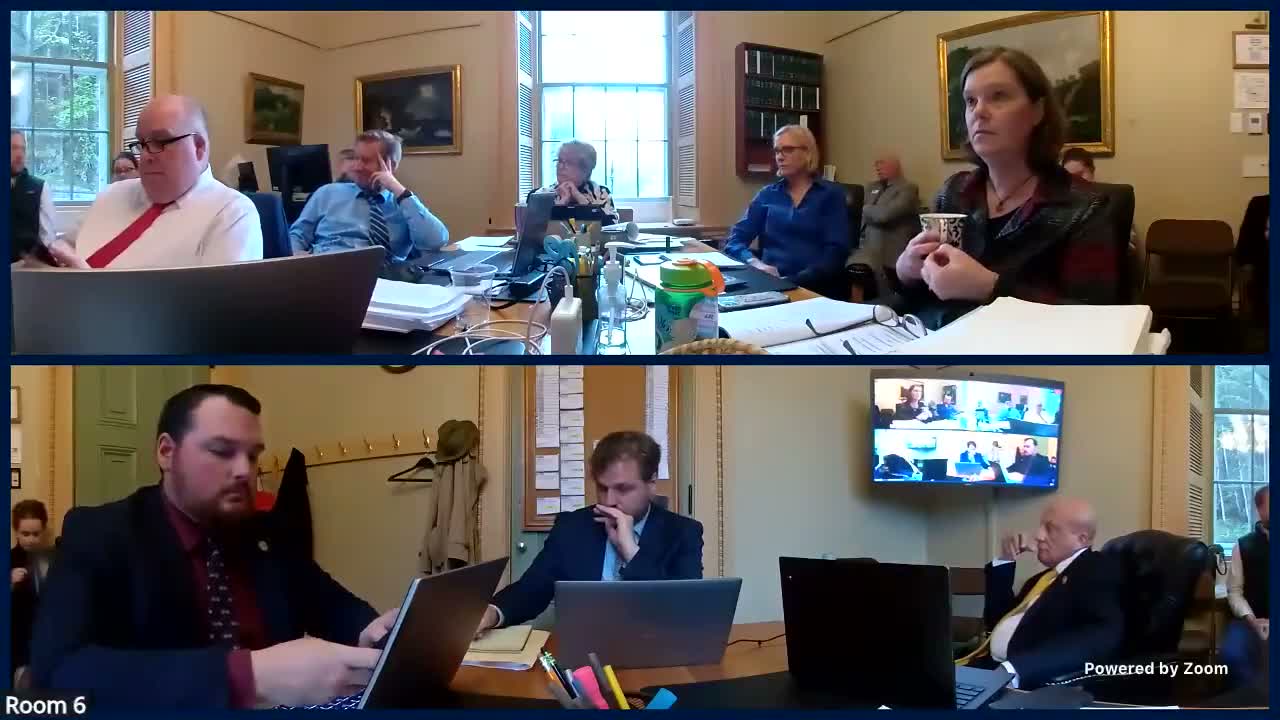
The Senate Committee on Finance voted to advance draft 1.1 of H.9.55 for legislative drafting and further edits after a section‑by‑section review that touched on tax and school‑construction provisions.
The committee agreed to add Department of Taxes–recommended clarifying language for determining a "bona fide landlord‑tenant relationship" in transfer‑tax provisions, language intended to give the commissioner discretion to consider factors such as fair‑market rent and whether the landlord has a business purpose beyond tax avoidance. "This came from the Department of Taxes," a staff member said while reviewing the proposed insertion, and members agreed the clarification should reduce the risk of a vagueness challenge while preserving the bill’s existing six‑month requirement.
Jake Feldman of the tax department warned the committee the provisions will increase administrative workload. "It doesn’t start for several years, so that gives us some time to understand exactly what we need, but we are gonna need more people," Feldman said, adding that homestead declaration processing has already proven resource‑intensive and the new rules will add more attestations and appeals.
The draft also revises tax‑sale rules: a new subdivision would exempt the $1,500 minimum threshold for initiating a tax sale when a parcel has no year‑round dwelling or was not declared as a homestead under section 54 10, allowing sales of small, vacant parcels that owe less than $1,500 after one year delinquency.
On school construction, the bill would appropriate funds to staff the newly created school construction division and direct the agency to return next year with recommended funding levels. "This provides an appropriation for the full staffing of the school construction division," an agency counsel said while summarizing section 66, and committee discussion indicated the draft uses a portion of one‑time funds included in the senate budget construct.
Members also debated changes to construction aid and sequencing. The draft tightens eligibility burdens in some places (for example, requiring demonstration of district proficiency rather than self‑assessment) and reduces the award range compared with the house version (the house had a 50–95% range; the draft reflected 30–75%). The committee added new ballot and informational‑hearing language to help voters understand a range of supplemental district spending (SDS) tax outcomes — including estimates for no state aid, partial aid, and maximum aid scenarios — before a district authorizes bonding.
Section 74, the legacy‑debt provision, was revised from the house’s 100% coverage to a conditional 75% maximum and an eligibility test: districts identified by the facilitator as having participated in study committees in "bad faith" could be ineligible for legacy‑debt aid. Committee counsel described a facilitator report and timeline tied to that determination; the bill would require the facilitator to submit a report to the education committees by 01/01/2029 identifying any districts that did not participate in good faith.
Several members voiced mixed reactions to the composite package. One lawmaker said they would vote to advance the draft despite reservations because the bill’s timeline and contingencies give the next legislature time to address outstanding concerns: "I don't think this bill is ever gonna come into law as it is," the lawmaker said, but added they would move it forward to keep the process on schedule. The Chair noted that unless objections are raised, advancing the draft would reduce the volume of individual emails to staff.
Committee member Speaker 2 moved draft 1.1 "pending edits" by legislative council staff; the clerk called a roll. The transcript records multiple yes votes and at least two no votes (the record includes a "No" from Senator Meadows and a "No" recorded for Senator Maddox at separate points), but the transcript does not contain a complete final tally or a single consolidated yes/no count.
Next steps: the committee directed drafters to compile the agreed edits into a single composite amendment and to circulate the compiled draft (described in the meeting as draft 1.1) for final review and formal vote on the amended text. The bill will be returned with pending edits for the committee to consider and, if approved, to move to the next legislative stage.
The committee agreed to add Department of Taxes–recommended clarifying language for determining a "bona fide landlord‑tenant relationship" in transfer‑tax provisions, language intended to give the commissioner discretion to consider factors such as fair‑market rent and whether the landlord has a business purpose beyond tax avoidance. "This came from the Department of Taxes," a staff member said while reviewing the proposed insertion, and members agreed the clarification should reduce the risk of a vagueness challenge while preserving the bill’s existing six‑month requirement.
Jake Feldman of the tax department warned the committee the provisions will increase administrative workload. "It doesn’t start for several years, so that gives us some time to understand exactly what we need, but we are gonna need more people," Feldman said, adding that homestead declaration processing has already proven resource‑intensive and the new rules will add more attestations and appeals.
The draft also revises tax‑sale rules: a new subdivision would exempt the $1,500 minimum threshold for initiating a tax sale when a parcel has no year‑round dwelling or was not declared as a homestead under section 54 10, allowing sales of small, vacant parcels that owe less than $1,500 after one year delinquency.
On school construction, the bill would appropriate funds to staff the newly created school construction division and direct the agency to return next year with recommended funding levels. "This provides an appropriation for the full staffing of the school construction division," an agency counsel said while summarizing section 66, and committee discussion indicated the draft uses a portion of one‑time funds included in the senate budget construct.
Members also debated changes to construction aid and sequencing. The draft tightens eligibility burdens in some places (for example, requiring demonstration of district proficiency rather than self‑assessment) and reduces the award range compared with the house version (the house had a 50–95% range; the draft reflected 30–75%). The committee added new ballot and informational‑hearing language to help voters understand a range of supplemental district spending (SDS) tax outcomes — including estimates for no state aid, partial aid, and maximum aid scenarios — before a district authorizes bonding.
Section 74, the legacy‑debt provision, was revised from the house’s 100% coverage to a conditional 75% maximum and an eligibility test: districts identified by the facilitator as having participated in study committees in "bad faith" could be ineligible for legacy‑debt aid. Committee counsel described a facilitator report and timeline tied to that determination; the bill would require the facilitator to submit a report to the education committees by 01/01/2029 identifying any districts that did not participate in good faith.
Several members voiced mixed reactions to the composite package. One lawmaker said they would vote to advance the draft despite reservations because the bill’s timeline and contingencies give the next legislature time to address outstanding concerns: "I don't think this bill is ever gonna come into law as it is," the lawmaker said, but added they would move it forward to keep the process on schedule. The Chair noted that unless objections are raised, advancing the draft would reduce the volume of individual emails to staff.
Committee member Speaker 2 moved draft 1.1 "pending edits" by legislative council staff; the clerk called a roll. The transcript records multiple yes votes and at least two no votes (the record includes a "No" from Senator Meadows and a "No" recorded for Senator Maddox at separate points), but the transcript does not contain a complete final tally or a single consolidated yes/no count.
Next steps: the committee directed drafters to compile the agreed edits into a single composite amendment and to circulate the compiled draft (described in the meeting as draft 1.1) for final review and formal vote on the amended text. The bill will be returned with pending edits for the committee to consider and, if approved, to move to the next legislative stage.
View the Full Meeting & All Its Details
This article offers just a summary. Unlock complete video, transcripts, and insights as a Founder Member.
✓
Watch full, unedited meeting videos
✓
Search every word spoken in unlimited transcripts
✓
AI summaries & real-time alerts (all government levels)
✓
Permanent access to expanding government content
30-day money-back guarantee
