Federal monitor: Cleveland has made progress but search-and-seizure disparities and supervisory gaps remain
May 14, 2026 | Cleveland, Cuyahoga County, Ohio
This article was created by AI summarizing key points discussed. AI makes mistakes, so for full details and context, please refer to the video of the full meeting. Please report any errors so we can fix them. Report an error »
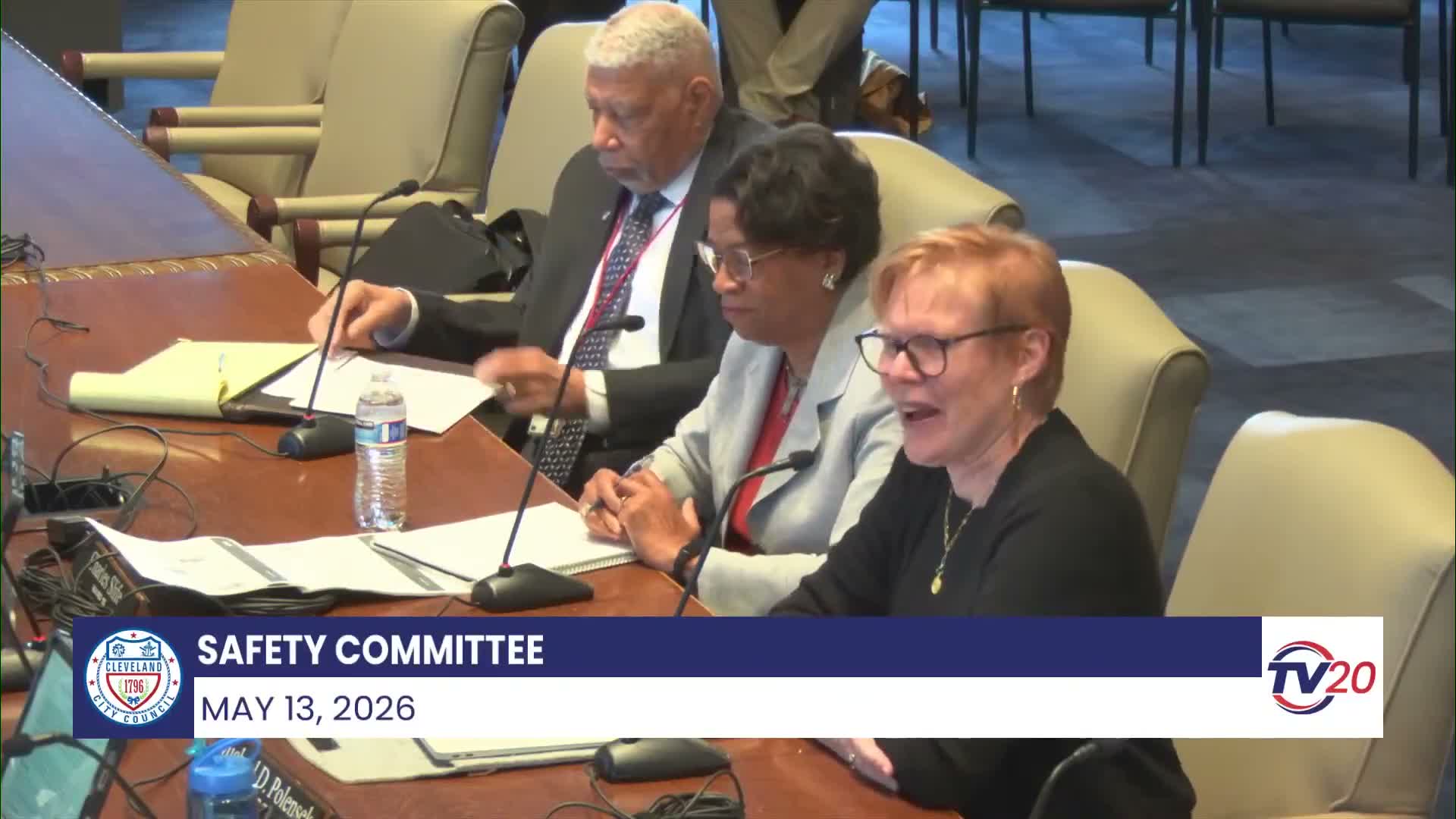
Christine Cole, the court-appointed federal monitor, told the Cleveland City Council safety committee on May 14 that the monitoring team's eighteenth semiannual report documents measurable progress across several policing areas but also identifies concrete gaps the city must address to reach full compliance with the consent decree.
"We have the eighteenth semiannual report ... in accordance with paragraph 3.75 of the consent decree," Cole said, describing the report's five-point assessment scale and the monitoring team's plan to focus working groups on paragraphs rated partial or noncompliant. She said some sections show substantial and effective compliance, while others require targeted implementation to become durable.
The monitoring team highlighted crisis intervention as a success area, saying many crisis-intervention paragraphs are in general or substantial compliance and noting fewer arrests and more transports to behavioral-health services. On use of force, the monitors reported that reviewers found approximately 97% of street-level force incidents were within policy, which the team described as "enormous, remarkable, and positive progress."
But the monitors flagged concerns about search-and-seizure outcomes: "We found that blacks were searched three times more than white drivers," the monitor said, while emphasizing the report does not yet explain why that disparity exists. The team recommended deeper audits and a more robust review system to examine deployment, calls for service and other factors that could explain the gap. The monitor contrasted their approach with an external consultant, Sigma Square, noting differences in denominators and sampling strategy that can produce divergent conclusions.
Council members pressed for more granular data. Several asked for district- and precinct-level breakdowns so the city can identify where disproportionate stops or searches occur and whether deployments or crime patterns account for differences. The monitoring team said it is assembling work groups and that city data teams and consultants (including Jensen Hughes and Benchmark Analytics) are being used to strengthen analytical capacity.
On oversight and accountability, the monitor said internal affairs, the Office of Professional Standards (OPS), the Civilian Police Review Board (CPRB) and the Community Police Commission (CPC) still need operational improvements. The report notes staffing vacuums previously hampered CPC operations but cited the CPC's recent hiring of a permanent executive director and progress in filling staff roles as positive developments.
Council members also asked about monitoring costs and legal authority. The monitoring team said its 10-year expenses are just under $11 million (about $1 million per year) and reiterated that the court assesses compliance against the consent decree; multiple paragraphs in noncompliance support continued oversight until the required remedial steps are implemented.
The committee closed the public portion of the meeting with five public commenters who urged deeper attention to racial disparities, better resourcing for community oversight bodies and continued investment in crisis-response services. The monitoring team and council agreed to follow up on requested district-level data and the monitors' written materials.
"We have the eighteenth semiannual report ... in accordance with paragraph 3.75 of the consent decree," Cole said, describing the report's five-point assessment scale and the monitoring team's plan to focus working groups on paragraphs rated partial or noncompliant. She said some sections show substantial and effective compliance, while others require targeted implementation to become durable.
The monitoring team highlighted crisis intervention as a success area, saying many crisis-intervention paragraphs are in general or substantial compliance and noting fewer arrests and more transports to behavioral-health services. On use of force, the monitors reported that reviewers found approximately 97% of street-level force incidents were within policy, which the team described as "enormous, remarkable, and positive progress."
But the monitors flagged concerns about search-and-seizure outcomes: "We found that blacks were searched three times more than white drivers," the monitor said, while emphasizing the report does not yet explain why that disparity exists. The team recommended deeper audits and a more robust review system to examine deployment, calls for service and other factors that could explain the gap. The monitor contrasted their approach with an external consultant, Sigma Square, noting differences in denominators and sampling strategy that can produce divergent conclusions.
Council members pressed for more granular data. Several asked for district- and precinct-level breakdowns so the city can identify where disproportionate stops or searches occur and whether deployments or crime patterns account for differences. The monitoring team said it is assembling work groups and that city data teams and consultants (including Jensen Hughes and Benchmark Analytics) are being used to strengthen analytical capacity.
On oversight and accountability, the monitor said internal affairs, the Office of Professional Standards (OPS), the Civilian Police Review Board (CPRB) and the Community Police Commission (CPC) still need operational improvements. The report notes staffing vacuums previously hampered CPC operations but cited the CPC's recent hiring of a permanent executive director and progress in filling staff roles as positive developments.
Council members also asked about monitoring costs and legal authority. The monitoring team said its 10-year expenses are just under $11 million (about $1 million per year) and reiterated that the court assesses compliance against the consent decree; multiple paragraphs in noncompliance support continued oversight until the required remedial steps are implemented.
The committee closed the public portion of the meeting with five public commenters who urged deeper attention to racial disparities, better resourcing for community oversight bodies and continued investment in crisis-response services. The monitoring team and council agreed to follow up on requested district-level data and the monitors' written materials.
View the Full Meeting & All Its Details
This article offers just a summary. Unlock complete video, transcripts, and insights as a Founder Member.
✓
Watch full, unedited meeting videos
✓
Search every word spoken in unlimited transcripts
✓
AI summaries & real-time alerts (all government levels)
✓
Permanent access to expanding government content
30-day money-back guarantee
