Committee orders feasibility plan for forensic competency facility, splits emerge over DOC role
May 14, 2026 | Corrections & Institutions, HOUSE OF REPRESENTATIVES, Committees, Legislative , Vermont
This article was created by AI summarizing key points discussed. AI makes mistakes, so for full details and context, please refer to the video of the full meeting. Please report any errors so we can fix them. Report an error »
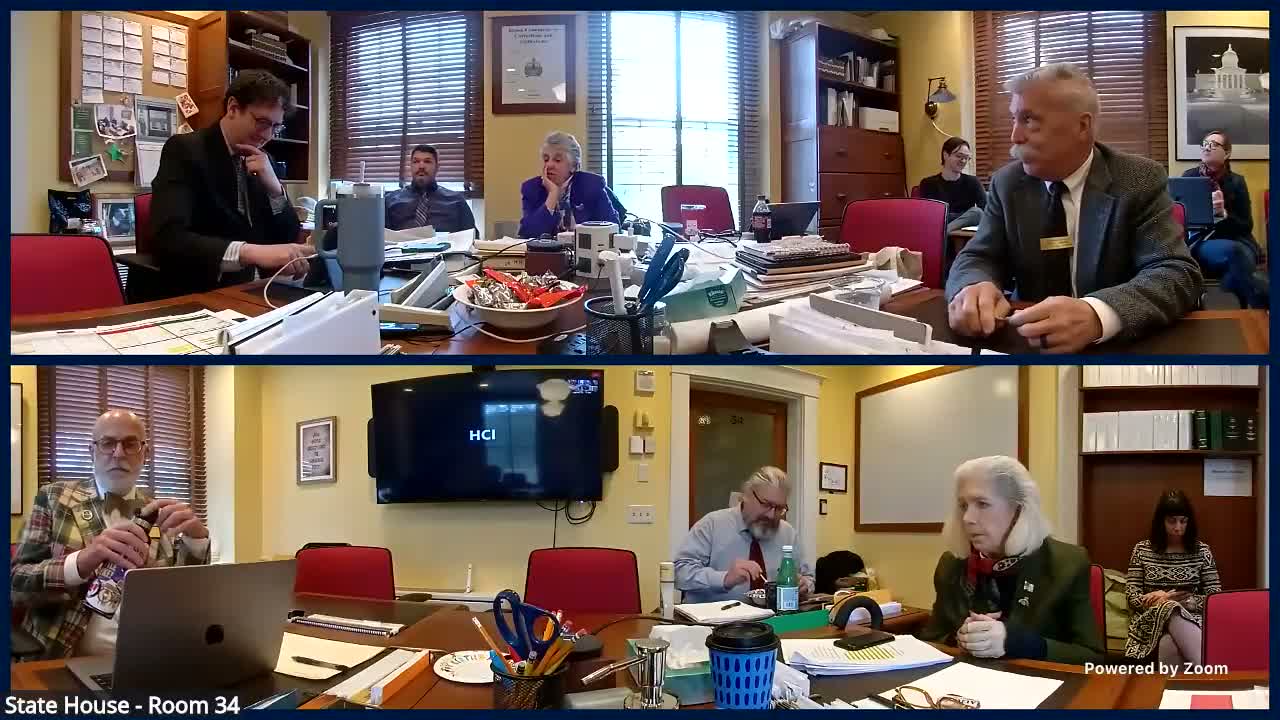
The Corrections & Institutions committee on May 13 instructed the Agency of Human Services to produce a feasibility plan for a forensic competency‑restoration facility and set a June 26 deadline for that plan, but lawmakers remained sharply divided over whether the Department of Corrections should be involved in operating or staffing the site.
Committee chair (Speaker 2) told members the plan must include a proposed location, design and bed count, separation by gender or clinical need, operating entity, estimated construction and operating costs, staffing levels and qualifications, a physical and staff security plan, discharge procedures and a community monitoring plan. The chair said AHS must consult with BTS and BGS while preparing the plan and return findings to the legislature on June 26.
Why it matters: The bill would create a statutory framework for competency restoration and other forensic services that, under the current draft, would not take effect until Jan. 1, 2028. Supporters say a dedicated, clinically led facility would close an existing gap in services; critics say the administration has not provided budget authority and that interim fixes risk becoming permanent compromises.
Supporters and critics clashed over scope and oversight. Jason Eaton (Speaker 5), who described a neighborhood shooting with deep local impact, urged a clinically led model separate from corrections: "We are here because we do not have a forensic facility," he said, adding the system’s purpose should be "clinical evaluation and treatment," not punishment. Kim McBannus (Speaker 3), addressed repeatedly by members to explain operational implications, told the committee that current law and practice leave many people without supervision: "But we can't do anything until another crime is committed, and then the same process starts over again because competency is fluid," she said, summarizing why the committee faces a choice about creating a gatekeeping function tied to public safety.
Several members pushed for a two‑track analysis so the legislature could compare a facility run entirely outside DOC with a model that uses DOC for perimeter security or on‑campus screening. Other members warned that asking for two side‑by‑side plans could bias the analysis; one member said prior apples‑to‑oranges staffing comparisons undermined trust in returned numbers.
Funding and schedule were recurring concerns. Multiple members said the FY27 budget does not include funding for a forensic facility and that staging implementation into FY28–2028 was realistic; others urged the committee to identify an interim, short‑term program to deliver restoration services now for the small group (often described as five to seven people) currently held without restoration opportunities. Committee language discussed an interim requirement that, before the forensic facility is operational, the Agency of Human Services — not DOC — provide restoration programming and bring a funding proposal to joint justice oversight for the BAA.
On operational details, members generally agreed that therapeutic programming and living units should be staffed by AHS or clinical staff rather than by correctional officers, though several said DOC could provide perimeter screening or front‑door security if the facility sits on a correctional campus. Members also debated whether existing DOC contractors providing medical services (identified in testimony as Wellpath) could be used for restoration work; at least one member proposed excluding current DOC medical contractors from interim restoration contracts because of perceived conflicts of interest.
The committee did not hold a formal roll‑call vote on final text on the floor during the session recorded in the transcript. Instead, members agreed to a drafting process: Speaker 2 asked a small group to work with staff ("Katie" and named members) to refine the language and return the change package; the committee then paused to meet with staff before floor action scheduled at 1:00 p.m.
Next steps: The committee set a June 26 target for AHS to return the feasibility plan, asked AHS to consult BTS and BGS on technical requirements, and tasked a drafting subgroup to prepare interim language that would require AHS to propose how restoration services could be provided before a full forensic facility opens. The committee broke to meet with staff and planned to take further action on the bill on the floor at 1:00 p.m.
Sources and attribution: Quotes and attributions come from the committee transcript; speakers are identified in the committee record either by name (Jason Eaton; Kim McBannus was referenced and addressed during the meeting) or by functional role (the committee chair and committee members).
Committee chair (Speaker 2) told members the plan must include a proposed location, design and bed count, separation by gender or clinical need, operating entity, estimated construction and operating costs, staffing levels and qualifications, a physical and staff security plan, discharge procedures and a community monitoring plan. The chair said AHS must consult with BTS and BGS while preparing the plan and return findings to the legislature on June 26.
Why it matters: The bill would create a statutory framework for competency restoration and other forensic services that, under the current draft, would not take effect until Jan. 1, 2028. Supporters say a dedicated, clinically led facility would close an existing gap in services; critics say the administration has not provided budget authority and that interim fixes risk becoming permanent compromises.
Supporters and critics clashed over scope and oversight. Jason Eaton (Speaker 5), who described a neighborhood shooting with deep local impact, urged a clinically led model separate from corrections: "We are here because we do not have a forensic facility," he said, adding the system’s purpose should be "clinical evaluation and treatment," not punishment. Kim McBannus (Speaker 3), addressed repeatedly by members to explain operational implications, told the committee that current law and practice leave many people without supervision: "But we can't do anything until another crime is committed, and then the same process starts over again because competency is fluid," she said, summarizing why the committee faces a choice about creating a gatekeeping function tied to public safety.
Several members pushed for a two‑track analysis so the legislature could compare a facility run entirely outside DOC with a model that uses DOC for perimeter security or on‑campus screening. Other members warned that asking for two side‑by‑side plans could bias the analysis; one member said prior apples‑to‑oranges staffing comparisons undermined trust in returned numbers.
Funding and schedule were recurring concerns. Multiple members said the FY27 budget does not include funding for a forensic facility and that staging implementation into FY28–2028 was realistic; others urged the committee to identify an interim, short‑term program to deliver restoration services now for the small group (often described as five to seven people) currently held without restoration opportunities. Committee language discussed an interim requirement that, before the forensic facility is operational, the Agency of Human Services — not DOC — provide restoration programming and bring a funding proposal to joint justice oversight for the BAA.
On operational details, members generally agreed that therapeutic programming and living units should be staffed by AHS or clinical staff rather than by correctional officers, though several said DOC could provide perimeter screening or front‑door security if the facility sits on a correctional campus. Members also debated whether existing DOC contractors providing medical services (identified in testimony as Wellpath) could be used for restoration work; at least one member proposed excluding current DOC medical contractors from interim restoration contracts because of perceived conflicts of interest.
The committee did not hold a formal roll‑call vote on final text on the floor during the session recorded in the transcript. Instead, members agreed to a drafting process: Speaker 2 asked a small group to work with staff ("Katie" and named members) to refine the language and return the change package; the committee then paused to meet with staff before floor action scheduled at 1:00 p.m.
Next steps: The committee set a June 26 target for AHS to return the feasibility plan, asked AHS to consult BTS and BGS on technical requirements, and tasked a drafting subgroup to prepare interim language that would require AHS to propose how restoration services could be provided before a full forensic facility opens. The committee broke to meet with staff and planned to take further action on the bill on the floor at 1:00 p.m.
Sources and attribution: Quotes and attributions come from the committee transcript; speakers are identified in the committee record either by name (Jason Eaton; Kim McBannus was referenced and addressed during the meeting) or by functional role (the committee chair and committee members).
View the Full Meeting & All Its Details
This article offers just a summary. Unlock complete video, transcripts, and insights as a Founder Member.
✓
Watch full, unedited meeting videos
✓
Search every word spoken in unlimited transcripts
✓
AI summaries & real-time alerts (all government levels)
✓
Permanent access to expanding government content
30-day money-back guarantee
