House Corrections & Institutions Committee reviews S.193 to set up state forensic facility
May 14, 2026 | Corrections & Institutions, HOUSE OF REPRESENTATIVES, Committees, Legislative , Vermont
This article was created by AI summarizing key points discussed. AI makes mistakes, so for full details and context, please refer to the video of the full meeting. Please report any errors so we can fix them. Report an error »
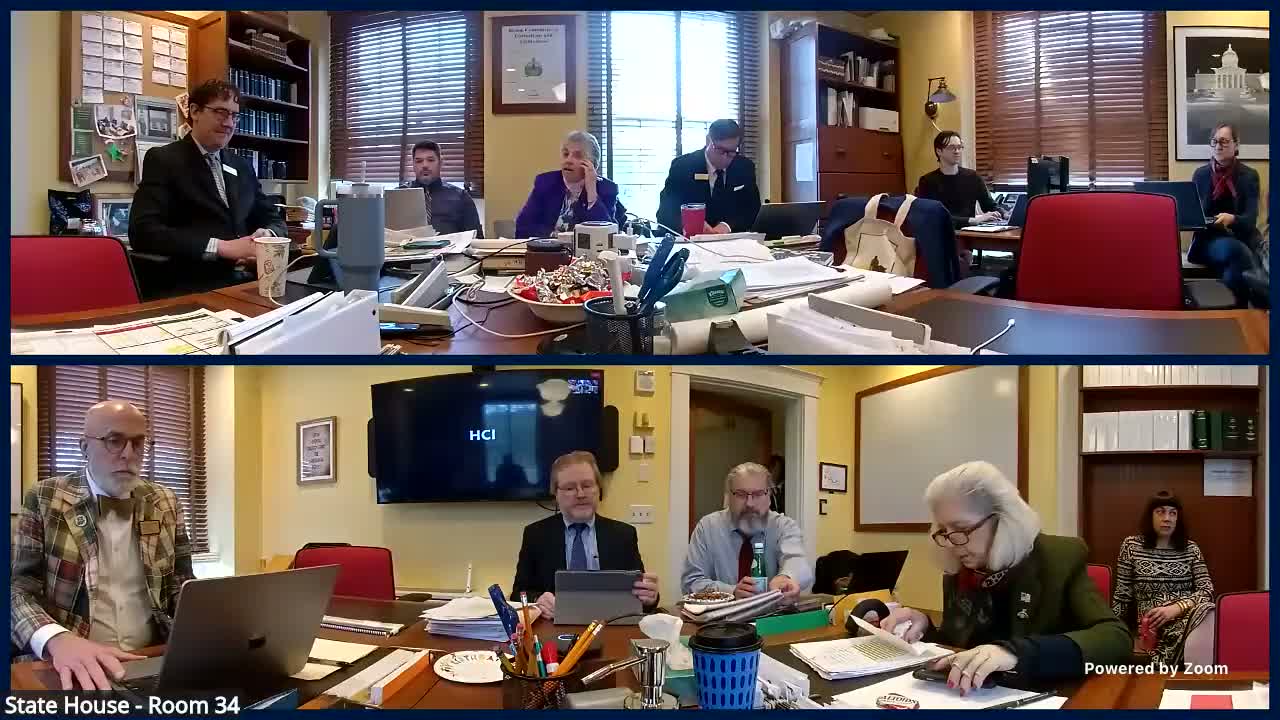
The House Corrections & Institutions Committee met May 13 to review draft 5.1 of S.193, a bill that would create a locked, secure forensic facility under the Agency of Human Services to provide competency restoration, evaluation, stabilization and treatment for certain defendants involved in the criminal justice system.
The proposal sets four eligibility criteria for transfer to the facility, including that a person has been found not competent to stand trial or is a defendant in a life‑maximum offense, and it distinguishes the competency track from the not‑guilty‑by‑reason‑of‑insanity (NGRI) track. Eric Fitzpatrick of the Office of Legislative Council told the committee, “The first thing is the person has to have been found not competent to stand trial,” and said the draft also limits the Department of Corrections’ role to perimeter security rather than day‑to‑day operation.
Why it matters: the bill would move clinical responsibility for competency restoration into a secure, AHS‑run program while raising questions about who supervises people released to the community, how often courts must review detentions and what populations should be excluded or routed to existing statutes such as Act 248.
Committee members focused on three operational issues: the criteria for admission, the timeline and standards for review, and which agency will supervise people once released. Fitzpatrick explained the draft sets a six‑month reevaluation clock after admission but allows the Agency of Human Services (AHS) medical director to request an earlier hearing if restoration appears imminent: “the person basically gets reevaluated every six months, and if the AHS medical director thinks the person is likely competent we can file for a reevaluation right then.”
The bill builds multiple off‑ramps. If a court finds a person not restorable, the draft provides a 60‑day hearing on dangerousness; if the court finds the person dangerous the statute allows continued commitment with periodic review, typically every 12 months. Fitzpatrick said the NGRI track is handled in parallel: people found not guilty by reason of insanity may remain at the facility while dangerous but may petition the court for release.
Several members urged clearer statutory text about supervision and custody. Representative Quatt said the committee should be cautious about allowing people with long histories under Act 248 into the facility, noting a four‑decade practice of community placements for that population and adding, “I am not sure that I’m totally comfortable with this at this point.” Other members and staff pressed for explicit language that courts consider whether a person would be dangerous absent community supervision before ordering continued detention.
Fitzpatrick said the draft anticipates AHS will designate the appropriate commissioner to monitor compliance for people released to the community and that monitoring authority will depend on an individual’s clinical needs. The draft also clarifies confidentiality, counsel rights and reporting responsibilities for the feasibility plan and rulemaking that the committee requested.
The measure limits DOC’s operational role: “Department of Corrections shall not play a role in the forensic facility’s operation, provision of services, internal security, or post‑release monitoring of any residence,” the draft states, with the narrow exception of perimeter security. The committee pressed for clearer language about which commissioner—mental health, health, or aging and independent living—would be responsible for specific supervision tasks.
Next steps: members asked AHS and staff to refine language on supervision, the court’s consideration of services‑absent risk, and the feasibility plan requested by the committee. The Chair said the bill may be considered quickly by the full House: "Martin is still planning on voting this out tomorrow," the Chair noted. The committee took a short break and planned to reconvene at 10:30 to continue work on its amendment.
Sources: committee discussion and staff presentation to the House Corrections & Institutions Committee reviewing draft 5.1 of S.193.
The proposal sets four eligibility criteria for transfer to the facility, including that a person has been found not competent to stand trial or is a defendant in a life‑maximum offense, and it distinguishes the competency track from the not‑guilty‑by‑reason‑of‑insanity (NGRI) track. Eric Fitzpatrick of the Office of Legislative Council told the committee, “The first thing is the person has to have been found not competent to stand trial,” and said the draft also limits the Department of Corrections’ role to perimeter security rather than day‑to‑day operation.
Why it matters: the bill would move clinical responsibility for competency restoration into a secure, AHS‑run program while raising questions about who supervises people released to the community, how often courts must review detentions and what populations should be excluded or routed to existing statutes such as Act 248.
Committee members focused on three operational issues: the criteria for admission, the timeline and standards for review, and which agency will supervise people once released. Fitzpatrick explained the draft sets a six‑month reevaluation clock after admission but allows the Agency of Human Services (AHS) medical director to request an earlier hearing if restoration appears imminent: “the person basically gets reevaluated every six months, and if the AHS medical director thinks the person is likely competent we can file for a reevaluation right then.”
The bill builds multiple off‑ramps. If a court finds a person not restorable, the draft provides a 60‑day hearing on dangerousness; if the court finds the person dangerous the statute allows continued commitment with periodic review, typically every 12 months. Fitzpatrick said the NGRI track is handled in parallel: people found not guilty by reason of insanity may remain at the facility while dangerous but may petition the court for release.
Several members urged clearer statutory text about supervision and custody. Representative Quatt said the committee should be cautious about allowing people with long histories under Act 248 into the facility, noting a four‑decade practice of community placements for that population and adding, “I am not sure that I’m totally comfortable with this at this point.” Other members and staff pressed for explicit language that courts consider whether a person would be dangerous absent community supervision before ordering continued detention.
Fitzpatrick said the draft anticipates AHS will designate the appropriate commissioner to monitor compliance for people released to the community and that monitoring authority will depend on an individual’s clinical needs. The draft also clarifies confidentiality, counsel rights and reporting responsibilities for the feasibility plan and rulemaking that the committee requested.
The measure limits DOC’s operational role: “Department of Corrections shall not play a role in the forensic facility’s operation, provision of services, internal security, or post‑release monitoring of any residence,” the draft states, with the narrow exception of perimeter security. The committee pressed for clearer language about which commissioner—mental health, health, or aging and independent living—would be responsible for specific supervision tasks.
Next steps: members asked AHS and staff to refine language on supervision, the court’s consideration of services‑absent risk, and the feasibility plan requested by the committee. The Chair said the bill may be considered quickly by the full House: "Martin is still planning on voting this out tomorrow," the Chair noted. The committee took a short break and planned to reconvene at 10:30 to continue work on its amendment.
Sources: committee discussion and staff presentation to the House Corrections & Institutions Committee reviewing draft 5.1 of S.193.
View the Full Meeting & All Its Details
This article offers just a summary. Unlock complete video, transcripts, and insights as a Founder Member.
✓
Watch full, unedited meeting videos
✓
Search every word spoken in unlimited transcripts
✓
AI summaries & real-time alerts (all government levels)
✓
Permanent access to expanding government content
30-day money-back guarantee
