Engineer: proposed Water District No.2 would cost about $3.3M; affordability question could trigger state review
May 13, 2026 | Rhinebeck, Dutchess County, New York
This article was created by AI summarizing key points discussed. AI makes mistakes, so for full details and context, please refer to the video of the full meeting. Please report any errors so we can fix them. Report an error »
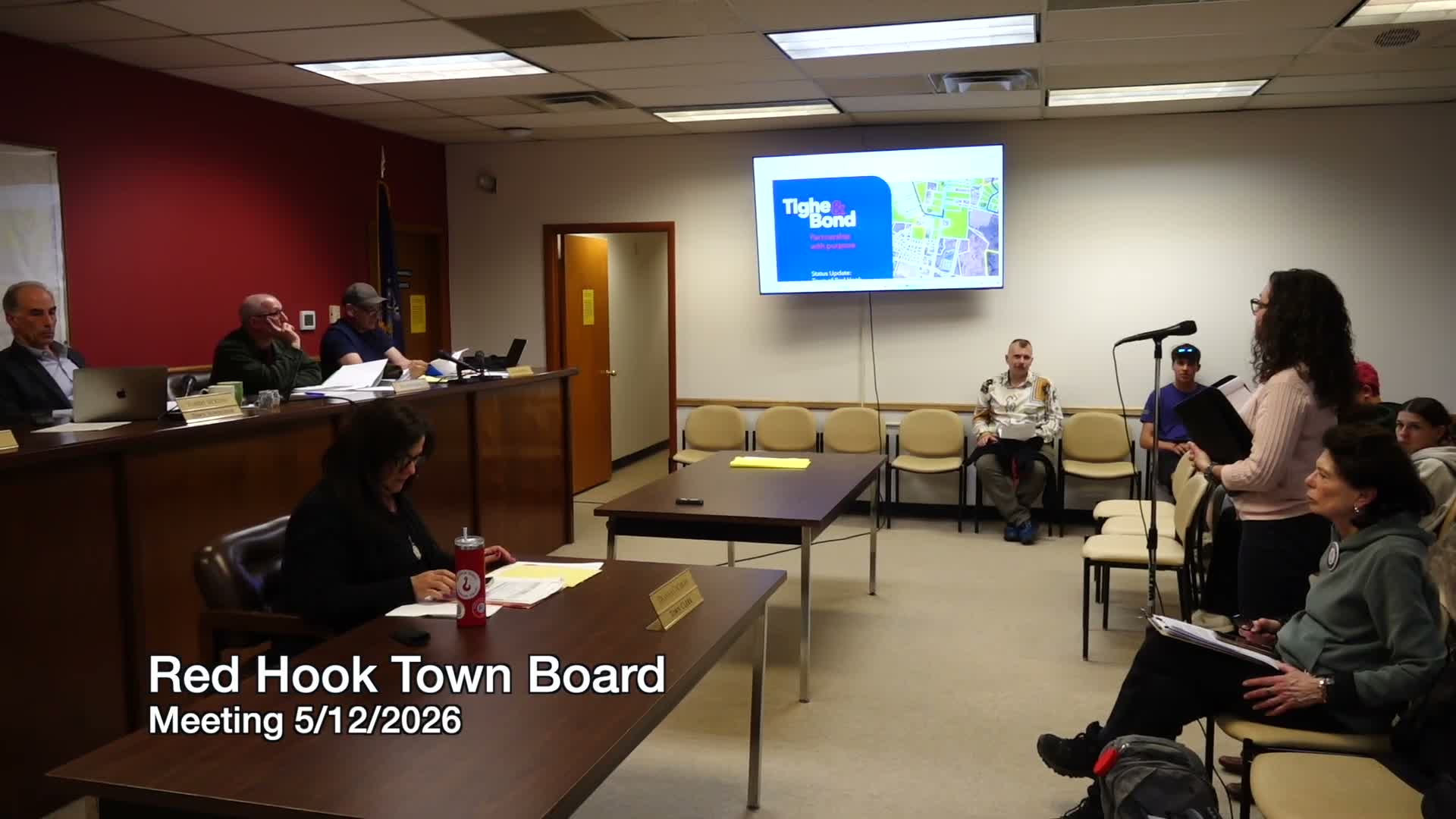
At the May 12 meeting the Red Hook Town Board received a preliminary engineering update on a proposed Water District No.2 in the Route 9 corridor and traditional neighborhood development zone.
Brandy Nelson, an engineer working with the town, presented map‑plan‑report slides showing the proposed district would include about 51 parcels, 25 of which already receive village water service. She said existing average day consumption for served parcels is about 10,320 gallons per day; additional parcels’ current use is estimated at roughly 18,210 gpd, for an average district demand of about 29,143 gpd. Nelson said full buildout under zoning could raise demand to about 115,130 gpd.
Nelson gave a preliminary capital estimate of about $3,300,000 to extend distribution mains and provide looping and asked the board to note an early affordability calculation: the district’s EDU-based capital assessment works out to about $984 per EDU per year, and the board’s combined estimate of base user charges plus EDU fees exceeded an affordability line cited in Nelson’s analysis ($1,213/year). “Based on these initial calculations... we are over the affordability line,” Nelson said, and noted that exceedance would likely require review by the New York State Office of the State Comptroller before district formation.
Board members discussed next steps: the village must confirm it can provide the supply (a "will-serve" letter) and the town should negotiate or clarify the village’s out‑of‑district rate structure to lower costs if possible. The board agreed it should revisit the report after additional conversations with the village and after bids and other data are in.
Why it matters: district formation determines who pays for capital improvements, who is eligible for grants or financing and whether the Office of the State Comptroller will review the proposal. If the board cannot bring projected user charges below the affordability threshold, the formation process will require additional state oversight and delay.
Sources: Brandy Nelson (engineer), Chair and several town board members (discussion).
Brandy Nelson, an engineer working with the town, presented map‑plan‑report slides showing the proposed district would include about 51 parcels, 25 of which already receive village water service. She said existing average day consumption for served parcels is about 10,320 gallons per day; additional parcels’ current use is estimated at roughly 18,210 gpd, for an average district demand of about 29,143 gpd. Nelson said full buildout under zoning could raise demand to about 115,130 gpd.
Nelson gave a preliminary capital estimate of about $3,300,000 to extend distribution mains and provide looping and asked the board to note an early affordability calculation: the district’s EDU-based capital assessment works out to about $984 per EDU per year, and the board’s combined estimate of base user charges plus EDU fees exceeded an affordability line cited in Nelson’s analysis ($1,213/year). “Based on these initial calculations... we are over the affordability line,” Nelson said, and noted that exceedance would likely require review by the New York State Office of the State Comptroller before district formation.
Board members discussed next steps: the village must confirm it can provide the supply (a "will-serve" letter) and the town should negotiate or clarify the village’s out‑of‑district rate structure to lower costs if possible. The board agreed it should revisit the report after additional conversations with the village and after bids and other data are in.
Why it matters: district formation determines who pays for capital improvements, who is eligible for grants or financing and whether the Office of the State Comptroller will review the proposal. If the board cannot bring projected user charges below the affordability threshold, the formation process will require additional state oversight and delay.
Sources: Brandy Nelson (engineer), Chair and several town board members (discussion).
View the Full Meeting & All Its Details
This article offers just a summary. Unlock complete video, transcripts, and insights as a Founder Member.
✓
Watch full, unedited meeting videos
✓
Search every word spoken in unlimited transcripts
✓
AI summaries & real-time alerts (all government levels)
✓
Permanent access to expanding government content
30-day money-back guarantee
