Committee previews H.710 changes adding PUC‑managed decommissioning fund for renewable projects
May 13, 2026 | Environment & Energy, HOUSE OF REPRESENTATIVES, Committees, Legislative , Vermont
This article was created by AI summarizing key points discussed. AI makes mistakes, so for full details and context, please refer to the video of the full meeting. Please report any errors so we can fix them. Report an error »
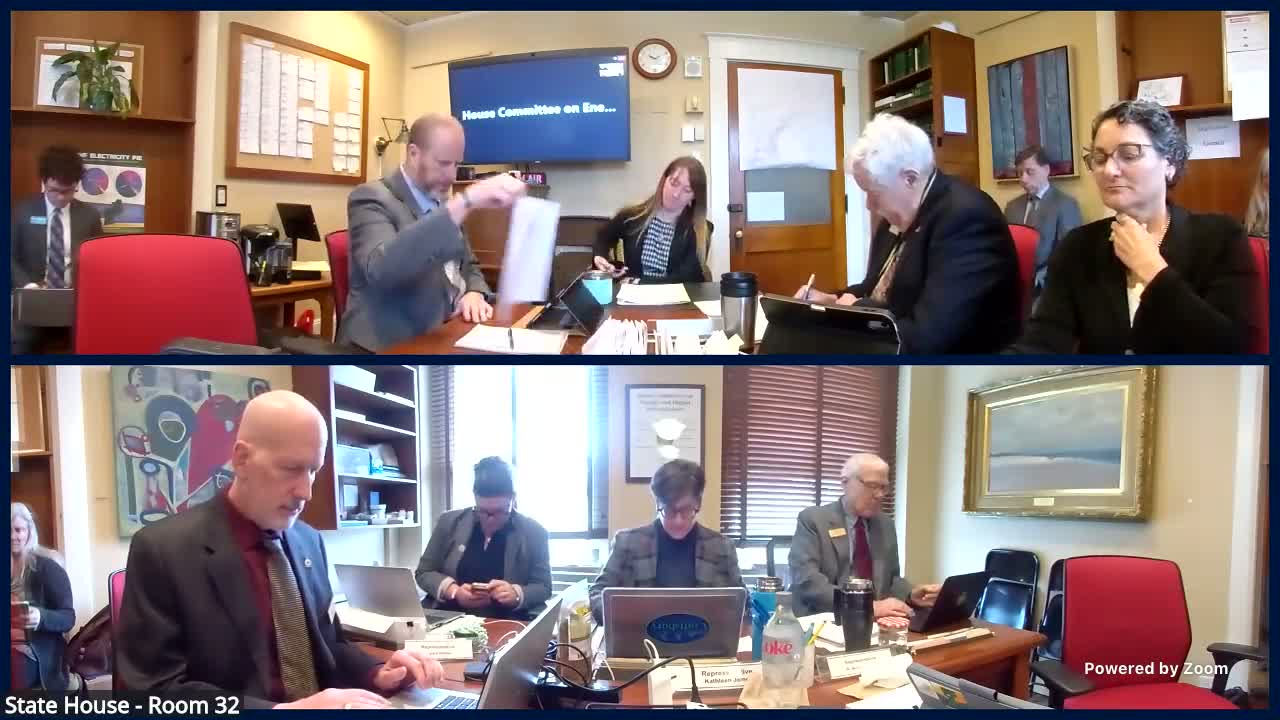
The House Energy and Digital Infrastructure Committee on May 13 reviewed draft changes to H.710 that would revise the statutory definition of a "single plant" for renewable energy programs and create a Public Utility Commission (PUC)‑administered decommissioning fund for electric generation and energy storage projects, with an effective date set in the draft for July 2026.
The draft now before the Senate is labeled 1.1 (May 5), Legislative Council told the committee, and it keeps the House's core single‑plant language while adding decommissioning provisions the PUC proposed. "They have added the decommissioning language from the PUC that the PUC pitched to your committee as well," Legislative Council said during the briefing.
Why it matters: the changes affect how colocated projects are treated under net‑metering and other renewable programs, and would shift the current system of project‑level surety instruments (letters of credit, bonds, escrows) to a centralized fund that the PUC would manage. Proponents say a pooled fund could lower upfront capital burdens on developers, reduce administrative work for regulators, and make repowering or recycling infrastructure more practicable; critics and some committee members pressed for details about actuarial methods, contingency planning and how the fund would be replenished after large draws.
Department and stakeholder views
Anne Margolis, deputy director of the Regulated Utility Planning Division at the Department of Public Service, told the committee the Department does not oppose the revised single‑plant definition. "We do not oppose the single plant language that's in H.710, either as it was passed out of the House or as it's currently being considered to be amended in the Senate," Margolis said, adding that the definition functions as a screening tool and that other policies could still encourage co‑location on preferred sites in the future.
Peter Sterling of Renewable Energy Vermont, one of the bill's stakeholder supporters, described the decommissioning proposal as a way to move from an expensive, project‑by‑project surety regime toward what he characterized as a pooled, actuarial model. "This goes from everybody parking money at the front ... to more of a health insurance model with an actuarial estimate," Sterling said, arguing that a centralized approach could make solar deployment cheaper and simplify PUC oversight.
PUC role and fund mechanics
PUC staff explained that the draft expands the commission's authority to hire outside experts and consultants to develop decommissioning plans and financial estimates and would authorize the PUC chair to collect and deposit decommissioning surety fees into a new special fund. "The commission shall deposit into the decommissioning fund each decommissioning surety fee it receives under this subchapter," Legislative Council read from the draft; the proposal also authorizes the PUC to disburse fund money to third parties that take on decommissioning when a certificate‑of‑public‑good (CPG) holder cannot be found or will not act.
The PUC and committee members acknowledged open questions about implementation. PUC representative Rick Faver said the commission would open a proceeding to develop a funding formula and rules and emphasized the practical benefit of a centralized fund: "Right now, we get surety bonds ... and those are difficult to acquire and to maintain over the life of the project. This would be a much easier and less expensive process for everyone." He added that the PUC has not historically handled many decommissioning actions — "we haven't had any, so far" — but that the fund would be insurance against future defaults or end‑of‑life site restorations.
Committee questions focused on scope and data gaps. Members asked whether the fund applies only to solar (it would apply to electric generation and storage per the draft), how actuarial estimates will account for salvage value and recycling markets, and whether there will be mechanisms to replenish the fund if a single decommissioning job draws down a large share of assets. PUC staff said those issues would be addressed in the stakeholder proceeding that sets the funding formula, contingencies and rules.
What the bill would create and how it would be used
Draft 1.1 would: (1) revise the statutory screening definition of "single plant" used in net‑metering and standard‑offer programs; (2) add PUC authority to hire experts and recover costs by billing applicants; and (3) create an "electric generation and energy storage facility decommissioning fund," administered by the PUC chair, funded by decommissioning surety fees and other decommissioning financial instruments. The draft includes definitions for "decommissioning," "decommissioning surety fee," and limits on fund use, and directs the commission to provide an annual accounting to the state treasurer.
Next steps
Legislative Council and PUC staff warned the committee the bill's path could include additional referrals (including Ways and Means if new fee authority is needed). Committee members asked staff to prepare side‑by‑side language and to arrange further testimony — particularly from the Department of Public Service and experts on energy storage decommissioning — if H.710 returns from the Senate. Chair Kathleen James said the committee will monitor the bill and reconvene for further previews as needed; the committee adjourned after scheduling a return to discuss high‑efficiency biomass, H.753 and data centers the following morning.
(Reporting note: statements and quotations are drawn from committee briefing and testimony on draft H.710, transcript May 13; the draft referenced repeatedly in testimony is "1.1 dated May 5." )
The draft now before the Senate is labeled 1.1 (May 5), Legislative Council told the committee, and it keeps the House's core single‑plant language while adding decommissioning provisions the PUC proposed. "They have added the decommissioning language from the PUC that the PUC pitched to your committee as well," Legislative Council said during the briefing.
Why it matters: the changes affect how colocated projects are treated under net‑metering and other renewable programs, and would shift the current system of project‑level surety instruments (letters of credit, bonds, escrows) to a centralized fund that the PUC would manage. Proponents say a pooled fund could lower upfront capital burdens on developers, reduce administrative work for regulators, and make repowering or recycling infrastructure more practicable; critics and some committee members pressed for details about actuarial methods, contingency planning and how the fund would be replenished after large draws.
Department and stakeholder views
Anne Margolis, deputy director of the Regulated Utility Planning Division at the Department of Public Service, told the committee the Department does not oppose the revised single‑plant definition. "We do not oppose the single plant language that's in H.710, either as it was passed out of the House or as it's currently being considered to be amended in the Senate," Margolis said, adding that the definition functions as a screening tool and that other policies could still encourage co‑location on preferred sites in the future.
Peter Sterling of Renewable Energy Vermont, one of the bill's stakeholder supporters, described the decommissioning proposal as a way to move from an expensive, project‑by‑project surety regime toward what he characterized as a pooled, actuarial model. "This goes from everybody parking money at the front ... to more of a health insurance model with an actuarial estimate," Sterling said, arguing that a centralized approach could make solar deployment cheaper and simplify PUC oversight.
PUC role and fund mechanics
PUC staff explained that the draft expands the commission's authority to hire outside experts and consultants to develop decommissioning plans and financial estimates and would authorize the PUC chair to collect and deposit decommissioning surety fees into a new special fund. "The commission shall deposit into the decommissioning fund each decommissioning surety fee it receives under this subchapter," Legislative Council read from the draft; the proposal also authorizes the PUC to disburse fund money to third parties that take on decommissioning when a certificate‑of‑public‑good (CPG) holder cannot be found or will not act.
The PUC and committee members acknowledged open questions about implementation. PUC representative Rick Faver said the commission would open a proceeding to develop a funding formula and rules and emphasized the practical benefit of a centralized fund: "Right now, we get surety bonds ... and those are difficult to acquire and to maintain over the life of the project. This would be a much easier and less expensive process for everyone." He added that the PUC has not historically handled many decommissioning actions — "we haven't had any, so far" — but that the fund would be insurance against future defaults or end‑of‑life site restorations.
Committee questions focused on scope and data gaps. Members asked whether the fund applies only to solar (it would apply to electric generation and storage per the draft), how actuarial estimates will account for salvage value and recycling markets, and whether there will be mechanisms to replenish the fund if a single decommissioning job draws down a large share of assets. PUC staff said those issues would be addressed in the stakeholder proceeding that sets the funding formula, contingencies and rules.
What the bill would create and how it would be used
Draft 1.1 would: (1) revise the statutory screening definition of "single plant" used in net‑metering and standard‑offer programs; (2) add PUC authority to hire experts and recover costs by billing applicants; and (3) create an "electric generation and energy storage facility decommissioning fund," administered by the PUC chair, funded by decommissioning surety fees and other decommissioning financial instruments. The draft includes definitions for "decommissioning," "decommissioning surety fee," and limits on fund use, and directs the commission to provide an annual accounting to the state treasurer.
Next steps
Legislative Council and PUC staff warned the committee the bill's path could include additional referrals (including Ways and Means if new fee authority is needed). Committee members asked staff to prepare side‑by‑side language and to arrange further testimony — particularly from the Department of Public Service and experts on energy storage decommissioning — if H.710 returns from the Senate. Chair Kathleen James said the committee will monitor the bill and reconvene for further previews as needed; the committee adjourned after scheduling a return to discuss high‑efficiency biomass, H.753 and data centers the following morning.
(Reporting note: statements and quotations are drawn from committee briefing and testimony on draft H.710, transcript May 13; the draft referenced repeatedly in testimony is "1.1 dated May 5." )
Don't Miss a Word: See the Full Meeting!
Go beyond summaries. Unlock every video, transcript, and key insight with a Founder Membership.
✓
Get instant access to full meeting videos
✓
Search and clip any phrase from complete transcripts
✓
Receive AI-powered summaries & custom alerts
✓
Enjoy lifetime, unrestricted access to government data
30-day money-back guarantee
