Schools ask county for $2.5 million in supplements and outline $1.7M weapon‑detection purchase as SRO grant sunsets
May 13, 2026 | Nash County Public Schools, School Districts, North Carolina
This article was created by AI summarizing key points discussed. AI makes mistakes, so for full details and context, please refer to the video of the full meeting. Please report any errors so we can fix them. Report an error »
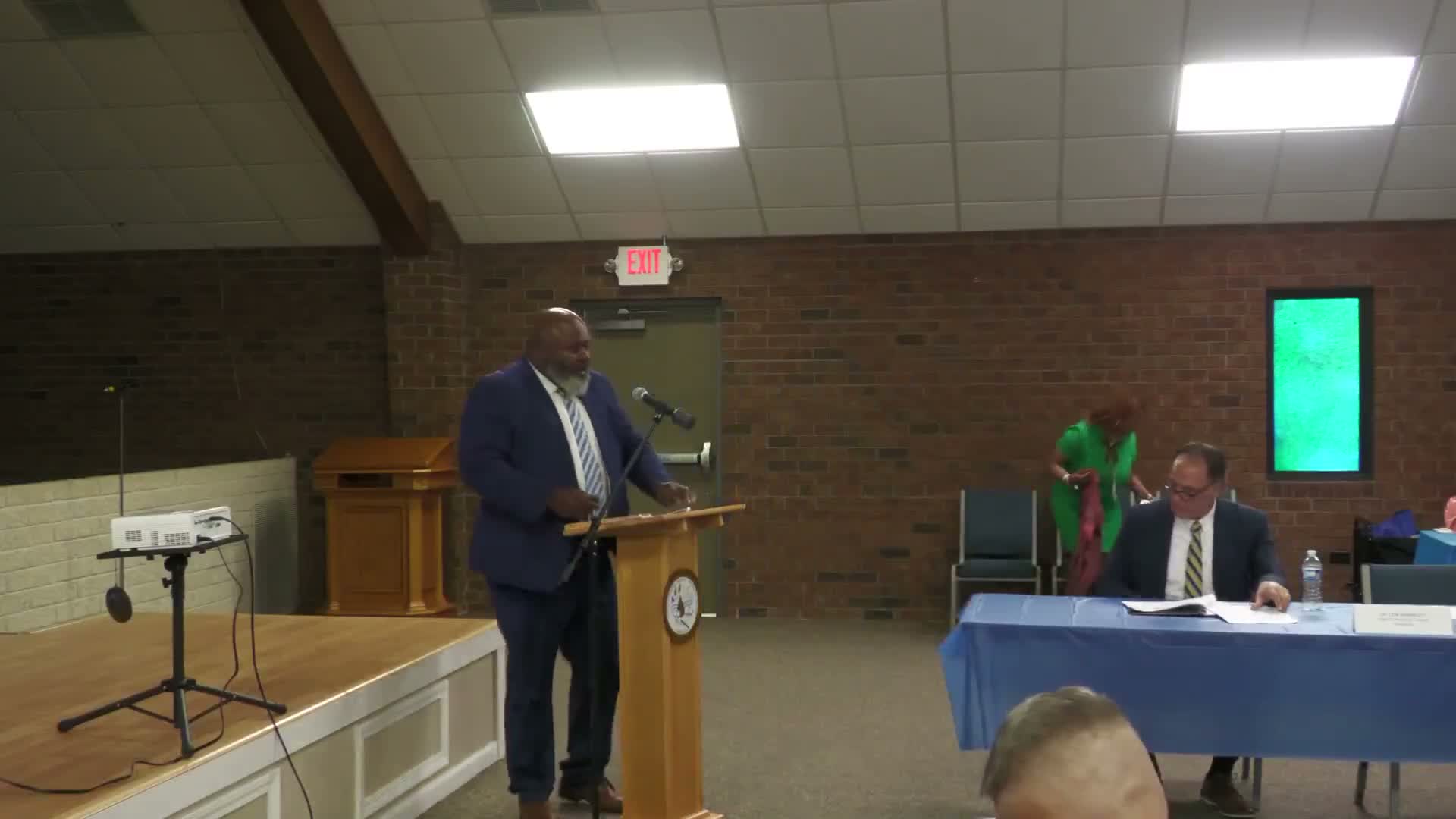
Nash County Public Schools leaders presented a FY27 funding request and security update to county commissioners on May 12, asking the county to consider funding supplements and safety upgrades amid falling state and local revenue.
Superintendent Dr. Steven Ellis opened the district's presentation and said the request would address shortfalls and support ongoing academic and safety programs. "Your investment in our schools directly impacts the success of our students, the strength of our workforce, and the future of our community," he said.
Melissa Dancy Smith, assistant superintendent for academic services, reported academic gains: roughly 74% of schools met or exceeded growth in 24–25 and the district posted its highest four‑year graduation rate in recent history (about 87.7%). She described the district's advanced teaching roles (ATR) program, funded initially by a roughly $1.3 million grant, as a key driver of instructional improvement.
On safety and staffing, Dr. Ferro said the district currently employs 23 full‑time school resource officers (12 elementary, four middle, seven high) and described three funding sources that pay for SROs: the county's recurring local allocation ($500,000 for elementary SROs), state at‑risk (o69) funds, and a Center for Safer Schools grant that is in a sunset year for the district. "This grant ... is a sunset year," he said, adding the district has applied for re‑award but does not yet know the amount.
Dr. Ferro also detailed the district's investment in EVAL weapon‑detection machines. "There are 24 total machines in Nash County Public Schools," he said, noting elementary machines were purchased outright while earlier middle/high machines were leased. He warned that when the leases expire in 26–27 the district will likely need to buy ~12 machines; "if the cost remains about what it was previously, that's somewhere around $1,700,000." He recommended planning for that capital need.
District finance staff outlined revenue pressure: state funding will decline because ADM (average daily membership) is down by 224 students, local revenue is reduced, and low‑wealth and at‑risk allocations have fallen (the latter down about $500,000 even as SRO counts rose). The district said these changes translate into fewer earned teacher positions and smaller school administrator allocations.
Budget presenter (speaker 12) summarized the FY27 ask at roughly $2.5 million, including: a 2% (about $726,000) or 4% (about $1.4 million) option for classified‑staff supplements; a 1% teacher supplement (~$654,000); continuation of a $500,000 retention bonus; approximately $267,000 to complete safety locks at three middle schools; and $450,000 to continue ATR staffing in non‑Title I schools. The presenter said fund balance use will be scaled back from prior years to fit within the county appropriation.
Commissioners requested comparative classified‑supplement data from neighboring districts and clarification on the 2% vs 4% totals; presenters agreed to provide the requested spreadsheets. The school board adjourned its portion and the commissioners adjourned the joint meeting without taking votes on the funding requests at that session.
Because some funding streams are declining while security and salary costs are rising, district leaders said they will return with additional detail and figures for commissioners to consider during the county budget process.
Superintendent Dr. Steven Ellis opened the district's presentation and said the request would address shortfalls and support ongoing academic and safety programs. "Your investment in our schools directly impacts the success of our students, the strength of our workforce, and the future of our community," he said.
Melissa Dancy Smith, assistant superintendent for academic services, reported academic gains: roughly 74% of schools met or exceeded growth in 24–25 and the district posted its highest four‑year graduation rate in recent history (about 87.7%). She described the district's advanced teaching roles (ATR) program, funded initially by a roughly $1.3 million grant, as a key driver of instructional improvement.
On safety and staffing, Dr. Ferro said the district currently employs 23 full‑time school resource officers (12 elementary, four middle, seven high) and described three funding sources that pay for SROs: the county's recurring local allocation ($500,000 for elementary SROs), state at‑risk (o69) funds, and a Center for Safer Schools grant that is in a sunset year for the district. "This grant ... is a sunset year," he said, adding the district has applied for re‑award but does not yet know the amount.
Dr. Ferro also detailed the district's investment in EVAL weapon‑detection machines. "There are 24 total machines in Nash County Public Schools," he said, noting elementary machines were purchased outright while earlier middle/high machines were leased. He warned that when the leases expire in 26–27 the district will likely need to buy ~12 machines; "if the cost remains about what it was previously, that's somewhere around $1,700,000." He recommended planning for that capital need.
District finance staff outlined revenue pressure: state funding will decline because ADM (average daily membership) is down by 224 students, local revenue is reduced, and low‑wealth and at‑risk allocations have fallen (the latter down about $500,000 even as SRO counts rose). The district said these changes translate into fewer earned teacher positions and smaller school administrator allocations.
Budget presenter (speaker 12) summarized the FY27 ask at roughly $2.5 million, including: a 2% (about $726,000) or 4% (about $1.4 million) option for classified‑staff supplements; a 1% teacher supplement (~$654,000); continuation of a $500,000 retention bonus; approximately $267,000 to complete safety locks at three middle schools; and $450,000 to continue ATR staffing in non‑Title I schools. The presenter said fund balance use will be scaled back from prior years to fit within the county appropriation.
Commissioners requested comparative classified‑supplement data from neighboring districts and clarification on the 2% vs 4% totals; presenters agreed to provide the requested spreadsheets. The school board adjourned its portion and the commissioners adjourned the joint meeting without taking votes on the funding requests at that session.
Because some funding streams are declining while security and salary costs are rising, district leaders said they will return with additional detail and figures for commissioners to consider during the county budget process.
View the Full Meeting & All Its Details
This article offers just a summary. Unlock complete video, transcripts, and insights as a Founder Member.
✓
Watch full, unedited meeting videos
✓
Search every word spoken in unlimited transcripts
✓
AI summaries & real-time alerts (all government levels)
✓
Permanent access to expanding government content
30-day money-back guarantee
