Oklahoma commerce director unveils industry-focused strategy centered on aerospace, energy and agribusiness
May 13, 2026 | 2026 Legislature OK, Oklahoma
This article was created by AI summarizing key points discussed. AI makes mistakes, so for full details and context, please refer to the video of the full meeting. Please report any errors so we can fix them. Report an error »
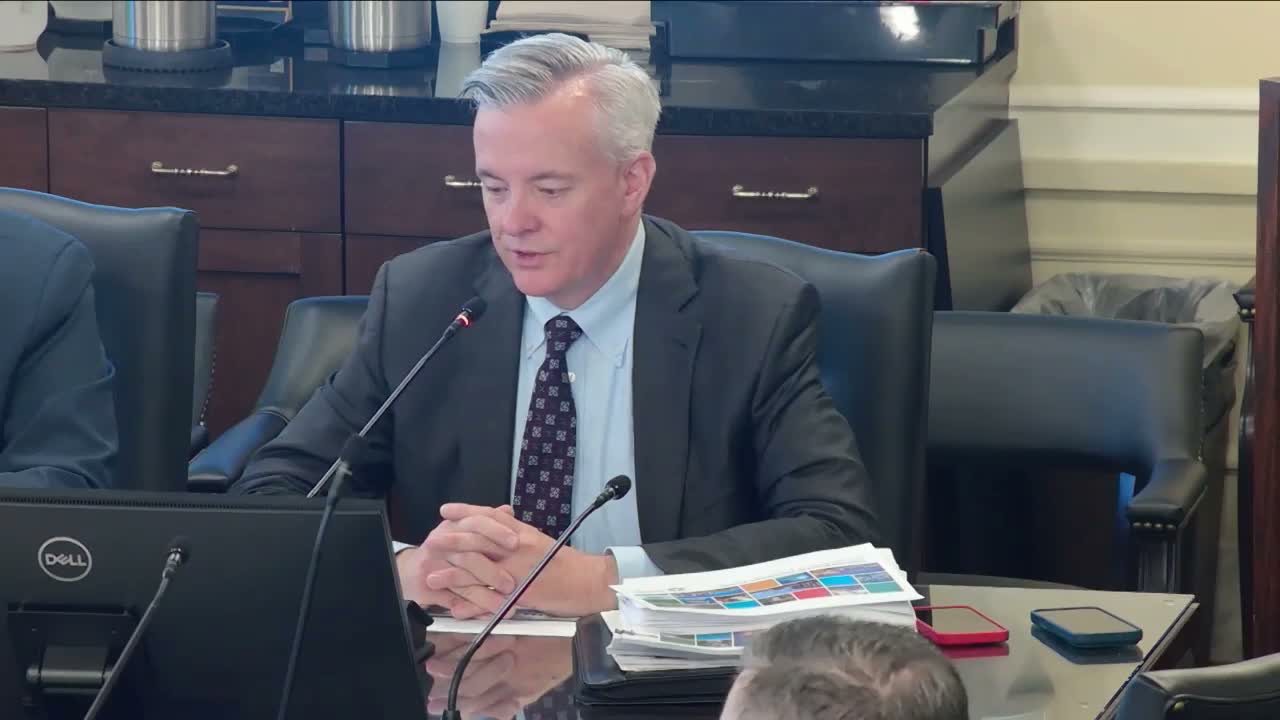
Director Budd, director of the Oklahoma Department of Commerce, presented a high-level strategic plan to the lead committee, saying the department will prioritize industries where the state has a "right to win" and then build operational plans, metrics and accountabilities to support those targets.
Budd told legislators that Oklahoma's logistical advantages—intersecting interstates, inland ports, rail and "132 public use airports"—and low operating costs give the state a competitive edge. "We are the number 1 lowest cost of doing business state," Budd said, and later emphasized resource limits: "We're only 4,000,000 people in our state. We only have a 120 people in commerce," arguing that focus is necessary to win projects.
Why it matters: The presentation lays out which sectors the department will actively pursue, which it will be prepared to respond to, and which are longer-term plays. Budd identified proactive targets including aerospace and defense, energy, agribusiness and manufacturing; responsive areas include transportation logistics and automotive; long-term positioning includes bioscience and broader IT. He said a statewide marketing campaign and stronger research and data capabilities will be central to changing external perceptions and winning site selectors.
Legislators pushed on workforce and infrastructure. Representative Kane asked whether Oklahoma's career-technical system and other education partners meet industry needs; Budd praised career tech as a major asset but said aligning funding and programs across multiple agencies (DHS, DRS, common ed and higher ed) remains a challenge. On infrastructure, agency staff described a P3 program that captures state withholding taxes to fund community infrastructure projects and said that recent work has helped connect industrial parks to rail and utilities.
On incentives, the committee heard that the Incentive Evaluation Commission reviews Oklahoma's packages against other states and that Commerce will evaluate total cost of operations (labor, energy, land) in addition to incentive amounts when competing for projects. An executive-office official added that closing often begins "on day 1" and that getting the right people at the table early influences whether a project chooses Oklahoma.
Representative Osborne raised the earlier restructuring bill and asked if Commerce is now focused on core mission activities. Budd said statutory mandates limit immediate reassignment of programs but suggested isolating teams and using tools to streamline non-core responsibilities while the legislature considers long-term changes.
Budd also highlighted regional coordination and tribal partnerships, saying the department divided the state into seven regions and will work with local economic development organizations, tribal nations, universities and workforce partners to tailor approaches. He named a new head of the global team, Mark Wells, who will help target countries aligned with Oklahoma's industries.
The department did not present formal motions or seek committee votes during the briefing. Budd closed by saying the slides were a strategic overview and the department will return to the legislature with detailed operational plans and metrics in the next session: "When you come back into session, we'll have all of that ready for you."
Budd told legislators that Oklahoma's logistical advantages—intersecting interstates, inland ports, rail and "132 public use airports"—and low operating costs give the state a competitive edge. "We are the number 1 lowest cost of doing business state," Budd said, and later emphasized resource limits: "We're only 4,000,000 people in our state. We only have a 120 people in commerce," arguing that focus is necessary to win projects.
Why it matters: The presentation lays out which sectors the department will actively pursue, which it will be prepared to respond to, and which are longer-term plays. Budd identified proactive targets including aerospace and defense, energy, agribusiness and manufacturing; responsive areas include transportation logistics and automotive; long-term positioning includes bioscience and broader IT. He said a statewide marketing campaign and stronger research and data capabilities will be central to changing external perceptions and winning site selectors.
Legislators pushed on workforce and infrastructure. Representative Kane asked whether Oklahoma's career-technical system and other education partners meet industry needs; Budd praised career tech as a major asset but said aligning funding and programs across multiple agencies (DHS, DRS, common ed and higher ed) remains a challenge. On infrastructure, agency staff described a P3 program that captures state withholding taxes to fund community infrastructure projects and said that recent work has helped connect industrial parks to rail and utilities.
On incentives, the committee heard that the Incentive Evaluation Commission reviews Oklahoma's packages against other states and that Commerce will evaluate total cost of operations (labor, energy, land) in addition to incentive amounts when competing for projects. An executive-office official added that closing often begins "on day 1" and that getting the right people at the table early influences whether a project chooses Oklahoma.
Representative Osborne raised the earlier restructuring bill and asked if Commerce is now focused on core mission activities. Budd said statutory mandates limit immediate reassignment of programs but suggested isolating teams and using tools to streamline non-core responsibilities while the legislature considers long-term changes.
Budd also highlighted regional coordination and tribal partnerships, saying the department divided the state into seven regions and will work with local economic development organizations, tribal nations, universities and workforce partners to tailor approaches. He named a new head of the global team, Mark Wells, who will help target countries aligned with Oklahoma's industries.
The department did not present formal motions or seek committee votes during the briefing. Budd closed by saying the slides were a strategic overview and the department will return to the legislature with detailed operational plans and metrics in the next session: "When you come back into session, we'll have all of that ready for you."
View the Full Meeting & All Its Details
This article offers just a summary. Unlock complete video, transcripts, and insights as a Founder Member.
✓
Watch full, unedited meeting videos
✓
Search every word spoken in unlimited transcripts
✓
AI summaries & real-time alerts (all government levels)
✓
Permanent access to expanding government content
30-day money-back guarantee
