Committee debate centers on K–3 literacy: proposal for $350,000 in ESPs vs. expanding dual‑language program
May 13, 2026 | North Wasco County SD 21, School Districts, Oregon
This article was created by AI summarizing key points discussed. AI makes mistakes, so for full details and context, please refer to the video of the full meeting. Please report any errors so we can fix them. Report an error »
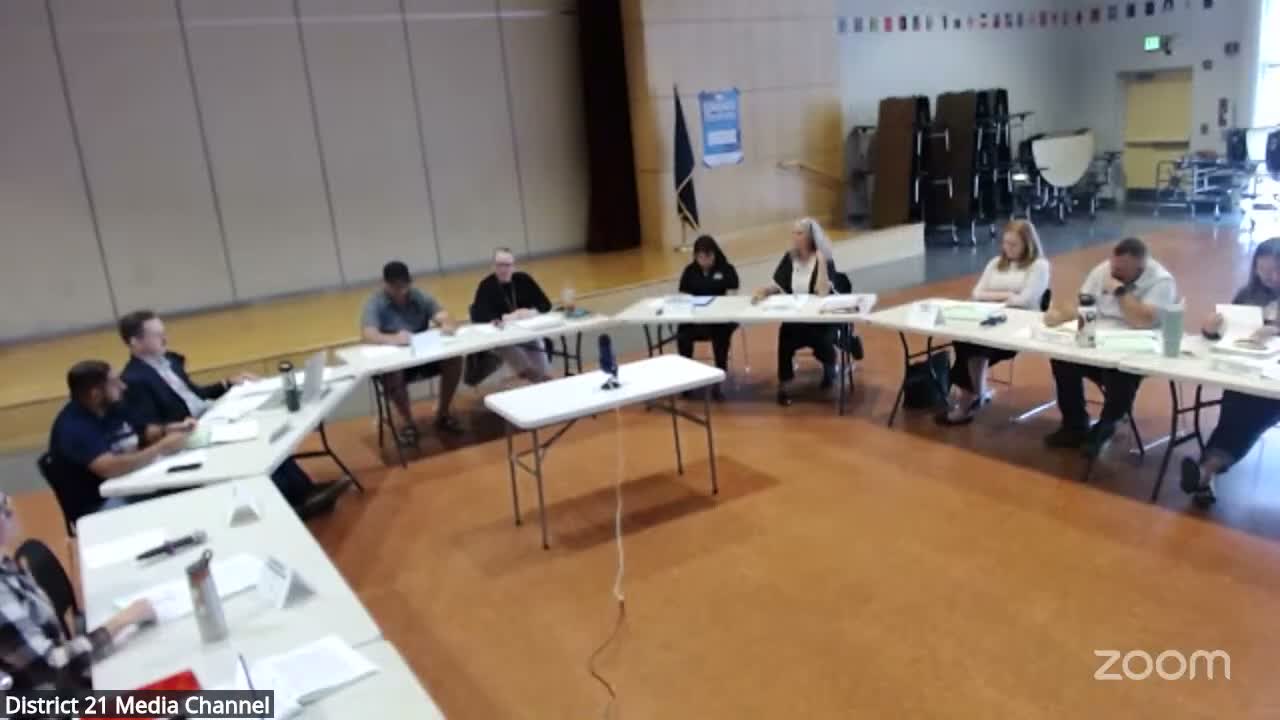
Committee discussion during the North Wasco County School District 21 budget review focused on how limited funds should be prioritized to improve literacy and student outcomes.
A committee member urged the district to target K–3 literacy, citing district data that 644 third‑grade students are below grade level (411 one grade below, 205 two grades below, 138 three or more grades below). The member proposed allocating about $350,000 to place an education support professional (ESP) in each third‑grade classroom to provide intensive in‑class supports. “We have to do something to help these teachers out... I think K through 3 should be a target,” the committee member said.
Staff and other committee members responded that while ESPs are desirable, the proposed budget is the second half of a biennium and is relatively constrained. An administrator on the leadership team said, “I don't think any of us on the leadership team disagree that we would love to have ESPs in every single classroom. Unfortunately, we have a pretty lean budget.”
Members also discussed the district’s Dual Language Immersion (DLI) program. Staff reported that about 120 families in the DLI program want it extended beyond fifth grade; some committee members asked whether expanding DLI to sixth grade should take priority over adding ESPs for K–3 given resource tradeoffs and the additional costs (for example, busing or shared specials) that expansion could entail.
One committee member suggested such programmatic choices may exceed the budget committee's scope and recommended moving broader policy and prioritization discussions to a board work session or full board meeting. No reallocation was made at this meeting; the committee adopted the proposed budget as presented and staff said they would continue program- and grant-specific planning and advocacy with legislators as needed.
The exchange highlighted a common budget tradeoff: intensive, targeted interventions for students who are behind versus investments that maintain or expand choice programs with active family demand.
A committee member urged the district to target K–3 literacy, citing district data that 644 third‑grade students are below grade level (411 one grade below, 205 two grades below, 138 three or more grades below). The member proposed allocating about $350,000 to place an education support professional (ESP) in each third‑grade classroom to provide intensive in‑class supports. “We have to do something to help these teachers out... I think K through 3 should be a target,” the committee member said.
Staff and other committee members responded that while ESPs are desirable, the proposed budget is the second half of a biennium and is relatively constrained. An administrator on the leadership team said, “I don't think any of us on the leadership team disagree that we would love to have ESPs in every single classroom. Unfortunately, we have a pretty lean budget.”
Members also discussed the district’s Dual Language Immersion (DLI) program. Staff reported that about 120 families in the DLI program want it extended beyond fifth grade; some committee members asked whether expanding DLI to sixth grade should take priority over adding ESPs for K–3 given resource tradeoffs and the additional costs (for example, busing or shared specials) that expansion could entail.
One committee member suggested such programmatic choices may exceed the budget committee's scope and recommended moving broader policy and prioritization discussions to a board work session or full board meeting. No reallocation was made at this meeting; the committee adopted the proposed budget as presented and staff said they would continue program- and grant-specific planning and advocacy with legislators as needed.
The exchange highlighted a common budget tradeoff: intensive, targeted interventions for students who are behind versus investments that maintain or expand choice programs with active family demand.
View the Full Meeting & All Its Details
This article offers just a summary. Unlock complete video, transcripts, and insights as a Founder Member.
✓
Watch full, unedited meeting videos
✓
Search every word spoken in unlimited transcripts
✓
AI summaries & real-time alerts (all government levels)
✓
Permanent access to expanding government content
30-day money-back guarantee
