Assembly subcommittee presses DMV on plan to join national Real ID state-to-state system amid privacy concerns
May 13, 2026 | California State Assembly, House, Legislative, California
This article was created by AI summarizing key points discussed. AI makes mistakes, so for full details and context, please refer to the video of the full meeting. Please report any errors so we can fix them. Report an error »
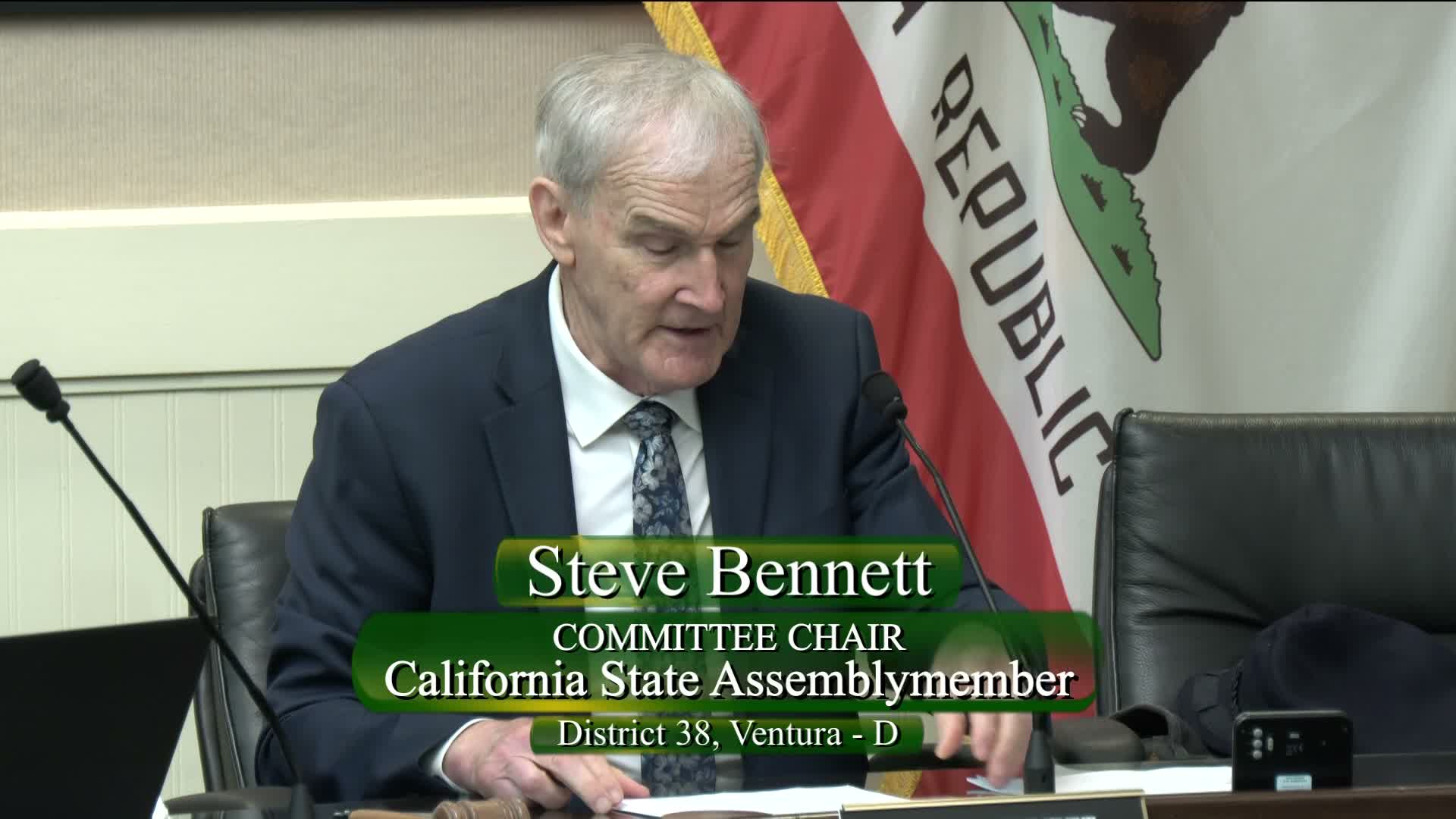
California Department of Motor Vehicles officials defended a proposal to join the national "state-to-state" verification system required by the federal Real ID Act, telling an Assembly Budget Subcommittee that limited identity data would be uploaded and that measures exist to detect and respond to abusive access.
"We are loading first name, last name, date of birth, [and] the last five of the Social Security number into this shared system," Steve Gordon, director at the DMV, said, describing the pointer-based system used by other jurisdictions. He emphasized the system only points to a record and that detailed driver-history data are held by the issuing state and returned only on a qualified request.
The Legislative Analyst's Office said the state faces a difficult choice: the alternative to participation would effectively require Californians to use passports for domestic air travel and access to federal facilities, a move it characterized as impractical and inequitable. "The option of forcing Californians to have to have a passport in order to fly domestically doesn't seem like an equitable or practical solution," Rachel Ehlers of the LAO said.
Committee members pressed DMV and administration officials on who can query the system, whether bulk or automated queries are possible, what minimal data are required for a match, how California would detect anomalous access by another jurisdiction, and what remedies exist for misuse. DMV staff said the minimum query is name plus date of birth, that the system is intended to be transaction-based (an in-person license application triggers a query), and that states and AMVA/AMBA operate oversight and anomaly-detection; California would be able to see when another jurisdiction requests a driver-history record.
Gordon described technical safeguards: encryption in transit and at rest, access controls, training for users and an ability to sever a jurisdiction's connectivity if it violates agreements. "If someone is making anomalous queries we would have visibility to that," he said, adding the state could refuse to supply the full driver-history record and could ask AMVA/AMBA to block a first transaction.
Still, immigrant-rights groups and civil-rights organizations told the committee they were not reassured. Dozens of public commenters said uploading identifiers for 80-60 license holders and other immigrant groups could erode trust and place vulnerable residents at risk. ‘‘California has set the nation in protecting immigrant residents. Entering a state-to-state data-sharing agreement without clear and strong guardrails threatens to break that promise,’’ said Danila Rodriguez of Immigrants Rising during public comment.
Committee members asked specific follow-ups the DMV agreed to return in writing, including: what additional elements AMVA/AMBA requires beyond federal rules, whether California will receive automated alerts when multiple records or bulk batches are requested, the legal and contractual remedies available if a jurisdiction abuses access, and whether the state can require notification to Californians when their records are accessed. DMV officials said some notifications occur in the standard in-person use case but that there is no automatic text message system; they committed to follow up on penalties and notification procedures.
Next steps: the subcommittee did not vote on the funding request at the hearing; committee members asked the administration and DMV to provide written clarifications and to consider statutory or trailer-bill guardrails tied to any appropriation. The Department of Finance, DMV and LAO will provide follow-up answers and the committee will weigh them before final action.
"We are loading first name, last name, date of birth, [and] the last five of the Social Security number into this shared system," Steve Gordon, director at the DMV, said, describing the pointer-based system used by other jurisdictions. He emphasized the system only points to a record and that detailed driver-history data are held by the issuing state and returned only on a qualified request.
The Legislative Analyst's Office said the state faces a difficult choice: the alternative to participation would effectively require Californians to use passports for domestic air travel and access to federal facilities, a move it characterized as impractical and inequitable. "The option of forcing Californians to have to have a passport in order to fly domestically doesn't seem like an equitable or practical solution," Rachel Ehlers of the LAO said.
Committee members pressed DMV and administration officials on who can query the system, whether bulk or automated queries are possible, what minimal data are required for a match, how California would detect anomalous access by another jurisdiction, and what remedies exist for misuse. DMV staff said the minimum query is name plus date of birth, that the system is intended to be transaction-based (an in-person license application triggers a query), and that states and AMVA/AMBA operate oversight and anomaly-detection; California would be able to see when another jurisdiction requests a driver-history record.
Gordon described technical safeguards: encryption in transit and at rest, access controls, training for users and an ability to sever a jurisdiction's connectivity if it violates agreements. "If someone is making anomalous queries we would have visibility to that," he said, adding the state could refuse to supply the full driver-history record and could ask AMVA/AMBA to block a first transaction.
Still, immigrant-rights groups and civil-rights organizations told the committee they were not reassured. Dozens of public commenters said uploading identifiers for 80-60 license holders and other immigrant groups could erode trust and place vulnerable residents at risk. ‘‘California has set the nation in protecting immigrant residents. Entering a state-to-state data-sharing agreement without clear and strong guardrails threatens to break that promise,’’ said Danila Rodriguez of Immigrants Rising during public comment.
Committee members asked specific follow-ups the DMV agreed to return in writing, including: what additional elements AMVA/AMBA requires beyond federal rules, whether California will receive automated alerts when multiple records or bulk batches are requested, the legal and contractual remedies available if a jurisdiction abuses access, and whether the state can require notification to Californians when their records are accessed. DMV officials said some notifications occur in the standard in-person use case but that there is no automatic text message system; they committed to follow up on penalties and notification procedures.
Next steps: the subcommittee did not vote on the funding request at the hearing; committee members asked the administration and DMV to provide written clarifications and to consider statutory or trailer-bill guardrails tied to any appropriation. The Department of Finance, DMV and LAO will provide follow-up answers and the committee will weigh them before final action.
View the Full Meeting & All Its Details
This article offers just a summary. Unlock complete video, transcripts, and insights as a Founder Member.
✓
Watch full, unedited meeting videos
✓
Search every word spoken in unlimited transcripts
✓
AI summaries & real-time alerts (all government levels)
✓
Permanent access to expanding government content
30-day money-back guarantee
