DMV says vehicle-registration piece of DXP on revised schedule; full ID rollout to follow in phased pilots
May 13, 2026 | California State Assembly, House, Legislative, California
This article was created by AI summarizing key points discussed. AI makes mistakes, so for full details and context, please refer to the video of the full meeting. Please report any errors so we can fix them. Report an error »
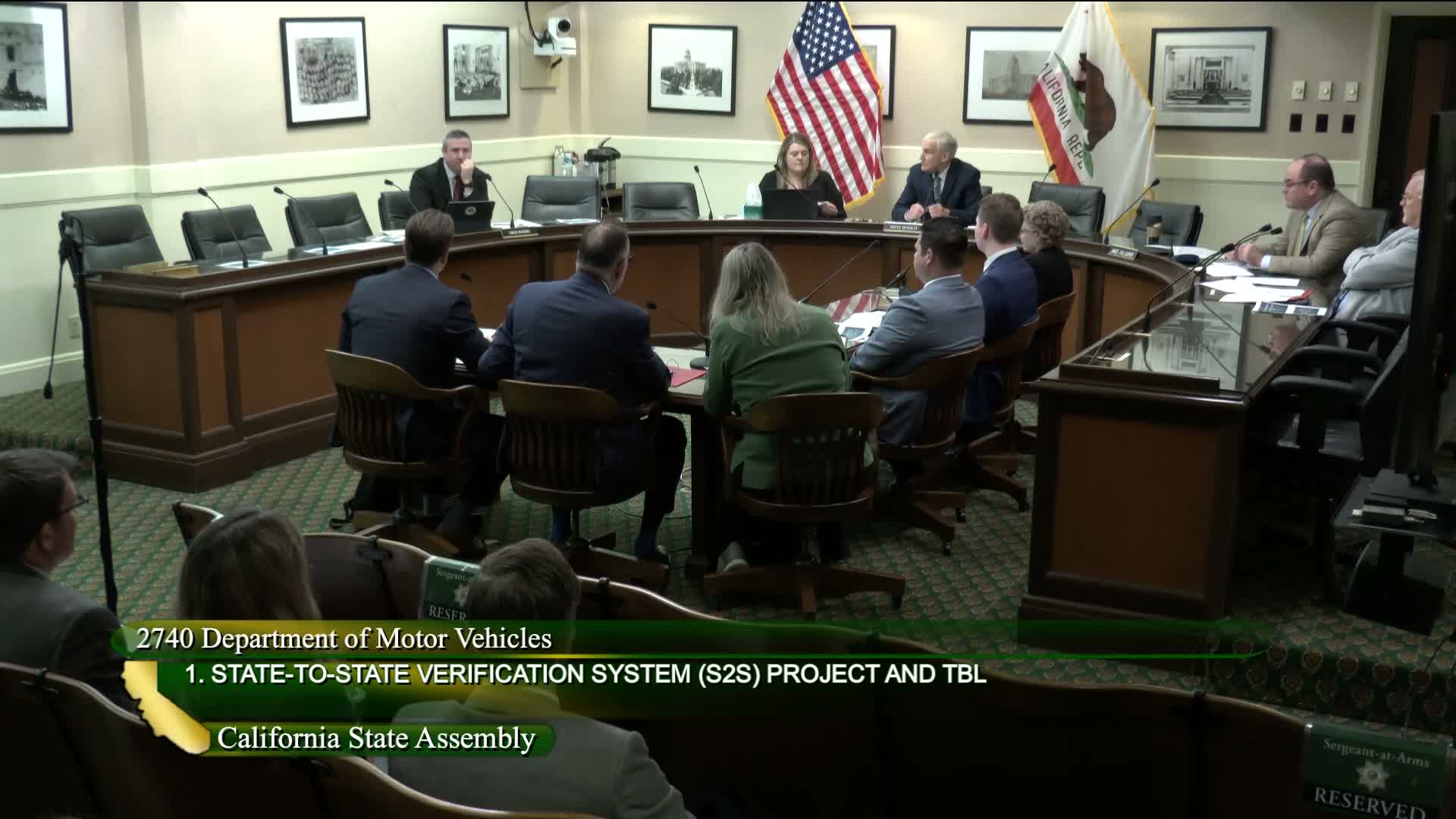
Department of Motor Vehicles witnesses described the Digital Experience Platform (DXP) as the agency's core modernization effort and said the project has been restructured into iterative phases to reduce risk and control costs.
"We have reset the project, stabilized costs and are now focused on delivering vehicle registration by the end of the calendar year 2026," Lee Scott, the DMVs chief budget officer, told the committee. Steve Gordon added the department is implementing pilot phases for ID issuance and will incrementally expand DXP features rather than attempt a single "big bang" launch.
Officials described three phases: occupational licensing (complete), vehicle registration (planned rollout by the end of 2026), and driver's licenses/ID to be phased in over the following years with an anticipated fiscal completion around 2029. DMV staff said they are reappropriating about $30 million into the next fiscal year to finish the vehicle-registration component and are asking for authority to validate and slow certain costs so the state does not overspend ahead of need.
Assembly members pressed DMV on procurement and implementation risks, the state's capacity to manage complex IT contracts and vendor relationships, and how legislative and newly enacted laws or bills will be incorporated into the DXP platform over time. DMV witnesses said the department is working with GovOps and other state procurement entities to increase oversight and to buy and deliver features in smaller, iterative chunks.
"We're trying to buy things and build things in smaller chunks so we can actually implement and not have the big bang," Gordon said. Officials also told the committee the vehicle registration slice is crucial because vehicle-related transactions generate the substantial majority of DMV revenue.
Next steps: DMV will provide more detailed budget documentation, procurement plans and progress checks as BCPs are considered; the subcommittee will review those materials during the budget process.
"We have reset the project, stabilized costs and are now focused on delivering vehicle registration by the end of the calendar year 2026," Lee Scott, the DMVs chief budget officer, told the committee. Steve Gordon added the department is implementing pilot phases for ID issuance and will incrementally expand DXP features rather than attempt a single "big bang" launch.
Officials described three phases: occupational licensing (complete), vehicle registration (planned rollout by the end of 2026), and driver's licenses/ID to be phased in over the following years with an anticipated fiscal completion around 2029. DMV staff said they are reappropriating about $30 million into the next fiscal year to finish the vehicle-registration component and are asking for authority to validate and slow certain costs so the state does not overspend ahead of need.
Assembly members pressed DMV on procurement and implementation risks, the state's capacity to manage complex IT contracts and vendor relationships, and how legislative and newly enacted laws or bills will be incorporated into the DXP platform over time. DMV witnesses said the department is working with GovOps and other state procurement entities to increase oversight and to buy and deliver features in smaller, iterative chunks.
"We're trying to buy things and build things in smaller chunks so we can actually implement and not have the big bang," Gordon said. Officials also told the committee the vehicle registration slice is crucial because vehicle-related transactions generate the substantial majority of DMV revenue.
Next steps: DMV will provide more detailed budget documentation, procurement plans and progress checks as BCPs are considered; the subcommittee will review those materials during the budget process.
View the Full Meeting & All Its Details
This article offers just a summary. Unlock complete video, transcripts, and insights as a Founder Member.
✓
Watch full, unedited meeting videos
✓
Search every word spoken in unlimited transcripts
✓
AI summaries & real-time alerts (all government levels)
✓
Permanent access to expanding government content
30-day money-back guarantee
