Mayor Whitfield details stepped-up code enforcement, abatement plan in Helena'West Helena town hall
May 13, 2026 | Helena, Phillips County, Arkansas
This article was created by AI summarizing key points discussed. AI makes mistakes, so for full details and context, please refer to the video of the full meeting. Please report any errors so we can fix them. Report an error »
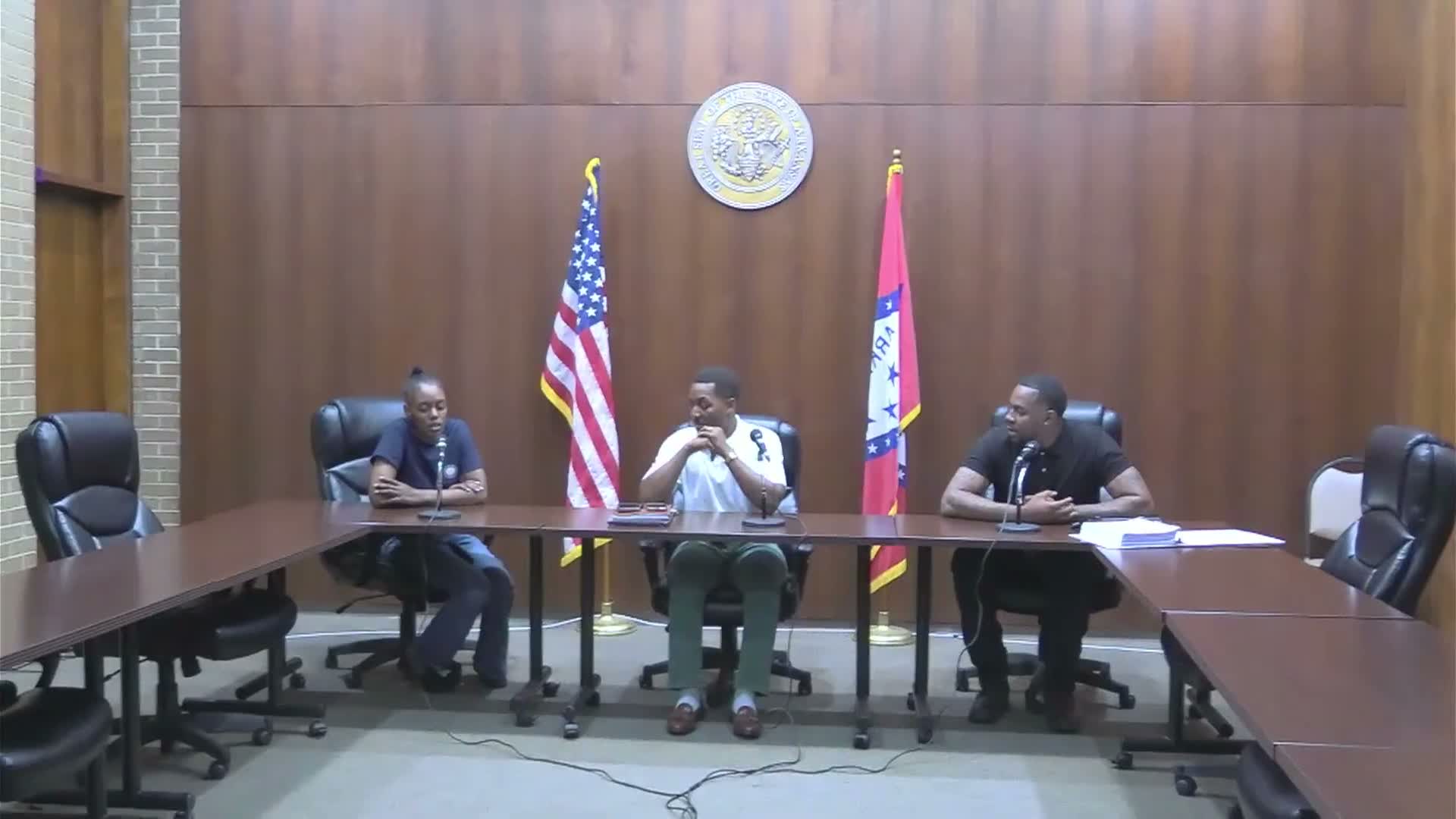
Mayor Whitfield told residents at a packed Helena'West Helena town hall that the city is ramping up code enforcement to address blight, abandoned vehicles, and unsafe structures and that the administration will present four priority properties to the city council for possible summary abatement.
The mayor said the city is not aiming to "catch" residents but to restore neighborhood safety and property values by enforcing existing codes and documenting cases to make them court-ready. "This is not an attempt to catch residents," Whitfield said, stressing the administration's emphasis on notice, documentation and due process.
City code enforcement officers Lakisha Williams and Kendrick Smith described the mechanics of the effort: a new activity log that records every complaint, inspection and follow-up; a web form the public can use to submit complaints and photos; and a newly implemented yard placard and notice system. "We send out 7-day letters through the mail," Williams said. She also described a new placard program to notify owners when the city may perform a cut and charge the owner for the work.
Whitfield described a dedicated code enforcement bank account to collect fines, liens and any recovered funds so the money can be reinvested in enforcement and related operations. "As fines are levied ... those monies can go into the code enforcement bank account, and that increases their operation and capacity," she said.
Officers and residents described enforcement priorities as life-safety hazards first (collapsed or unsafe structures), then sanitation and neighborhood maintenance issues such as tall grass, illegal dumping and abandoned or unoperable vehicles. Kendrick Smith referenced Ordinance 26 (2006) banning salvage yards inside city limits and said the team is using that and other codes to tackle illegal salvage operations.
The meeting included several practical details for businesses and property owners: occupational licenses are required and must be renewed annually (licenses were described as about $50 plus $10 per employee as an example); the council recently raised the summary-abatement fine (the mayor said the city raised the prior amount and now the ordinance sets a higher charge when the city must act); and staff said roughly 60 property-violation letters have been mailed with court dates planned in June for noncompliance.
Speakers gave examples of recent cleanups and local vendors the city has used for towing, landscaping and demolition. Williams pointed to before-and-after photos of sites on Sebastian Street, Oakland Avenue and Arkansas Street, and listed local contractors the department is using for removals.
Residents raised specific neighborhood concerns: vacancy and overgrown lots, tires and debris by the Masonic Lodge, potholes and a multi-year water leak that officials said appeared to be stolen water. The city said it is preparing criminal affidavits and back-billing in some utility-theft cases that will be handled through the city attorney. "We're going to serve them affidavits," a staff member said of addresses suspected of stealing water.
Animal control was another sustained topic: Whitfield said the fiscal-year budget includes $25,000 for animal control and the city is exploring partnerships to transport strays to regional shelters. The administration is also pursuing a potential small animal facility at a former veterinary site on Oakland and plans to ask the council to support a spay-and-neuter clinic. "We don't have a pound," Whitfield said; she added the city is pursuing partnerships and property options as interim and long-term solutions.
On next steps, the mayor said the administration will bring four example properties to the council for ordinance-based summary abatement and continue the process of mailing notices, documenting inspections, and pursuing court action where owners do not comply. Whitfield encouraged residents to use the online reporting form and to contact the code enforcement office; she thanked the officers for their field work and said the city will continue to prioritize enforcement while aiming to support residents who need assistance.
The town hall closed with a promise to announce dates for a food-truck discussion and other follow-up meetings; no formal council vote on abatement was recorded at the session.
The mayor said the city is not aiming to "catch" residents but to restore neighborhood safety and property values by enforcing existing codes and documenting cases to make them court-ready. "This is not an attempt to catch residents," Whitfield said, stressing the administration's emphasis on notice, documentation and due process.
City code enforcement officers Lakisha Williams and Kendrick Smith described the mechanics of the effort: a new activity log that records every complaint, inspection and follow-up; a web form the public can use to submit complaints and photos; and a newly implemented yard placard and notice system. "We send out 7-day letters through the mail," Williams said. She also described a new placard program to notify owners when the city may perform a cut and charge the owner for the work.
Whitfield described a dedicated code enforcement bank account to collect fines, liens and any recovered funds so the money can be reinvested in enforcement and related operations. "As fines are levied ... those monies can go into the code enforcement bank account, and that increases their operation and capacity," she said.
Officers and residents described enforcement priorities as life-safety hazards first (collapsed or unsafe structures), then sanitation and neighborhood maintenance issues such as tall grass, illegal dumping and abandoned or unoperable vehicles. Kendrick Smith referenced Ordinance 26 (2006) banning salvage yards inside city limits and said the team is using that and other codes to tackle illegal salvage operations.
The meeting included several practical details for businesses and property owners: occupational licenses are required and must be renewed annually (licenses were described as about $50 plus $10 per employee as an example); the council recently raised the summary-abatement fine (the mayor said the city raised the prior amount and now the ordinance sets a higher charge when the city must act); and staff said roughly 60 property-violation letters have been mailed with court dates planned in June for noncompliance.
Speakers gave examples of recent cleanups and local vendors the city has used for towing, landscaping and demolition. Williams pointed to before-and-after photos of sites on Sebastian Street, Oakland Avenue and Arkansas Street, and listed local contractors the department is using for removals.
Residents raised specific neighborhood concerns: vacancy and overgrown lots, tires and debris by the Masonic Lodge, potholes and a multi-year water leak that officials said appeared to be stolen water. The city said it is preparing criminal affidavits and back-billing in some utility-theft cases that will be handled through the city attorney. "We're going to serve them affidavits," a staff member said of addresses suspected of stealing water.
Animal control was another sustained topic: Whitfield said the fiscal-year budget includes $25,000 for animal control and the city is exploring partnerships to transport strays to regional shelters. The administration is also pursuing a potential small animal facility at a former veterinary site on Oakland and plans to ask the council to support a spay-and-neuter clinic. "We don't have a pound," Whitfield said; she added the city is pursuing partnerships and property options as interim and long-term solutions.
On next steps, the mayor said the administration will bring four example properties to the council for ordinance-based summary abatement and continue the process of mailing notices, documenting inspections, and pursuing court action where owners do not comply. Whitfield encouraged residents to use the online reporting form and to contact the code enforcement office; she thanked the officers for their field work and said the city will continue to prioritize enforcement while aiming to support residents who need assistance.
The town hall closed with a promise to announce dates for a food-truck discussion and other follow-up meetings; no formal council vote on abatement was recorded at the session.
View the Full Meeting & All Its Details
This article offers just a summary. Unlock complete video, transcripts, and insights as a Founder Member.
✓
Watch full, unedited meeting videos
✓
Search every word spoken in unlimited transcripts
✓
AI summaries & real-time alerts (all government levels)
✓
Permanent access to expanding government content
30-day money-back guarantee
