City attorney guidance: SMAC should not vote on rezoning cases, may offer UDO text amendments
May 13, 2026 | Raleigh, Wake County, North Carolina
This article was created by AI summarizing key points discussed. AI makes mistakes, so for full details and context, please refer to the video of the full meeting. Please report any errors so we can fix them. Report an error »
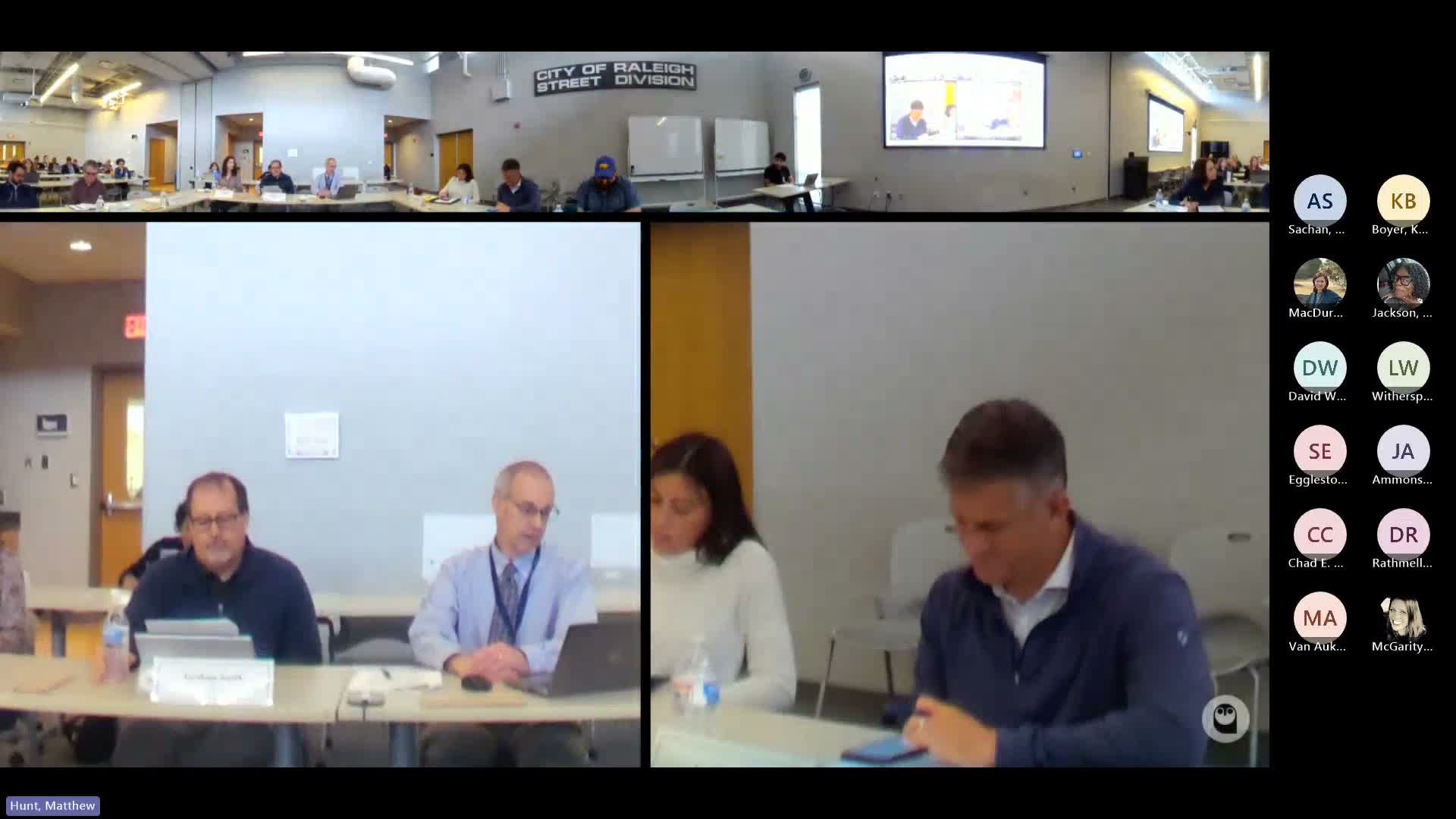
At a regular SMAC meeting, staff read formal guidance from the city attorney and the finance office clarifying the advisory panel’s role in rezoning decisions.
Scott Bridal, who presented the attorney’s memo, said the relevant UDO provision is section 10.2.4 and that “this UDO section does not include SMAC as part of that process. Being SMAC should not be voting on rezoning cases.” He added the attorney’s office recommended that SMAC “review resulting cases in our meetings for information only” and limit formal actions to requesting text amendments to the UDO rather than directing applicants to revise rezoning conditions.
The memo also addressed state voting-conflict law. According to the guidance read at the meeting, commissioners are required to monitor conflicts only when the body is taking votes on matters before it; because SMAC should not be voting on rezoning petitions, the conflict-of-interest provision tied to rezoning does not generally apply in that context. The attorney’s language cited the statute referenced in the transcript as section 160 D-one 109 B; staff summarized that the threshold for recusal is where a commissioner’s vote would have a direct, substantial and readily identifiable financial impact on the member.
Members asked for clarification about whether SMAC could form a task force or otherwise provide recommendations on the UDO. Staff and Bridal said SMAC can request a task force under its bylaws and that the commission’s liaison may continue to convey SMAC questions and comments to the planning commission. The attorney’s office recommended SMAC focus on text amendments and information-sharing to avoid legal risk that could arise if applicants perceived attendance at SMAC as mandatory or if SMAC’s recommendations were treated as binding.
Why it matters: the clarification narrows the advisory body’s formal role in rezoning, preserving the planning commission and city council as the bodies with decision-making authority while keeping a path for SMAC to influence rule changes through recommended UDO text amendments. The guidance may change how commissioners engage with applicants and neighborhood concerns going forward.
Next steps: staff said it will circulate the attorney memo to members and can provide additional detail on conflict rules and the task force process if requested.
Scott Bridal, who presented the attorney’s memo, said the relevant UDO provision is section 10.2.4 and that “this UDO section does not include SMAC as part of that process. Being SMAC should not be voting on rezoning cases.” He added the attorney’s office recommended that SMAC “review resulting cases in our meetings for information only” and limit formal actions to requesting text amendments to the UDO rather than directing applicants to revise rezoning conditions.
The memo also addressed state voting-conflict law. According to the guidance read at the meeting, commissioners are required to monitor conflicts only when the body is taking votes on matters before it; because SMAC should not be voting on rezoning petitions, the conflict-of-interest provision tied to rezoning does not generally apply in that context. The attorney’s language cited the statute referenced in the transcript as section 160 D-one 109 B; staff summarized that the threshold for recusal is where a commissioner’s vote would have a direct, substantial and readily identifiable financial impact on the member.
Members asked for clarification about whether SMAC could form a task force or otherwise provide recommendations on the UDO. Staff and Bridal said SMAC can request a task force under its bylaws and that the commission’s liaison may continue to convey SMAC questions and comments to the planning commission. The attorney’s office recommended SMAC focus on text amendments and information-sharing to avoid legal risk that could arise if applicants perceived attendance at SMAC as mandatory or if SMAC’s recommendations were treated as binding.
Why it matters: the clarification narrows the advisory body’s formal role in rezoning, preserving the planning commission and city council as the bodies with decision-making authority while keeping a path for SMAC to influence rule changes through recommended UDO text amendments. The guidance may change how commissioners engage with applicants and neighborhood concerns going forward.
Next steps: staff said it will circulate the attorney memo to members and can provide additional detail on conflict rules and the task force process if requested.
View the Full Meeting & All Its Details
This article offers just a summary. Unlock complete video, transcripts, and insights as a Founder Member.
✓
Watch full, unedited meeting videos
✓
Search every word spoken in unlimited transcripts
✓
AI summaries & real-time alerts (all government levels)
✓
Permanent access to expanding government content
30-day money-back guarantee
