Garden City Council adopts land-use ordinance tightening post‑decision review and clarifying notice rules
May 13, 2026 | Garden City, Ada County, Idaho
This article was created by AI summarizing key points discussed. AI makes mistakes, so for full details and context, please refer to the video of the full meeting. Please report any errors so we can fix them. Report an error »
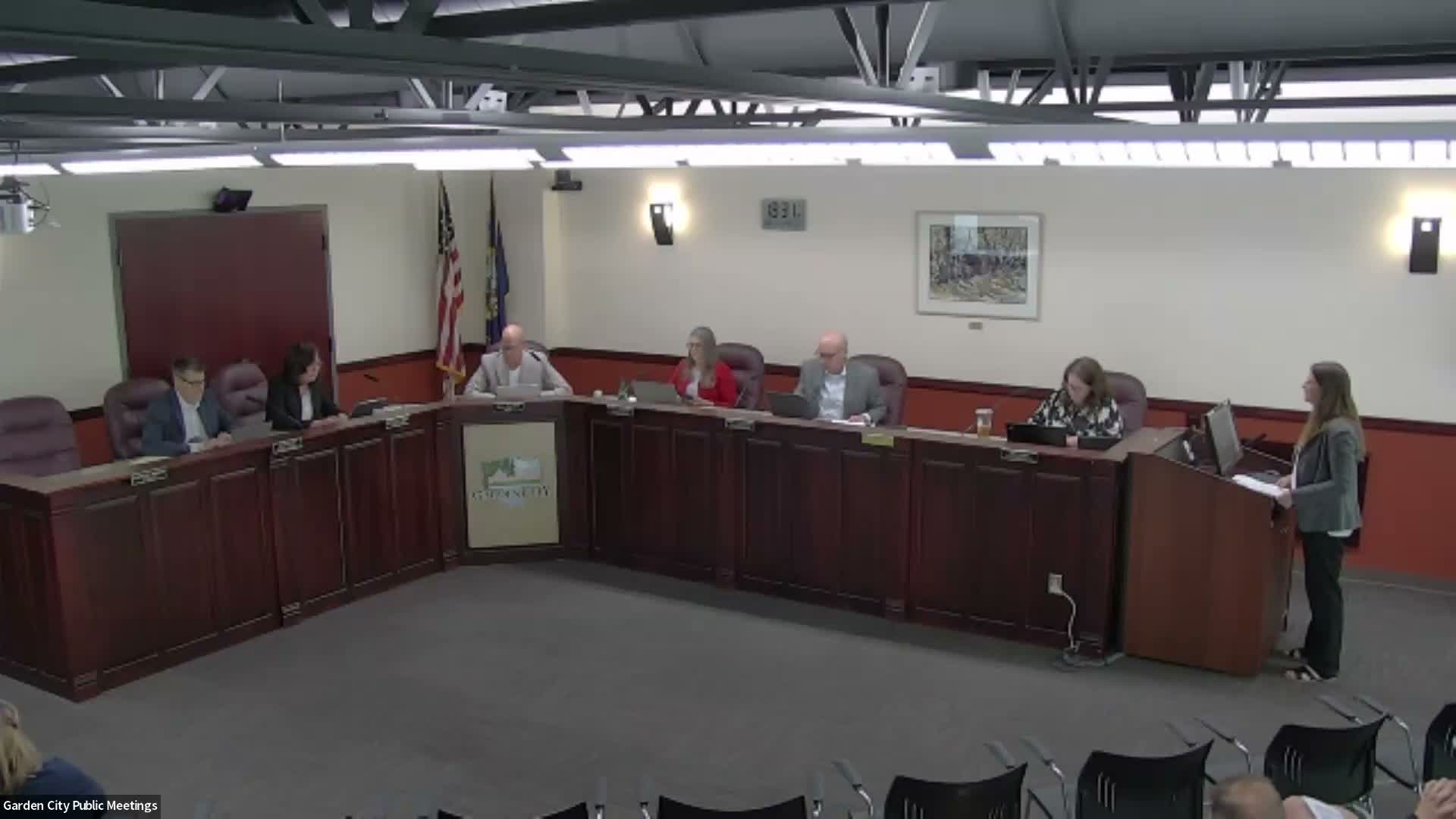
Garden City’s City Council on a single evening adopted ordinance 10-51-26, revising the city’s development code to clarify post‑decision review processes and public‑notice rules.
The ordinance, adopted as amended, establishes a clearer distinction between council‑initiated reviews, appeals and requests for reconsideration; staff said the change is intended to streamline appeals while preserving the ability to hold public hearings when new evidence is introduced. Council president moved to approve option B of the draft ordinance, with edits stripping unintended language copied from option A and changing the section title on page 20 from 'failure to notify' to 'non‑prejudicial notice deficiencies.' The motion carried on a roll‑call vote with one 'no.'
Why it matters: The measure affects how residents and applicants can challenge land‑use and design‑review decisions. Staff described two primary pathways: a council review (a free/de novo review of a closed record that can be opened to new evidence if the council orders a hearing) and an appeal/reconsideration route that uses an abuse‑of‑discretion standard. Staff said the intent is that council‑initiated reviews give the council flexibility to consider new information while routine appeals remain constrained to the record.
Council members debated whether neighborhood meetings should remain a required step for comprehensive‑plan amendments and some design‑review matters. Several members urged keeping opportunities for broad public engagement on citywide matters such as updates to the comprehensive plan; staff recommended using work sessions or an 'open‑house' style public meeting for citywide planning updates to avoid duplicative notices. Staff estimated neighborhood‑meeting signage and noticing could add roughly $3,000 in sign costs for some citywide efforts and several hundred dollars in legal notices in other cases.
Resident Jackson Haim urged the council to allow more time for public comment after neighborhood meetings, saying a 17‑day deadline for post‑meeting comments may be too short when applicants submit revisions later in the process. Director Thornburg told the council the 17‑day window is designed to give staff a predictable earliest date to consider approving an administrative with‑notice application while preserving a 15‑day right to appeal for interested parties; staff said that if the council wants a longer window, that can be considered.
The council also approved a companion resolution to the ordinance (resolution 12‑45‑26) that clarifies radius versus mailing notices, defines 'interested party,' specifies durable signage requirements, and aligns the policy handbook language with the ordinance. That resolution passed after an amendment to change 'de novo' language to 'open/free review.'
The ordinance will take effect as provided in the document and the city clerk read the ordinance title and summary for a formal third reading before the adoption vote. The council directed staff to implement the revised notice language and to make the editorial corrections staff flagged in option B.
The ordinance, adopted as amended, establishes a clearer distinction between council‑initiated reviews, appeals and requests for reconsideration; staff said the change is intended to streamline appeals while preserving the ability to hold public hearings when new evidence is introduced. Council president moved to approve option B of the draft ordinance, with edits stripping unintended language copied from option A and changing the section title on page 20 from 'failure to notify' to 'non‑prejudicial notice deficiencies.' The motion carried on a roll‑call vote with one 'no.'
Why it matters: The measure affects how residents and applicants can challenge land‑use and design‑review decisions. Staff described two primary pathways: a council review (a free/de novo review of a closed record that can be opened to new evidence if the council orders a hearing) and an appeal/reconsideration route that uses an abuse‑of‑discretion standard. Staff said the intent is that council‑initiated reviews give the council flexibility to consider new information while routine appeals remain constrained to the record.
Council members debated whether neighborhood meetings should remain a required step for comprehensive‑plan amendments and some design‑review matters. Several members urged keeping opportunities for broad public engagement on citywide matters such as updates to the comprehensive plan; staff recommended using work sessions or an 'open‑house' style public meeting for citywide planning updates to avoid duplicative notices. Staff estimated neighborhood‑meeting signage and noticing could add roughly $3,000 in sign costs for some citywide efforts and several hundred dollars in legal notices in other cases.
Resident Jackson Haim urged the council to allow more time for public comment after neighborhood meetings, saying a 17‑day deadline for post‑meeting comments may be too short when applicants submit revisions later in the process. Director Thornburg told the council the 17‑day window is designed to give staff a predictable earliest date to consider approving an administrative with‑notice application while preserving a 15‑day right to appeal for interested parties; staff said that if the council wants a longer window, that can be considered.
The council also approved a companion resolution to the ordinance (resolution 12‑45‑26) that clarifies radius versus mailing notices, defines 'interested party,' specifies durable signage requirements, and aligns the policy handbook language with the ordinance. That resolution passed after an amendment to change 'de novo' language to 'open/free review.'
The ordinance will take effect as provided in the document and the city clerk read the ordinance title and summary for a formal third reading before the adoption vote. The council directed staff to implement the revised notice language and to make the editorial corrections staff flagged in option B.
Don't Miss a Word: See the Full Meeting!
Go beyond summaries. Unlock every video, transcript, and key insight with a Founder Membership.
✓
Get instant access to full meeting videos
✓
Search and clip any phrase from complete transcripts
✓
Receive AI-powered summaries & custom alerts
✓
Enjoy lifetime, unrestricted access to government data
30-day money-back guarantee
