Poudre School District approves $275,000 to cover off‑campus college-credit costs for concurrent enrollment
May 13, 2026 | Poudre School District R-1, School Districts , Colorado
This article was created by AI summarizing key points discussed. AI makes mistakes, so for full details and context, please refer to the video of the full meeting. Please report any errors so we can fix them. Report an error »
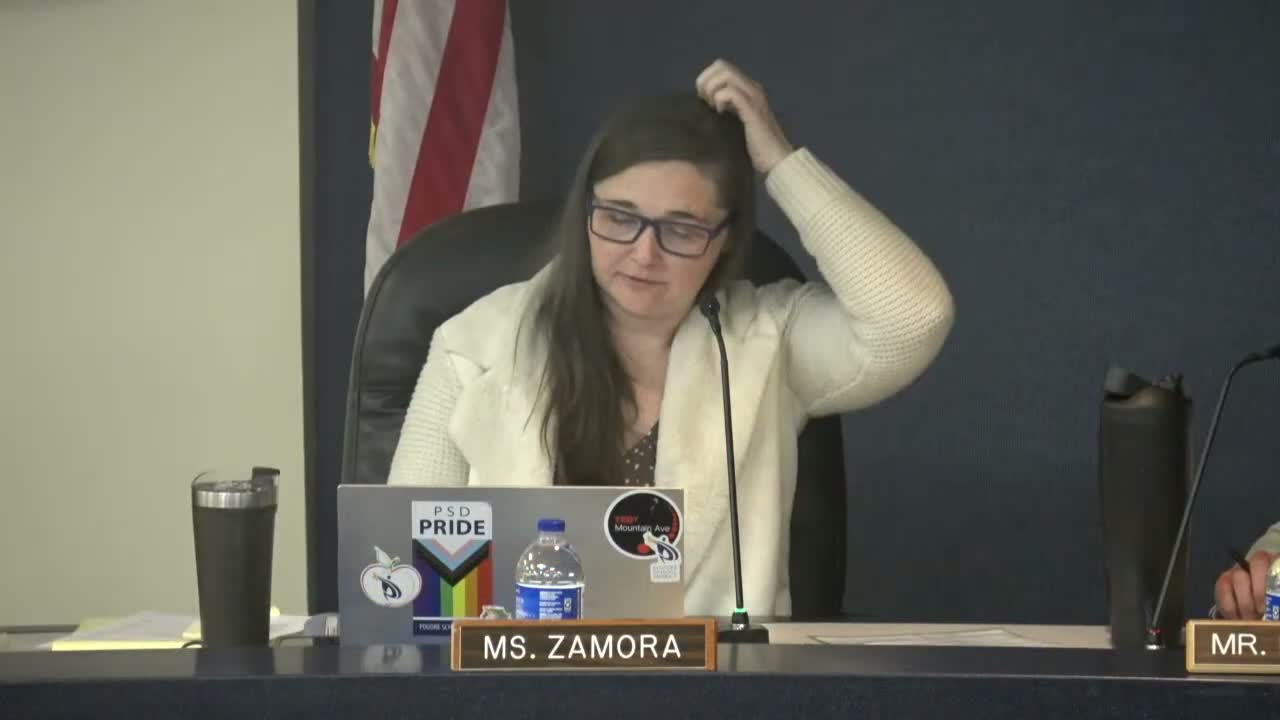
The Poudre School District Board of Education on May 12 approved expenditures exceeding $250,000 — capped at $275,000 — to pay tuition, books and fees for students who take off‑campus college courses through campus‑select concurrent enrollment programs.
District staff urged the board to approve the request as part of a broader state shift that ties funding to three postsecondary outcomes — 12 college credits, an industry credential, or a work‑based learning experience — rather than to the older program funding streams. "We have been working really hard on expanding opportunities for these 'big 3' outcomes," Tanya Alcaraz, director of postsecondary workforce readiness, told the board during the presentation.
Why it matters: PSD officials said the district provided concurrent, dual, AP and IB opportunities to thousands of students last year and that college‑credit options on high‑school campuses generate high pass rates. Kristen Basansani, the district’s concurrent enrollment coordinator, said PSD had more than 4,000 unique students in concurrent enrollment in 2024–25 and a 94% pass rate for college courses taught in high schools. Julie Chaplin, who compiled cost estimates, told the board the total estimated tuition savings for families from credits earned last year is about $19,219,390, based on a $400/credit equivalent calculation.
What the board approved: Board members were asked to authorize a single line‑item expenditure for campus‑select arrangements — where students take courses on a college campus or online and the district pays tuition and fees — because that line will exceed PSD’s existing $250,000 authorization. Officials said campus‑select courses typically cost PSD about $600–$1,000 per class and that the district is limited by a flat budget line ($275,000) set in prior years.
"Our ask tonight is to approve that agreement so students can continue to access those campus select opportunities," Basansani said. The board approved the motion unanimously.
Board discussion and tradeoffs: Trustees and staff discussed program equity, sustainability of the funding model and the state’s changing funding structure. Alcaraz explained that the state will shift from funding specific programs to paying districts when students hit the outcomes (for example, completing 12 college credits), and that rules and buckets are still being finalized by the State Board of Education and CDHE. Alcaraz said some program funding (the ASCENT program) is being sunset and that the state has a finite pot for the new outcome funding buckets.
Staff follow‑up: District officials said they will continue to expand college‑credit options on high‑school campuses — where pass rates and equity outcomes are strongest — and will provide additional data on participation rates and budgeting as the state finalizes rules. PSD also flagged a forthcoming data dashboard that will show enrollment, facility and performance metrics used by the comprehensive planning committee.
Vote and formal motion: The board approved the expenditure authorization in a 7–0 vote. The motion as presented asked the board to "approve expenditures in excess of $250,000 for programs detailed in the summary of concurrent enrollment and dual enrollment programs in PSD." The board recorded the motion as passed 7–0.
Next steps: Staff will implement the campus‑select agreement within the approved budgetary authorization and continue reporting on access, equity and budget implications as state rules for outcome funding are finalized.
District staff urged the board to approve the request as part of a broader state shift that ties funding to three postsecondary outcomes — 12 college credits, an industry credential, or a work‑based learning experience — rather than to the older program funding streams. "We have been working really hard on expanding opportunities for these 'big 3' outcomes," Tanya Alcaraz, director of postsecondary workforce readiness, told the board during the presentation.
Why it matters: PSD officials said the district provided concurrent, dual, AP and IB opportunities to thousands of students last year and that college‑credit options on high‑school campuses generate high pass rates. Kristen Basansani, the district’s concurrent enrollment coordinator, said PSD had more than 4,000 unique students in concurrent enrollment in 2024–25 and a 94% pass rate for college courses taught in high schools. Julie Chaplin, who compiled cost estimates, told the board the total estimated tuition savings for families from credits earned last year is about $19,219,390, based on a $400/credit equivalent calculation.
What the board approved: Board members were asked to authorize a single line‑item expenditure for campus‑select arrangements — where students take courses on a college campus or online and the district pays tuition and fees — because that line will exceed PSD’s existing $250,000 authorization. Officials said campus‑select courses typically cost PSD about $600–$1,000 per class and that the district is limited by a flat budget line ($275,000) set in prior years.
"Our ask tonight is to approve that agreement so students can continue to access those campus select opportunities," Basansani said. The board approved the motion unanimously.
Board discussion and tradeoffs: Trustees and staff discussed program equity, sustainability of the funding model and the state’s changing funding structure. Alcaraz explained that the state will shift from funding specific programs to paying districts when students hit the outcomes (for example, completing 12 college credits), and that rules and buckets are still being finalized by the State Board of Education and CDHE. Alcaraz said some program funding (the ASCENT program) is being sunset and that the state has a finite pot for the new outcome funding buckets.
Staff follow‑up: District officials said they will continue to expand college‑credit options on high‑school campuses — where pass rates and equity outcomes are strongest — and will provide additional data on participation rates and budgeting as the state finalizes rules. PSD also flagged a forthcoming data dashboard that will show enrollment, facility and performance metrics used by the comprehensive planning committee.
Vote and formal motion: The board approved the expenditure authorization in a 7–0 vote. The motion as presented asked the board to "approve expenditures in excess of $250,000 for programs detailed in the summary of concurrent enrollment and dual enrollment programs in PSD." The board recorded the motion as passed 7–0.
Next steps: Staff will implement the campus‑select agreement within the approved budgetary authorization and continue reporting on access, equity and budget implications as state rules for outcome funding are finalized.
Don't Miss a Word: See the Full Meeting!
Go beyond summaries. Unlock every video, transcript, and key insight with a Founder Membership.
✓
Get instant access to full meeting videos
✓
Search and clip any phrase from complete transcripts
✓
Receive AI-powered summaries & custom alerts
✓
Enjoy lifetime, unrestricted access to government data
30-day money-back guarantee
