Council presses administration on $79M PAYGO list and criteria for one‑time grants and pilot programs
May 15, 2024 | Howard County, Maryland
This article was created by AI summarizing key points discussed. AI makes mistakes, so for full details and context, please refer to the video of the full meeting. Please report any errors so we can fix them. Report an error »
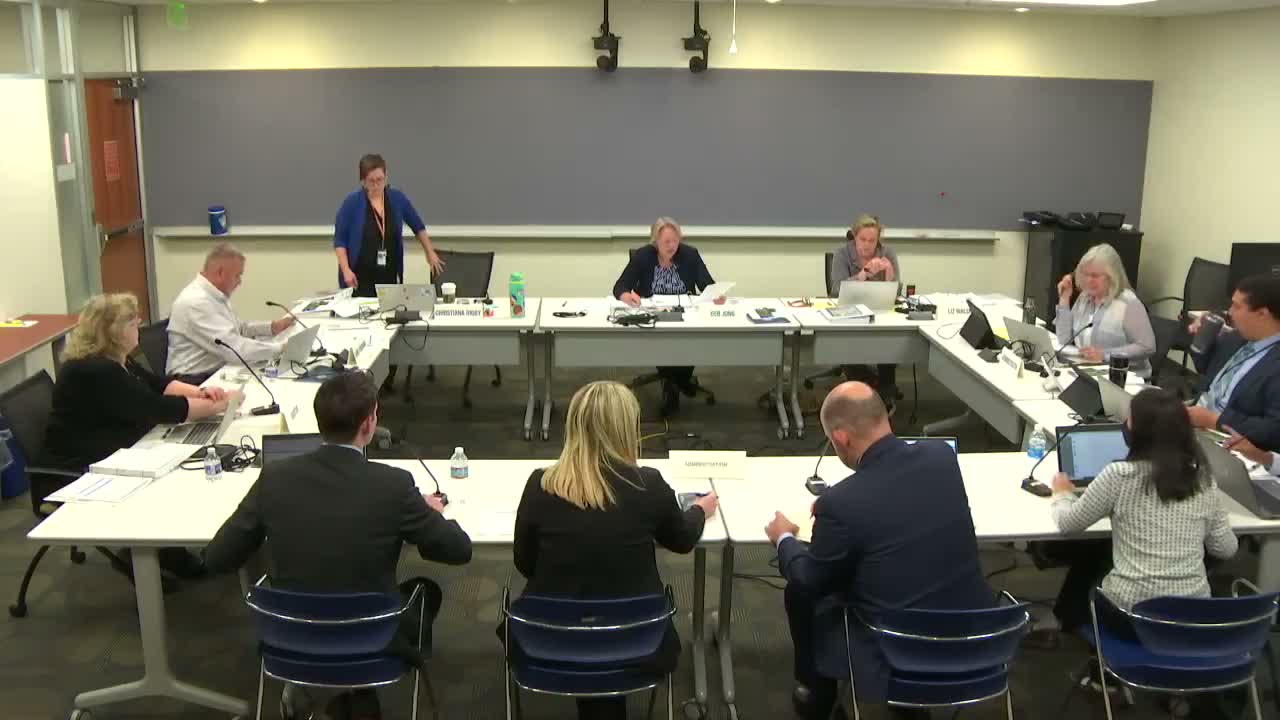
Council members spent substantial time scrutinizing the county’s PAYGO one‑time funding list and related community‑service (CSP) proposals, pressing administration staff for clearer selection criteria, timing and guardrails before approving large, non‑recurring expenditures.
Administration said the PAYGO list combines departmental requests and executive initiatives that are one‑time in nature. “Those requests are either coming through our county departments and offices through our budget process, or if the county executive has certain initiatives he wants to move forward with departments, that’s how those will end up on the list,” a finance official said during the meeting.
Several line items prompted detailed questioning. Councilmembers asked why some recurring‑seeming services — for example, grant writing support, recruitment incentives and certain program expansions — were placed in one‑time PAYGO rather than in base operating budgets. Finance and administration staff said some requests are explicitly pilots or time‑limited initiatives (for instance, a three‑year guaranteed basic income pilot targeted at a narrowly defined, income‑eligible population), while others were categorized as PAYGO because timing or procurement made them one‑time commitments for FY25.
On health and human services, the council probed a pair of major proposals: a roughly $3.0 million planned contribution to Shock Trauma for patient transition, injury‑prevention and trauma‑survivor support, and a proposed partnership with Planned Parenthood of Maryland for a $500,000 fit‑out of a reproductive‑health facility in the county. Administration defended the Shock Trauma ask as regional health capacity support and said state and other counties are also contributing; council members asked staff to provide a list of other jurisdictions’ commitments.
Councilors also pressed for guardrails on the $2.5 million “emerging needs” PAYGO fund and other flexible appropriations, asking how the county will decide what qualifies and whether the administration will bring explicit criteria back to the council. For recruitment and retention bonuses aggregated across public safety and other departments (a reported $852,000 total), the administration said the money covers signing and retention incentives for multiple public‑safety departments and would be broken out if the council wants a departmental split.
What was requested and next steps: Administration committed to provide written follow‑ups showing (a) how PAYGO recipients are selected and what guardrails apply, (b) a breakdown of how recruitment/retention funds will be allocated among public‑safety agencies, and (c) details on Shock Trauma’s regional funding needs and who else is contributing. Council members said they want clearer criteria for putting programs in one‑time PAYGO versus embedding them in the base operating budget, particularly if those programs are likely to recur.
Administration said the PAYGO list combines departmental requests and executive initiatives that are one‑time in nature. “Those requests are either coming through our county departments and offices through our budget process, or if the county executive has certain initiatives he wants to move forward with departments, that’s how those will end up on the list,” a finance official said during the meeting.
Several line items prompted detailed questioning. Councilmembers asked why some recurring‑seeming services — for example, grant writing support, recruitment incentives and certain program expansions — were placed in one‑time PAYGO rather than in base operating budgets. Finance and administration staff said some requests are explicitly pilots or time‑limited initiatives (for instance, a three‑year guaranteed basic income pilot targeted at a narrowly defined, income‑eligible population), while others were categorized as PAYGO because timing or procurement made them one‑time commitments for FY25.
On health and human services, the council probed a pair of major proposals: a roughly $3.0 million planned contribution to Shock Trauma for patient transition, injury‑prevention and trauma‑survivor support, and a proposed partnership with Planned Parenthood of Maryland for a $500,000 fit‑out of a reproductive‑health facility in the county. Administration defended the Shock Trauma ask as regional health capacity support and said state and other counties are also contributing; council members asked staff to provide a list of other jurisdictions’ commitments.
Councilors also pressed for guardrails on the $2.5 million “emerging needs” PAYGO fund and other flexible appropriations, asking how the county will decide what qualifies and whether the administration will bring explicit criteria back to the council. For recruitment and retention bonuses aggregated across public safety and other departments (a reported $852,000 total), the administration said the money covers signing and retention incentives for multiple public‑safety departments and would be broken out if the council wants a departmental split.
What was requested and next steps: Administration committed to provide written follow‑ups showing (a) how PAYGO recipients are selected and what guardrails apply, (b) a breakdown of how recruitment/retention funds will be allocated among public‑safety agencies, and (c) details on Shock Trauma’s regional funding needs and who else is contributing. Council members said they want clearer criteria for putting programs in one‑time PAYGO versus embedding them in the base operating budget, particularly if those programs are likely to recur.
Don't Miss a Word: See the Full Meeting!
Go beyond summaries. Unlock every video, transcript, and key insight with a Founder Membership.
✓
Get instant access to full meeting videos
✓
Search and clip any phrase from complete transcripts
✓
Receive AI-powered summaries & custom alerts
✓
Enjoy lifetime, unrestricted access to government data
30-day money-back guarantee
