Senate advances H.6 60 to third reading after debate over opioid settlement spending
May 13, 2026 | SENATE, Committees, Legislative , Vermont
This article was created by AI summarizing key points discussed. AI makes mistakes, so for full details and context, please refer to the video of the full meeting. Please report any errors so we can fix them. Report an error »
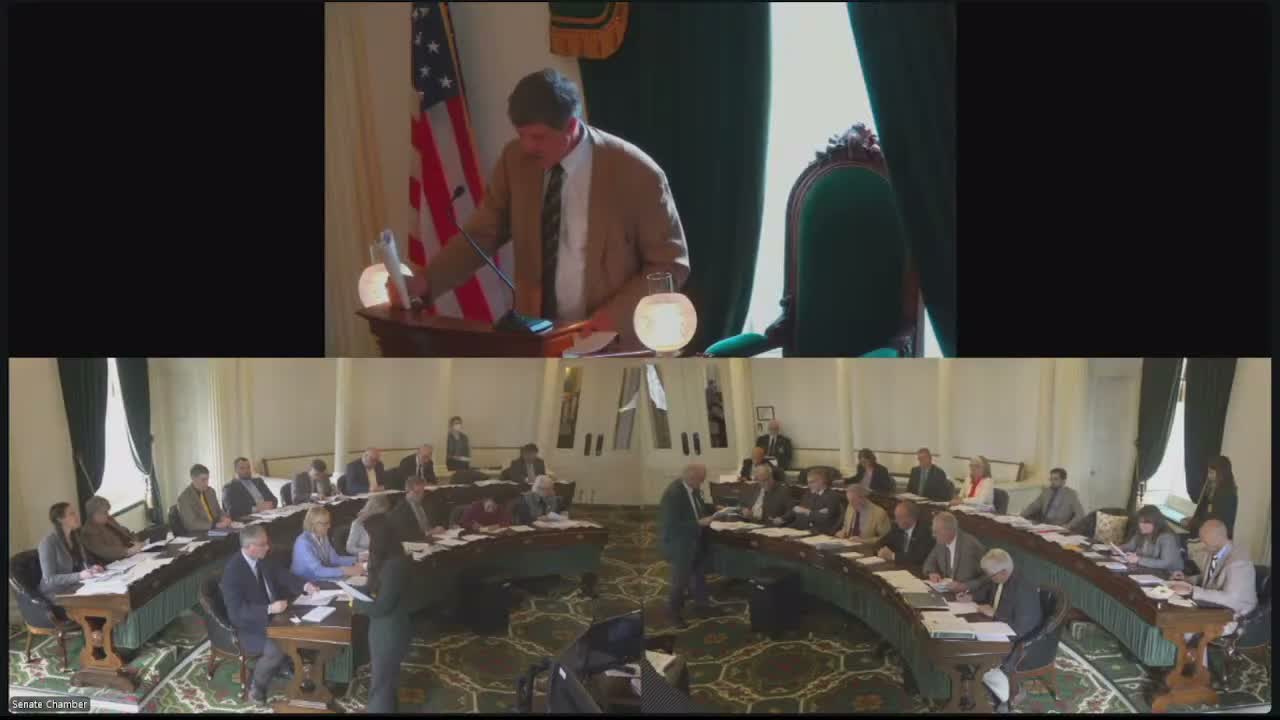
The Vermont Senate ordered third reading of H.6 60 on the opioid abatement special fund after a lengthy floor report and debate.
Senator Lyons, the Health and Welfare committee reporter, summarized the bill as appropriating opioid-settlement dollars to ongoing recovery and harm-reduction programs, new recovery residence beds and targeted clinical services. "In January... it was $11,800,000 in the fund," she said, describing about $6.71 million already spent under prior appropriations and a package of new grants and reversions the bill would authorize.
Why it matters: H.6 60 directs a nonrecurring settlement fund used statewide to pay for recovery residences, syringe-service programs, peer recovery coaches, naloxone distribution, emergency medical training on buprenorphine, and a continuation of an overdose-prevention center project in Burlington. Supporters said the spending follows months of advisory-committee review and aims to sustain programs shown to reduce overdose deaths.
Opponents and questions: A senator from Essex said elements of the bill that fund harm-reduction sites are wrongheaded and pledged an amendment to strip some dollars, arguing the measures enable addiction rather than cure it. "You don't quit anything that you're addicted to by just having a little bit more and then calling it great," the senator said during floor remarks opposing parts of the bill.
Reporters and committee members replied that state data show declines in overdose fatalities for three consecutive years and that the advisory committee reviewed 67 proposals this cycle. Lyons and another member of the opioid settlement advisory committee pointed to a mix of recommendations from the advisory panel, the Department of Health and the House that were reconciled in the bill.
Key program details in the bill include funds for: outreach and case management; recovery residences at National Alliance for Recovery Residences level 3 or higher; residential treatment beds at ASAM 3.1; syringe services and associated community supports (including sharps containers and drug checking); peer recovery coaching in correctional facilities and probation/parole offices; and $1.1 million continuing support for a Burlington overdose-prevention center that had expended about $400,000 to date, leaving roughly $700,000 previously appropriated but not yet spent.
Amendments and safeguards: Committees added language requiring sustainability plans for ongoing funded projects and recommended consultation with the attorney general's office to ensure compliance with settlement guidance and legal constraints. The appropriations reporter said committees sought mechanisms to ensure the Department of Health distributes funds in a timely manner after reports that some grants were not delivered promptly.
Next steps: After committee reports and amendment votes, the Senate ordered third reading of H.6 60. The bill will return for final floor action and recorded votes at third reading.
Senator Lyons, the Health and Welfare committee reporter, summarized the bill as appropriating opioid-settlement dollars to ongoing recovery and harm-reduction programs, new recovery residence beds and targeted clinical services. "In January... it was $11,800,000 in the fund," she said, describing about $6.71 million already spent under prior appropriations and a package of new grants and reversions the bill would authorize.
Why it matters: H.6 60 directs a nonrecurring settlement fund used statewide to pay for recovery residences, syringe-service programs, peer recovery coaches, naloxone distribution, emergency medical training on buprenorphine, and a continuation of an overdose-prevention center project in Burlington. Supporters said the spending follows months of advisory-committee review and aims to sustain programs shown to reduce overdose deaths.
Opponents and questions: A senator from Essex said elements of the bill that fund harm-reduction sites are wrongheaded and pledged an amendment to strip some dollars, arguing the measures enable addiction rather than cure it. "You don't quit anything that you're addicted to by just having a little bit more and then calling it great," the senator said during floor remarks opposing parts of the bill.
Reporters and committee members replied that state data show declines in overdose fatalities for three consecutive years and that the advisory committee reviewed 67 proposals this cycle. Lyons and another member of the opioid settlement advisory committee pointed to a mix of recommendations from the advisory panel, the Department of Health and the House that were reconciled in the bill.
Key program details in the bill include funds for: outreach and case management; recovery residences at National Alliance for Recovery Residences level 3 or higher; residential treatment beds at ASAM 3.1; syringe services and associated community supports (including sharps containers and drug checking); peer recovery coaching in correctional facilities and probation/parole offices; and $1.1 million continuing support for a Burlington overdose-prevention center that had expended about $400,000 to date, leaving roughly $700,000 previously appropriated but not yet spent.
Amendments and safeguards: Committees added language requiring sustainability plans for ongoing funded projects and recommended consultation with the attorney general's office to ensure compliance with settlement guidance and legal constraints. The appropriations reporter said committees sought mechanisms to ensure the Department of Health distributes funds in a timely manner after reports that some grants were not delivered promptly.
Next steps: After committee reports and amendment votes, the Senate ordered third reading of H.6 60. The bill will return for final floor action and recorded votes at third reading.
Don't Miss a Word: See the Full Meeting!
Go beyond summaries. Unlock every video, transcript, and key insight with a Founder Membership.
✓
Get instant access to full meeting videos
✓
Search and clip any phrase from complete transcripts
✓
Receive AI-powered summaries & custom alerts
✓
Enjoy lifetime, unrestricted access to government data
30-day money-back guarantee
