Senate hears lengthy H.6 57 floor report tightening child-welfare restraint, transport and access rules
May 13, 2026 | SENATE, Committees, Legislative , Vermont
This article was created by AI summarizing key points discussed. AI makes mistakes, so for full details and context, please refer to the video of the full meeting. Please report any errors so we can fix them. Report an error »
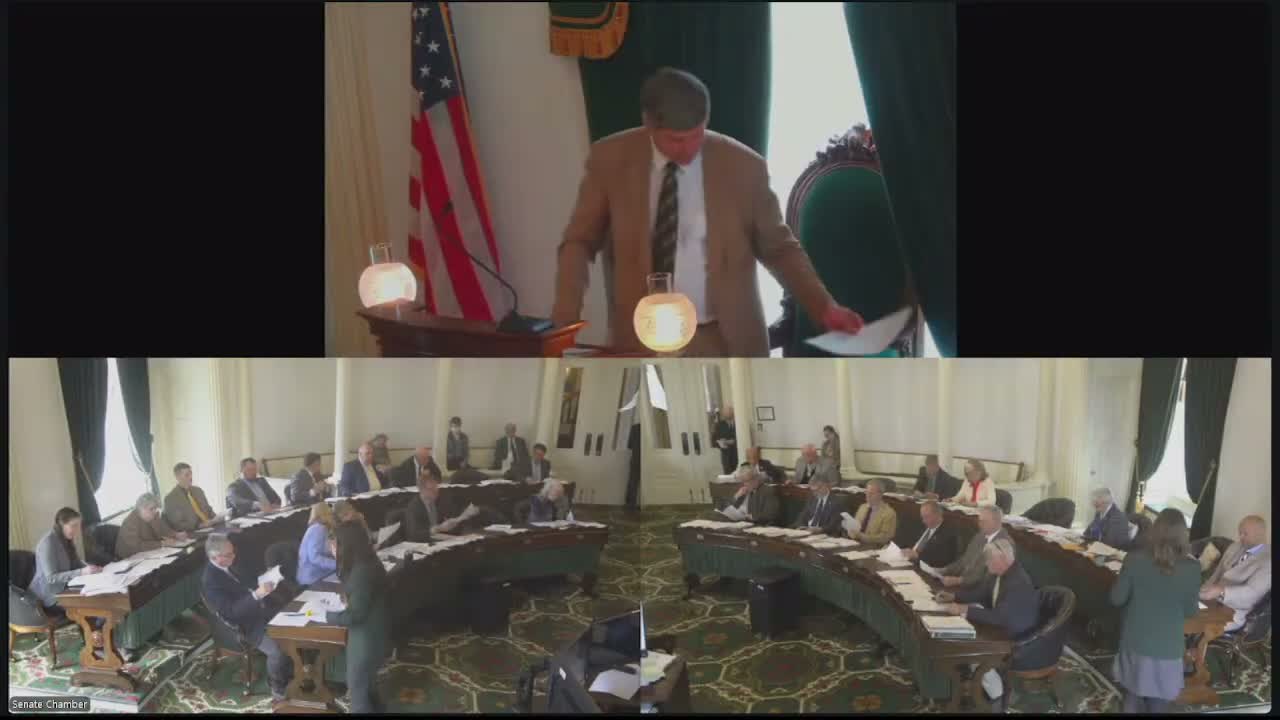
The Senate received an extensive floor report on H.6 57, a multi-part bills that updates DCF practices, expands services for unaccompanied homeless youth and tightens rules on restraint, seclusion and secure transport for children in state custody.
Key provisions summarized on the floor include: eliminating the $9,000 asset test for REACH-UP eligibility; authorizing a standardized certification form to let certified unaccompanied youth obtain identification, housing contracts, health care and other services without parental consent; prohibiting DCF from using a child's Social Security benefits to offset state costs in most circumstances; strengthened rules and reporting on secure transport and mechanical restraints (including prohibitions on prone restraints, mechanical or chemical restraints and limits on waist shackles for children under certain ages); a requirement for annual data reporting and public posting of restraint/seclusion rates; and creation of working groups (including a prenatal engagement and family support working group) to study departmental practices such as the 'pregnancy calendar.'
Why it matters: The bill touches multiple child-welfare processes affecting foster care, unaccompanied youth, and the oversight of seclusion and restraint practices in residential and correctional programs. Sponsors cited testimony from advocates, legal aid, DCF, the Office of Child, Youth and Family Advocate, and other stakeholders.
Amendments and fiscal notes: Committees amended effective dates to give DCF more time to implement and asked the department to produce specified reports (including a report on children in correctional facilities and secure-transport data). Finance noted several de minimis revenue impacts and a potential years-out impact of roughly $700,000 related to prohibitions on certain uses of children's Social Security benefits.
Next steps: The Senate adopted committee amendments adjusting effective dates and ordered third reading; multiple reporting deadlines and working-group deliverables are specified in the bill.
Key provisions summarized on the floor include: eliminating the $9,000 asset test for REACH-UP eligibility; authorizing a standardized certification form to let certified unaccompanied youth obtain identification, housing contracts, health care and other services without parental consent; prohibiting DCF from using a child's Social Security benefits to offset state costs in most circumstances; strengthened rules and reporting on secure transport and mechanical restraints (including prohibitions on prone restraints, mechanical or chemical restraints and limits on waist shackles for children under certain ages); a requirement for annual data reporting and public posting of restraint/seclusion rates; and creation of working groups (including a prenatal engagement and family support working group) to study departmental practices such as the 'pregnancy calendar.'
Why it matters: The bill touches multiple child-welfare processes affecting foster care, unaccompanied youth, and the oversight of seclusion and restraint practices in residential and correctional programs. Sponsors cited testimony from advocates, legal aid, DCF, the Office of Child, Youth and Family Advocate, and other stakeholders.
Amendments and fiscal notes: Committees amended effective dates to give DCF more time to implement and asked the department to produce specified reports (including a report on children in correctional facilities and secure-transport data). Finance noted several de minimis revenue impacts and a potential years-out impact of roughly $700,000 related to prohibitions on certain uses of children's Social Security benefits.
Next steps: The Senate adopted committee amendments adjusting effective dates and ordered third reading; multiple reporting deadlines and working-group deliverables are specified in the bill.
View the Full Meeting & All Its Details
This article offers just a summary. Unlock complete video, transcripts, and insights as a Founder Member.
✓
Watch full, unedited meeting videos
✓
Search every word spoken in unlimited transcripts
✓
AI summaries & real-time alerts (all government levels)
✓
Permanent access to expanding government content
30-day money-back guarantee
