Arvada outlines wildfire mitigation plan, evacuation mapping and PSPS preparedness
May 13, 2026 | Arvada, Jefferson County, Colorado
This article was created by AI summarizing key points discussed. AI makes mistakes, so for full details and context, please refer to the video of the full meeting. Please report any errors so we can fix them. Report an error »
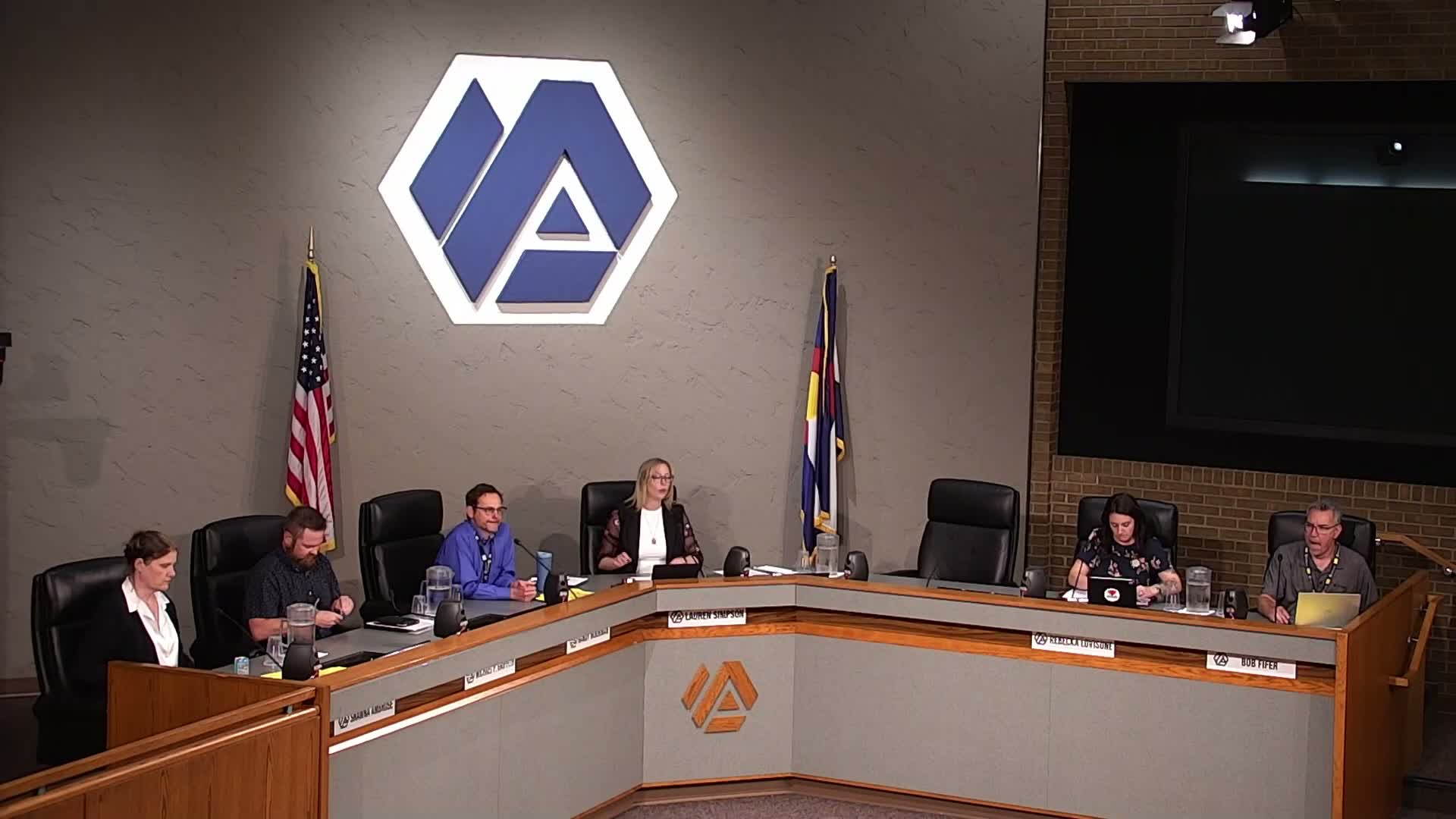
City officials and Arvada Fire staff presented a joint wildfire mitigation and response workshop on May 12, outlining preparedness steps, neighborhood partnerships, and regional coordination to reduce wildfire risk.
The presentation centered on a Community Wildfire Protection Plan (CWPP) the city completed in February 2026 that city staff said will prioritize mitigation projects, guide funding requests and steer neighborhood outreach. "The CWPP will serve as a guiding document for us in terms of mitigation efforts," a city emergency management presenter said, urging neighborhoods to consult the plan's appendix for homeowner actions.
Why it matters: the CWPP and related work determine which neighborhoods receive fuel-reduction projects and which interventions are prioritized when applying for federal mitigation funds. City staff said adoption of an Arvada-specific annex to the Jefferson County Hazard Mitigation Plan will be a prerequisite for some federal grants.
Preparedness and monitoring: staff described an Emergency Operations Center team of roughly 65 trained people, the use of Lookout Alert for rapid community and staff notifications, and a newly installed Remote Automated Weather Station (RAWS) at Arvada Modelers Park to improve localized weather and vegetation-dryness monitoring. "We purchased a RAWS station ... it gives us specific weather data to our community," the Arvada Fire presenter said, describing how the department uses USDA/Forest Service hot-dry-windy indices and RAWS data to set response levels.
Evacuation planning: presenters emphasized that evacuation planning must protect egress corridors from wildfire, not only facilitate vehicle movement. Staff said the city has created evacuation polygons to speed public messaging and is doing neighborhood-scale modeling to identify at-risk routes. They noted a lack of formal policy tools tying evacuation analysis into development review and suggested modeling and code changes could be considered in future comprehensive-plan work.
PSPS and community impacts: officials addressed public-safety power shutoffs (PSPS). Staff noted that utilities’ advance notices can change as events evolve and said city modeling previously estimated 350,000–500,000 people could be affected during a large PSPS, though a prior event affected about 120,000. City measures include placing generators at critical intersections, standby debris crews, and coordinating charging and warming centers with Jefferson County. "If I had that power, I would..." the presenter said when asked why the city cannot order utilities to stop PSPS; staff framed the events as a utility-led mitigation tactic and described city steps to reduce community impacts.
Mitigation projects and prescribed fire: Arvada Fire described recent fuels-reduction work at Meadowbrook Park with Team Rubicon and stressed the value of small-scale actions (mowing, limbing, mechanical removal) as well as larger strategies such as grazing and prescribed fire. The presenters cautioned that prescribed burns require coordination with the Colorado Department of Public Health and Environment, county and state fire authorities and qualified burn overseers.
Regional coordination: presenters described ongoing collaboration with Jefferson County, West Metro Fire and the Mountain Metro Wildfire Mitigation Council; county hiring of additional mitigation and fuels crews was cited as a resource for regional projects.
Community outreach and assistance: staff reiterated free home hardening and defensible-space assessments available to residents, a planned small grant program to financially assist homeowners with mitigation work, and efforts to broaden Lookout Alert sign-ups and business outreach through the Arvada Chamber.
What’s next: staff said the county hazard mitigation annex and any Arvada-specific annex will return to council for consideration in the fall to enable pursuit of federal mitigation funding.
Actions: at the start of the meeting council voted 6–0 to excuse Council member Davis from the evening; that motion was made and recorded before the workshops began.
The council moved to the utilities workshop after the wildfire presentation; no formal policy votes on mitigation projects were taken at this meeting.
The presentation centered on a Community Wildfire Protection Plan (CWPP) the city completed in February 2026 that city staff said will prioritize mitigation projects, guide funding requests and steer neighborhood outreach. "The CWPP will serve as a guiding document for us in terms of mitigation efforts," a city emergency management presenter said, urging neighborhoods to consult the plan's appendix for homeowner actions.
Why it matters: the CWPP and related work determine which neighborhoods receive fuel-reduction projects and which interventions are prioritized when applying for federal mitigation funds. City staff said adoption of an Arvada-specific annex to the Jefferson County Hazard Mitigation Plan will be a prerequisite for some federal grants.
Preparedness and monitoring: staff described an Emergency Operations Center team of roughly 65 trained people, the use of Lookout Alert for rapid community and staff notifications, and a newly installed Remote Automated Weather Station (RAWS) at Arvada Modelers Park to improve localized weather and vegetation-dryness monitoring. "We purchased a RAWS station ... it gives us specific weather data to our community," the Arvada Fire presenter said, describing how the department uses USDA/Forest Service hot-dry-windy indices and RAWS data to set response levels.
Evacuation planning: presenters emphasized that evacuation planning must protect egress corridors from wildfire, not only facilitate vehicle movement. Staff said the city has created evacuation polygons to speed public messaging and is doing neighborhood-scale modeling to identify at-risk routes. They noted a lack of formal policy tools tying evacuation analysis into development review and suggested modeling and code changes could be considered in future comprehensive-plan work.
PSPS and community impacts: officials addressed public-safety power shutoffs (PSPS). Staff noted that utilities’ advance notices can change as events evolve and said city modeling previously estimated 350,000–500,000 people could be affected during a large PSPS, though a prior event affected about 120,000. City measures include placing generators at critical intersections, standby debris crews, and coordinating charging and warming centers with Jefferson County. "If I had that power, I would..." the presenter said when asked why the city cannot order utilities to stop PSPS; staff framed the events as a utility-led mitigation tactic and described city steps to reduce community impacts.
Mitigation projects and prescribed fire: Arvada Fire described recent fuels-reduction work at Meadowbrook Park with Team Rubicon and stressed the value of small-scale actions (mowing, limbing, mechanical removal) as well as larger strategies such as grazing and prescribed fire. The presenters cautioned that prescribed burns require coordination with the Colorado Department of Public Health and Environment, county and state fire authorities and qualified burn overseers.
Regional coordination: presenters described ongoing collaboration with Jefferson County, West Metro Fire and the Mountain Metro Wildfire Mitigation Council; county hiring of additional mitigation and fuels crews was cited as a resource for regional projects.
Community outreach and assistance: staff reiterated free home hardening and defensible-space assessments available to residents, a planned small grant program to financially assist homeowners with mitigation work, and efforts to broaden Lookout Alert sign-ups and business outreach through the Arvada Chamber.
What’s next: staff said the county hazard mitigation annex and any Arvada-specific annex will return to council for consideration in the fall to enable pursuit of federal mitigation funding.
Actions: at the start of the meeting council voted 6–0 to excuse Council member Davis from the evening; that motion was made and recorded before the workshops began.
The council moved to the utilities workshop after the wildfire presentation; no formal policy votes on mitigation projects were taken at this meeting.
View the Full Meeting & All Its Details
This article offers just a summary. Unlock complete video, transcripts, and insights as a Founder Member.
✓
Watch full, unedited meeting videos
✓
Search every word spoken in unlimited transcripts
✓
AI summaries & real-time alerts (all government levels)
✓
Permanent access to expanding government content
30-day money-back guarantee
