CFO Sydney Grama warns of financial emergency as SSD of St. Louis County outlines large FY27 shortfall
May 13, 2026 | SPECL. SCH. DST. ST. LOUIS CO., School Districts, Missouri
This article was created by AI summarizing key points discussed. AI makes mistakes, so for full details and context, please refer to the video of the full meeting. Please report any errors so we can fix them. Report an error »
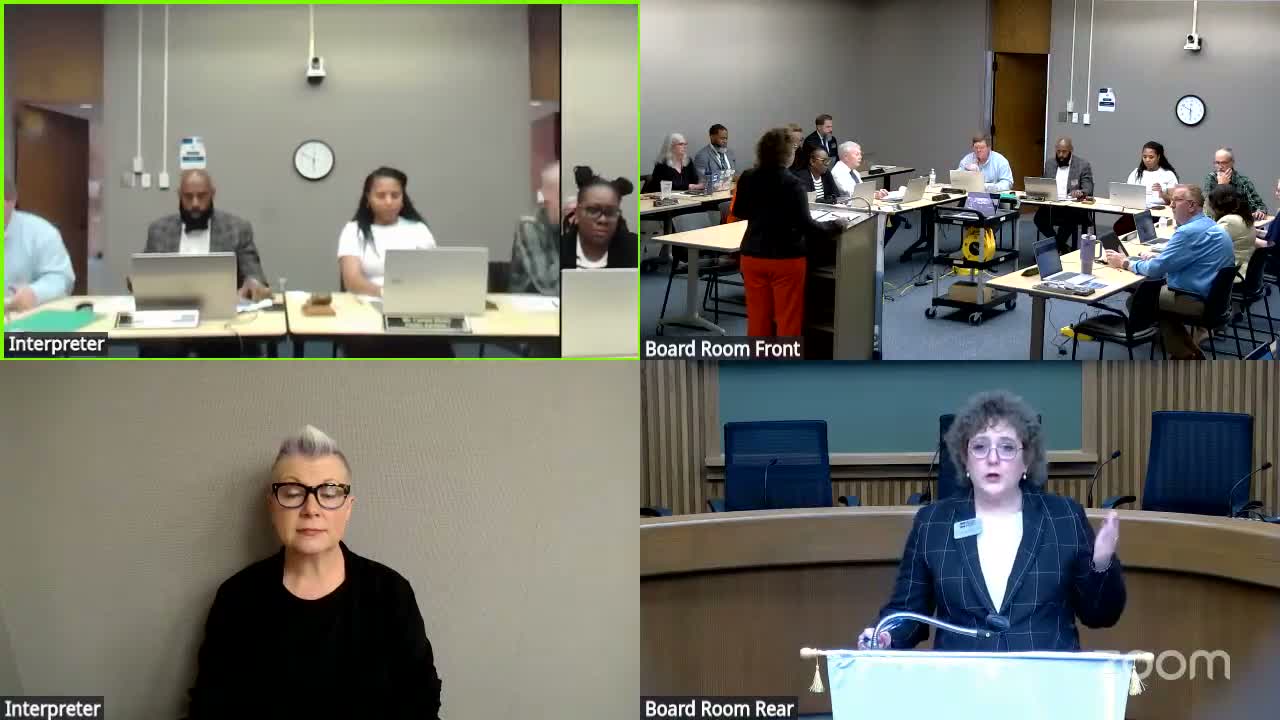
CFO Sydney Grama told the Special School District of St. Louis County board at a May work‑study that the district is facing both revenue and expenditure challenges that have produced what she described as a financial emergency and a multiyear budget shortfall for fiscal year 2027.
Grama said staff are taking a “conservative approach” to the FY27 budget and that the district is projecting lower revenues because 2026 is a non‑reassessment year and because of ongoing state funding uncertainty. "This amount in no way covers the cost of educating one of our students," she said when describing the state aid payment level and the gap with the state adequacy target. She added that transportation aid is projected to fall by about 7.6% for FY27.
The presentation summarized recent deficit history and cost drivers. Grama said the district began FY25 with a roughly $74.8 million budgeted deficit and reduced that gap to about $55.6 million through position eliminations and other measures, but the district remains in deficit. For FY26 she said the district began with a $36.3 million deficit, has added 62 classroom support staff (which she estimated at roughly $3.2 million) and continues to carry substitute and other personnel costs. Grama said salary increases are a major driver of recent deficit spending and that the district has also implemented salary freezes for administrators and business professionals, limits on travel and food purchases, and moved workers’ compensation coverage to the Missouri United School Insurance Council to capture savings.
On revenues, Grama said the district is "held harmless" for state foundation funding at a lower per‑pupil payment than the adequacy target; the presentation cited a state aid figure of $6,917 per pupil and discussed a possible adequacy figure near $69.60 (transcript figures were inconsistent). She also noted a roughly $8.8 million reduction in the FY27 revenue budget compared with FY26 and warned that prior recalculations by the state (DESE) produced a $3.4 million reduction to the district's revenue in a prior year. Grama said county protested tax distributions—which historically come in May or June—are uncertain this year after Riverview/River City Casino filed an injunction blocking the distribution of protested taxes to partner districts.
On capital spending, Grama said the capital projects tax rate will remain at 3¢ and that the capital fund includes an Ameren grant tied to electric‑bus purchases; she said that grant work is budget‑neutral in the capital fund. A board member asked about electric‑bus availability; staff replied that electric buses tied to the Ameren/Rush Island funding stream have lead times of roughly 8–12 months (shorter than current diesel lead times of about 24 months) and that procurement work is under way with multiple vendors.
Grama previewed the ClearGov online budget book for board review and said the board will receive a printed budget book in Friday packets. She said the board is expected to vote on the FY27 budget at a May 26 business meeting and that staff will submit required application materials by roughly Aug. 15 after subsequent governing‑council actions.
The board discussed the timing and visibility of fund balances (capital versus operating) and the importance of preserving an $8–$10 million capital reserve for emergencies. The meeting ended with a motion to adjourn that carried; no final budget vote occurred at the work‑study.
Grama said staff are taking a “conservative approach” to the FY27 budget and that the district is projecting lower revenues because 2026 is a non‑reassessment year and because of ongoing state funding uncertainty. "This amount in no way covers the cost of educating one of our students," she said when describing the state aid payment level and the gap with the state adequacy target. She added that transportation aid is projected to fall by about 7.6% for FY27.
The presentation summarized recent deficit history and cost drivers. Grama said the district began FY25 with a roughly $74.8 million budgeted deficit and reduced that gap to about $55.6 million through position eliminations and other measures, but the district remains in deficit. For FY26 she said the district began with a $36.3 million deficit, has added 62 classroom support staff (which she estimated at roughly $3.2 million) and continues to carry substitute and other personnel costs. Grama said salary increases are a major driver of recent deficit spending and that the district has also implemented salary freezes for administrators and business professionals, limits on travel and food purchases, and moved workers’ compensation coverage to the Missouri United School Insurance Council to capture savings.
On revenues, Grama said the district is "held harmless" for state foundation funding at a lower per‑pupil payment than the adequacy target; the presentation cited a state aid figure of $6,917 per pupil and discussed a possible adequacy figure near $69.60 (transcript figures were inconsistent). She also noted a roughly $8.8 million reduction in the FY27 revenue budget compared with FY26 and warned that prior recalculations by the state (DESE) produced a $3.4 million reduction to the district's revenue in a prior year. Grama said county protested tax distributions—which historically come in May or June—are uncertain this year after Riverview/River City Casino filed an injunction blocking the distribution of protested taxes to partner districts.
On capital spending, Grama said the capital projects tax rate will remain at 3¢ and that the capital fund includes an Ameren grant tied to electric‑bus purchases; she said that grant work is budget‑neutral in the capital fund. A board member asked about electric‑bus availability; staff replied that electric buses tied to the Ameren/Rush Island funding stream have lead times of roughly 8–12 months (shorter than current diesel lead times of about 24 months) and that procurement work is under way with multiple vendors.
Grama previewed the ClearGov online budget book for board review and said the board will receive a printed budget book in Friday packets. She said the board is expected to vote on the FY27 budget at a May 26 business meeting and that staff will submit required application materials by roughly Aug. 15 after subsequent governing‑council actions.
The board discussed the timing and visibility of fund balances (capital versus operating) and the importance of preserving an $8–$10 million capital reserve for emergencies. The meeting ended with a motion to adjourn that carried; no final budget vote occurred at the work‑study.
View the Full Meeting & All Its Details
This article offers just a summary. Unlock complete video, transcripts, and insights as a Founder Member.
✓
Watch full, unedited meeting videos
✓
Search every word spoken in unlimited transcripts
✓
AI summaries & real-time alerts (all government levels)
✓
Permanent access to expanding government content
30-day money-back guarantee
