Arts leaders present Greater Grand Rapids cultural strategy, cite $300 million annual economic impact
May 13, 2026 | Grand Rapids City, Kent County, Michigan
This article was created by AI summarizing key points discussed. AI makes mistakes, so for full details and context, please refer to the video of the full meeting. Please report any errors so we can fix them. Report an error »
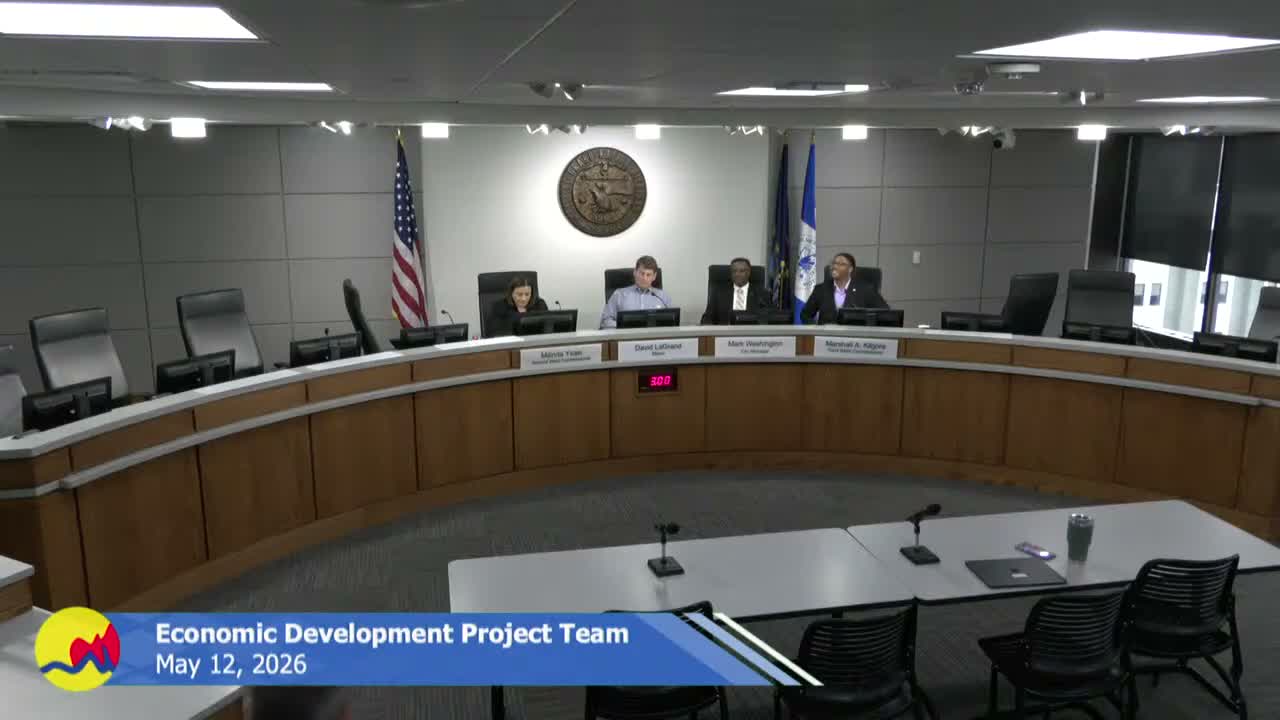
Maggie Lancaster, CEO of the Grand Rapids Children’s Museum and co-chair of the Arts and Cultural Collective of Grand Rapids (ACCGR), and co-chair Steph Rosales presented the ACCGR’s plan to develop a comprehensive regional arts-and-culture strategy.
Lancaster said the Seidman School of Business completed a regional economic-impact study that “came up with about $300,000,000 a year annually that the arts and cultural collective brings” to the Grand Rapids region and that the collective has retained consultants from Lord Cultural Resources to lead the next phase of work. "That impact study is out there for all of you to enjoy," she said.
The presenters said the process is structured in three overlapping phases: research and discovery, a public-engagement phase this summer (including sector workshops, a community survey and community ambassadors), and a drafting phase that will yield an implementation plan. "During their first visit, they were just listening and learning from everyone," Rosales said, explaining that consultants will return a proposed strategy for public review.
Why it matters: city and county officials said arts activity supports both cultural goals and economic development. A committee member noted partnerships with local institutions — including Kendall College of Art and Design, Ferris State University, Aquinas College and Calvin University — and reiterated the Seidman estimate of roughly $300 million in annual impact and an estimated 2,500 jobs tied to the sector.
Several elected officials and staff pressed presenters on outreach plans and comparators. Commissioner Sasse asked how the project will engage young people, and Rosales said organizers will use targeted workshops, community ambassadors and a brief online survey to reach residents beyond nonprofit arts networks. Rosales invited city leaders to suggest five comparator cities the consultants should study as part of their research and said the consultants will publish a comparative report at the end of the engagement period.
Reaction and context: a council member identified only in the transcript as the Chair praised the presentation but emphasized the value of art beyond economics, saying "the language of politics is really fundamentally impoverished" if the discussion is limited to dollars and jobs.
Next steps: organizers asked officials to take the survey and to participate in sector workshops this summer; the consultants will use the engagement results to produce a strategy and implementation plan for community review at the end of the engagement period.
Lancaster said the Seidman School of Business completed a regional economic-impact study that “came up with about $300,000,000 a year annually that the arts and cultural collective brings” to the Grand Rapids region and that the collective has retained consultants from Lord Cultural Resources to lead the next phase of work. "That impact study is out there for all of you to enjoy," she said.
The presenters said the process is structured in three overlapping phases: research and discovery, a public-engagement phase this summer (including sector workshops, a community survey and community ambassadors), and a drafting phase that will yield an implementation plan. "During their first visit, they were just listening and learning from everyone," Rosales said, explaining that consultants will return a proposed strategy for public review.
Why it matters: city and county officials said arts activity supports both cultural goals and economic development. A committee member noted partnerships with local institutions — including Kendall College of Art and Design, Ferris State University, Aquinas College and Calvin University — and reiterated the Seidman estimate of roughly $300 million in annual impact and an estimated 2,500 jobs tied to the sector.
Several elected officials and staff pressed presenters on outreach plans and comparators. Commissioner Sasse asked how the project will engage young people, and Rosales said organizers will use targeted workshops, community ambassadors and a brief online survey to reach residents beyond nonprofit arts networks. Rosales invited city leaders to suggest five comparator cities the consultants should study as part of their research and said the consultants will publish a comparative report at the end of the engagement period.
Reaction and context: a council member identified only in the transcript as the Chair praised the presentation but emphasized the value of art beyond economics, saying "the language of politics is really fundamentally impoverished" if the discussion is limited to dollars and jobs.
Next steps: organizers asked officials to take the survey and to participate in sector workshops this summer; the consultants will use the engagement results to produce a strategy and implementation plan for community review at the end of the engagement period.
View the Full Meeting & All Its Details
This article offers just a summary. Unlock complete video, transcripts, and insights as a Founder Member.
✓
Watch full, unedited meeting videos
✓
Search every word spoken in unlimited transcripts
✓
AI summaries & real-time alerts (all government levels)
✓
Permanent access to expanding government content
30-day money-back guarantee
