Residents urge Marathon County to rescind 287(g) agreement with ICE
May 13, 2026 | Marathon County, Wisconsin
This article was created by AI summarizing key points discussed. AI makes mistakes, so for full details and context, please refer to the video of the full meeting. Please report any errors so we can fix them. Report an error »
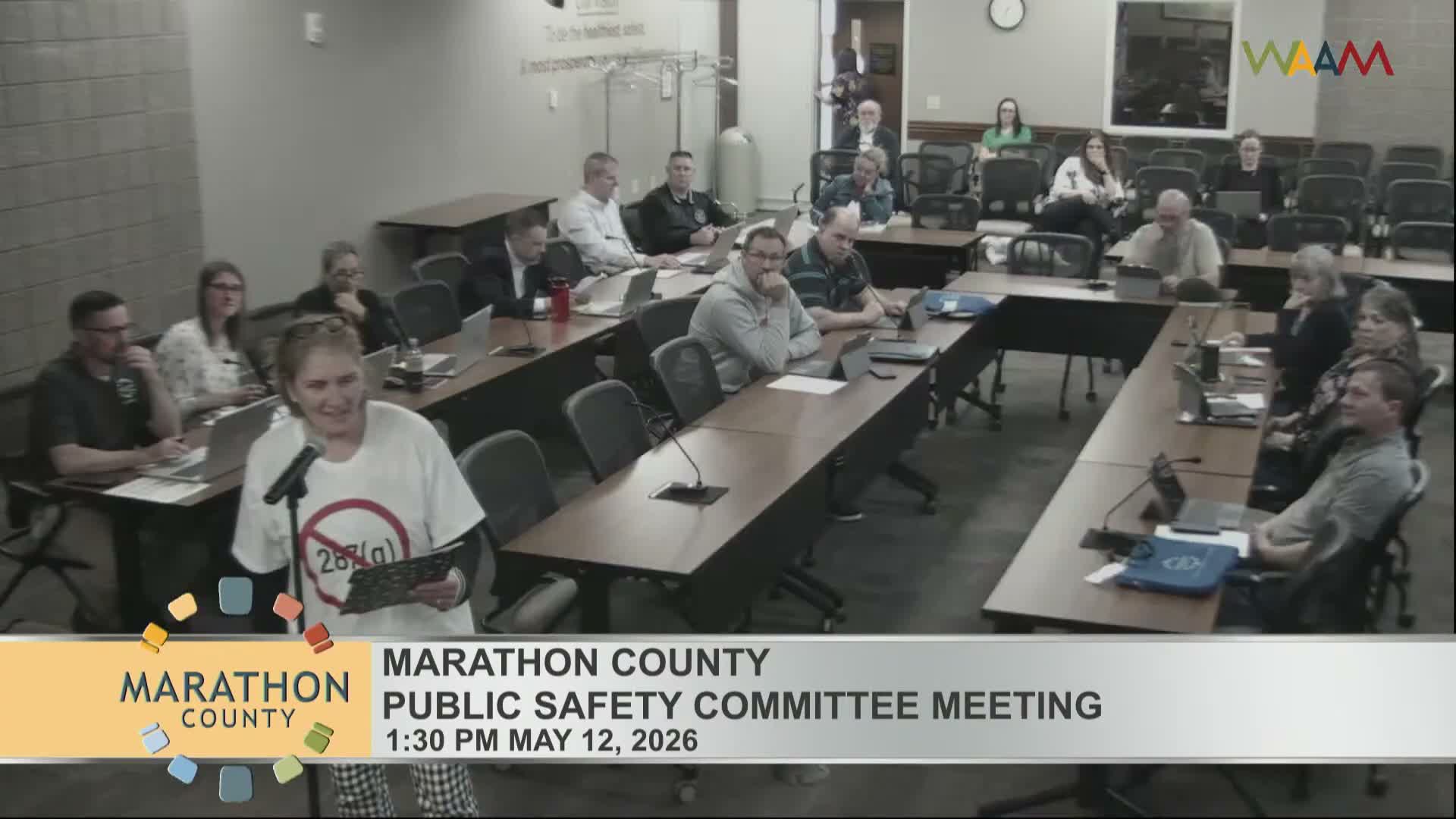
Two public commenters urged the Marathon County Public Safety Committee on May 12 to ask the sheriff to withdraw the county's 287(g) agreement with Immigration and Customs Enforcement.
Kaye (Kate) Palmer, who identified herself as a Wausau resident, said the signed agreement sends a “hugely negative message” that frightens people and keeps them from participating in daily life, work and community activities. “It is a matter of not perpetuating a culture of going after people who are driving while brown,” Palmer said, distinguishing her concerns from removing “the worst of the worst” and framing her request as one aimed at protecting productive community members and civil rights.
Chris Horning, who said he lives in Athens, told the committee he shares that view and laid out three concerns if the county remains in the program: potential financial and legal exposure for the county; reduced public safety if immigrant families stop reporting crimes or cooperating with law enforcement; and moral or ethical issues tied to using county resources for federal immigration enforcement. Horning urged the committee to review impacts of 287(g) agreements and formally ask the sheriff to withdraw Marathon County from the program.
No county official present during public comment recorded a response on the record. The committee agenda later advanced routine business and department briefings; the committee did not take formal action on the 287(g) topic during the meeting.
Why it matters: County participation in an ICE cooperative agreement can affect local budgets, civil liability and community trust in law enforcement. Residents testified that the current arrangement chills reporting and could reduce public safety if certain groups avoid contact with police.
Next steps: The committee did not vote on the agreement at the May 12 meeting; members who raised the topic encouraged further review and discussion outside the public comment period.
Kaye (Kate) Palmer, who identified herself as a Wausau resident, said the signed agreement sends a “hugely negative message” that frightens people and keeps them from participating in daily life, work and community activities. “It is a matter of not perpetuating a culture of going after people who are driving while brown,” Palmer said, distinguishing her concerns from removing “the worst of the worst” and framing her request as one aimed at protecting productive community members and civil rights.
Chris Horning, who said he lives in Athens, told the committee he shares that view and laid out three concerns if the county remains in the program: potential financial and legal exposure for the county; reduced public safety if immigrant families stop reporting crimes or cooperating with law enforcement; and moral or ethical issues tied to using county resources for federal immigration enforcement. Horning urged the committee to review impacts of 287(g) agreements and formally ask the sheriff to withdraw Marathon County from the program.
No county official present during public comment recorded a response on the record. The committee agenda later advanced routine business and department briefings; the committee did not take formal action on the 287(g) topic during the meeting.
Why it matters: County participation in an ICE cooperative agreement can affect local budgets, civil liability and community trust in law enforcement. Residents testified that the current arrangement chills reporting and could reduce public safety if certain groups avoid contact with police.
Next steps: The committee did not vote on the agreement at the May 12 meeting; members who raised the topic encouraged further review and discussion outside the public comment period.
View the Full Meeting & All Its Details
This article offers just a summary. Unlock complete video, transcripts, and insights as a Founder Member.
✓
Watch full, unedited meeting videos
✓
Search every word spoken in unlimited transcripts
✓
AI summaries & real-time alerts (all government levels)
✓
Permanent access to expanding government content
30-day money-back guarantee
