Emergency management warns battery energy storage incidents can be hazardous; committee discusses training, standards and potential developer agreements
May 13, 2026 | Marathon County, Wisconsin
This article was created by AI summarizing key points discussed. AI makes mistakes, so for full details and context, please refer to the video of the full meeting. Please report any errors so we can fix them. Report an error »
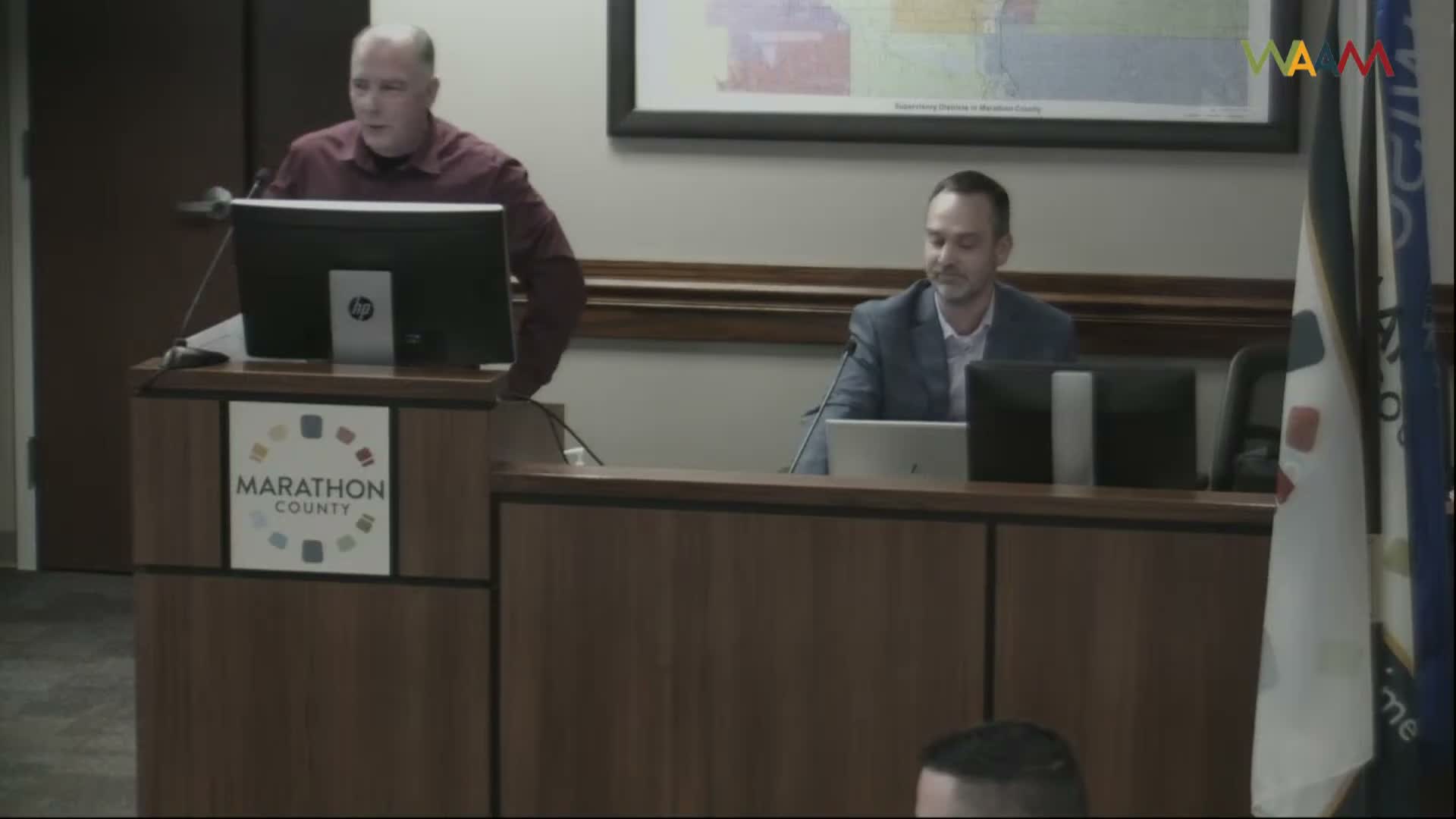
Phil Rentmeester, Marathon County Emergency Management Director, told the Public Safety Committee that incidents involving battery energy storage systems (BESS) present unique risks to responders and nearby residents.
Rentmeester cited guidance from the International Association of Fire Chiefs and the EPA: compromised lithium-ion batteries can produce large volumes of flammable gases, present risk of deflagration, be difficult to extinguish, and may reignite hours or days after initial suppression. He said typical response guidance is to isolate the site, use water to prevent spread to exposures, set wide isolation zones (example: 330 feet for large commercial installations), deploy SCBA, and monitor for hazardous air emissions such as hydrogen fluoride, hydrogen cyanide, hydrogen chloride and carbon monoxide.
Committee members asked practical questions about responsibility for cleanup, equipment costs for rural departments, aviation impacts from wind turbines, and how county zoning and PSC jurisdiction intersect. Rentmeester said the spiller (typically the responsible private party) is usually required to pay cleanup costs under state statute and that DNR would be involved. He described a limited "computer hazmat" grant (up to $10,000) that can help departments purchase hazmat-related equipment but said recurring equipment and training needs are larger than many small departments can shoulder.
Staff and the administrator recommended that, if large BESS or associated energy projects are developed locally, community benefit agreements or joint development agreements should require developers to fund recurring training and ongoing equipment purchases for local responders. They also noted that some energy projects that fall under the Public Service Commission may limit the county's ability to impose more restrictive local ordinance conditions.
The presentation referenced standards (NFPA 855 and relevant UL standards) and noted wide operational impacts: personnel training, incident action planning, hazard mitigation, and updating the county hazard mitigation and integrated preparedness plans.
Why it matters: Counties with new energy infrastructure may face difficult, long-running incidents that require specialized equipment, recurring training, air-quality monitoring and clear agreements assigning responsibility for cleanup and costs.
Next steps: Staff said they will continue to gather information, consider including training and equipment requirements in any community benefit or joint development agreements, and update the committee as research and policy recommendations develop.
Rentmeester cited guidance from the International Association of Fire Chiefs and the EPA: compromised lithium-ion batteries can produce large volumes of flammable gases, present risk of deflagration, be difficult to extinguish, and may reignite hours or days after initial suppression. He said typical response guidance is to isolate the site, use water to prevent spread to exposures, set wide isolation zones (example: 330 feet for large commercial installations), deploy SCBA, and monitor for hazardous air emissions such as hydrogen fluoride, hydrogen cyanide, hydrogen chloride and carbon monoxide.
Committee members asked practical questions about responsibility for cleanup, equipment costs for rural departments, aviation impacts from wind turbines, and how county zoning and PSC jurisdiction intersect. Rentmeester said the spiller (typically the responsible private party) is usually required to pay cleanup costs under state statute and that DNR would be involved. He described a limited "computer hazmat" grant (up to $10,000) that can help departments purchase hazmat-related equipment but said recurring equipment and training needs are larger than many small departments can shoulder.
Staff and the administrator recommended that, if large BESS or associated energy projects are developed locally, community benefit agreements or joint development agreements should require developers to fund recurring training and ongoing equipment purchases for local responders. They also noted that some energy projects that fall under the Public Service Commission may limit the county's ability to impose more restrictive local ordinance conditions.
The presentation referenced standards (NFPA 855 and relevant UL standards) and noted wide operational impacts: personnel training, incident action planning, hazard mitigation, and updating the county hazard mitigation and integrated preparedness plans.
Why it matters: Counties with new energy infrastructure may face difficult, long-running incidents that require specialized equipment, recurring training, air-quality monitoring and clear agreements assigning responsibility for cleanup and costs.
Next steps: Staff said they will continue to gather information, consider including training and equipment requirements in any community benefit or joint development agreements, and update the committee as research and policy recommendations develop.
Don't Miss a Word: See the Full Meeting!
Go beyond summaries. Unlock every video, transcript, and key insight with a Founder Membership.
✓
Get instant access to full meeting videos
✓
Search and clip any phrase from complete transcripts
✓
Receive AI-powered summaries & custom alerts
✓
Enjoy lifetime, unrestricted access to government data
30-day money-back guarantee
