County receives three-year housing investment strategy, staff urged to prioritize sites and capacity
May 13, 2026 | Santa Fe County, New Mexico
This article was created by AI summarizing key points discussed. AI makes mistakes, so for full details and context, please refer to the video of the full meeting. Please report any errors so we can fix them. Report an error »
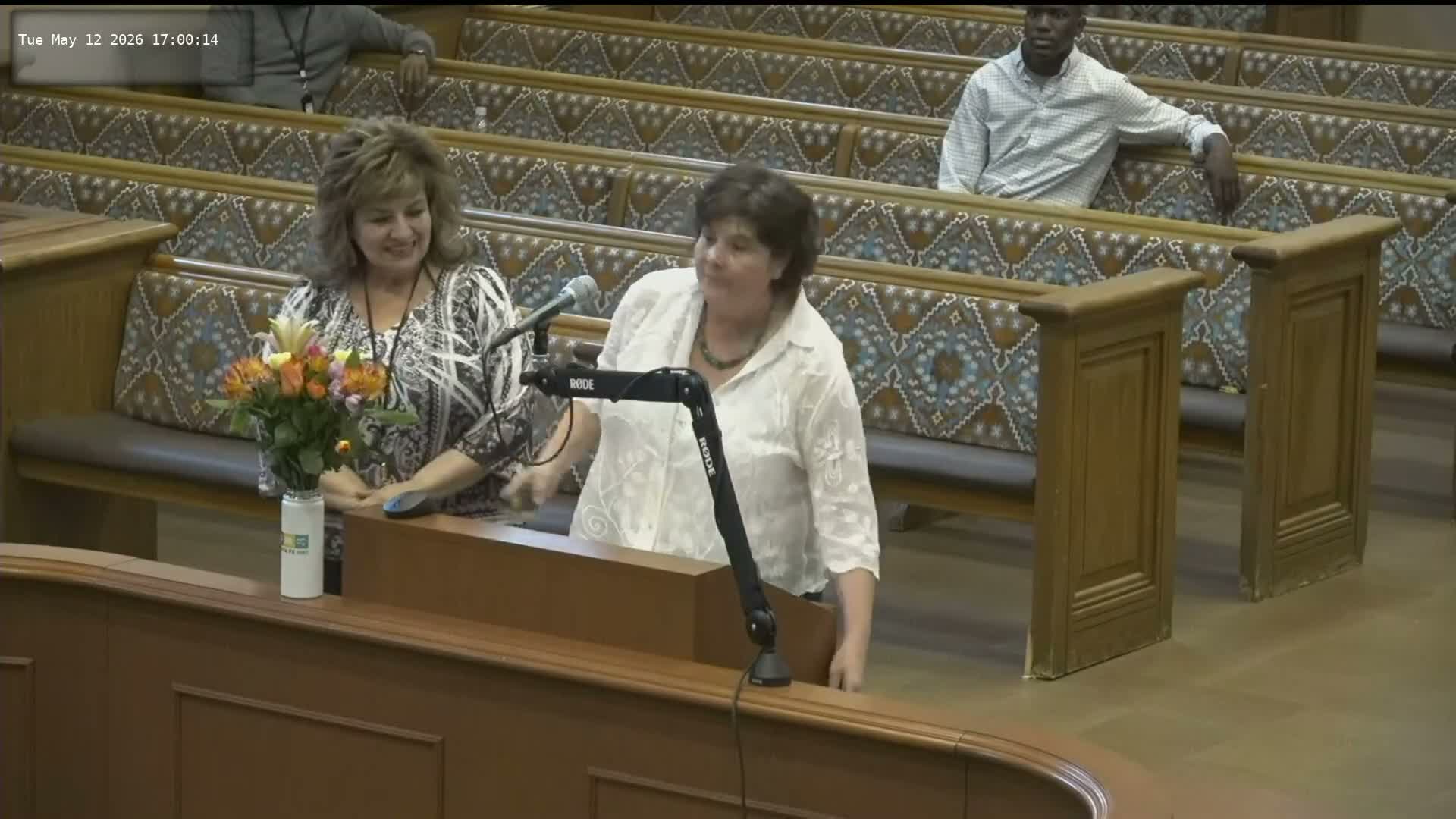
Consultants from Project Moxie presented Santa Fe County's housing investment strategy during the May 12 commission meeting, outlining how a hypothetical $10 million in county program funding could be prioritized over three years to maximize leveraged development and preserve affordable units.
Jen Lopez, president of Project Moxie, described the investment-strategy framework: match available program dollars to programs that yield the greatest leverage and benefit (developer assistance, permanent supportive housing, down-payment assistance, housing rehab and energy-efficiency upgrades, and housing authority portfolio stabilization). She said the team assumed $10 million for the county housing division over three years and emphasized trade-offs: building in "areas of opportunity" (east-side or close-in neighborhoods) carries higher land and infrastructure costs than building in lower-cost parts of the county.
Denise Benavides (housing staff) said the county has several active programs (developer assistance, down-payment assistance, a potential 40-unit permanent supportive housing project, and the Nueva Secchia project approaching close). Commissioners asked for district-level tools and data; Benavides said staff has built a district-level tool that identifies created, approved and prospective affordable units and plans a workshop for commissioners to review that data and district equity.
Commissioners discussed how county policy (tax-abatement practices, conduit bond financing, land-use code and ADU rules) and staffing capacity affect what the county can deliver. Several commissioners urged more emphasis on one-bedroom units and accessory dwelling units as a way to deliver smaller, in-demand housing types; Project Moxie noted financing and tax-credit mechanics make some unit types easier to produce than others.
The presentation will inform budget deliberations and potential code changes; staff said next steps include continuing code work, site visits and moving the strategy into the budget process.
Jen Lopez, president of Project Moxie, described the investment-strategy framework: match available program dollars to programs that yield the greatest leverage and benefit (developer assistance, permanent supportive housing, down-payment assistance, housing rehab and energy-efficiency upgrades, and housing authority portfolio stabilization). She said the team assumed $10 million for the county housing division over three years and emphasized trade-offs: building in "areas of opportunity" (east-side or close-in neighborhoods) carries higher land and infrastructure costs than building in lower-cost parts of the county.
Denise Benavides (housing staff) said the county has several active programs (developer assistance, down-payment assistance, a potential 40-unit permanent supportive housing project, and the Nueva Secchia project approaching close). Commissioners asked for district-level tools and data; Benavides said staff has built a district-level tool that identifies created, approved and prospective affordable units and plans a workshop for commissioners to review that data and district equity.
Commissioners discussed how county policy (tax-abatement practices, conduit bond financing, land-use code and ADU rules) and staffing capacity affect what the county can deliver. Several commissioners urged more emphasis on one-bedroom units and accessory dwelling units as a way to deliver smaller, in-demand housing types; Project Moxie noted financing and tax-credit mechanics make some unit types easier to produce than others.
The presentation will inform budget deliberations and potential code changes; staff said next steps include continuing code work, site visits and moving the strategy into the budget process.
Don't Miss a Word: See the Full Meeting!
Go beyond summaries. Unlock every video, transcript, and key insight with a Founder Membership.
✓
Get instant access to full meeting videos
✓
Search and clip any phrase from complete transcripts
✓
Receive AI-powered summaries & custom alerts
✓
Enjoy lifetime, unrestricted access to government data
30-day money-back guarantee
