Assembly passes omnibus COVID-era cleanup bill after debate over emergency powers, utilities and mortgage forbearance
May 13, 2026 | 2026 Legislature NY, New York
This article was created by AI summarizing key points discussed. AI makes mistakes, so for full details and context, please refer to the video of the full meeting. Please report any errors so we can fix them. Report an error »
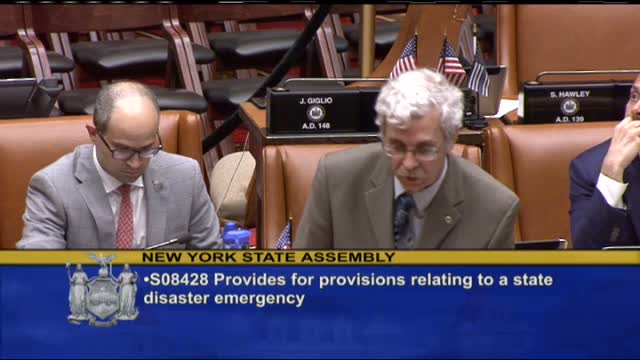
The New York State Assembly approved Rules Report 60, a multi-part, post-pandemic "cleanup" package addressing local fiscal flexibility, protections for consumers and changes to criminal-procedure practice — but not before members debated a controversial amendment and the scope of legislative oversight of emergency declarations.
Assemblymember Goodell offered an amendment that would have required state emergency declarations to be made county by county with specific reasons listed, limited unilateral gubernatorial emergency authority to 30 days plus a 15-day renewal without legislative authorization, and created a formal role for local elected officials to request termination or modification of a county emergency. "The proposed amendment would require that a declaration of the state of emergency be done on a county by county basis with specific reasons why each county is included," Goodell said during his floor explanation.
The chair ruled Goodell's amendment not germane to the bill in chief; Goodell appealed. The House voted on whether to sustain the chair's ruling; the clerk announced the results as Ayes 99, Nays 44, sustaining the ruling and preventing the amendment from being considered.
Goodell, in a longer floor statement about the bill in chief, characterized several provisions as raising constitutional concerns. On the expanded moratorium on utility terminations he argued it amounts to "forcing private companies as well as public utilities ... to continue to provide service and products like water or other products to people who are not paying for them," and suggested the provision risks breaching contract protections.
Assemblymember Abernathy, addressing section c on mortgage forbearance for owner-occupied one- to four-family properties, defended the approach and the amendment's changes to the earlier bill. "This continues the obligation of the borrower to pay interest. Secondly, it defers obligations. It doesn't impair obligations," Abernathy said, describing the provision as a short-term measure intended to prevent foreclosures during the COVID crisis.
Members also raised concerns about proposed changes to criminal procedure that would broaden virtual preliminary hearings and require technical picture-and-sound standards; proponents and critics discussed witness-protection limits and the availability of protective orders in virtual settings.
The clerk recorded the final roll call on Rules Report 60 as Ayes 107, No 36; the bill was declared passed and will take effect immediately. Protest and disagreement among caucuses were recorded during the germaneness vote, but the omnibus package itself secured enough support to pass the House.
Assemblymember Goodell offered an amendment that would have required state emergency declarations to be made county by county with specific reasons listed, limited unilateral gubernatorial emergency authority to 30 days plus a 15-day renewal without legislative authorization, and created a formal role for local elected officials to request termination or modification of a county emergency. "The proposed amendment would require that a declaration of the state of emergency be done on a county by county basis with specific reasons why each county is included," Goodell said during his floor explanation.
The chair ruled Goodell's amendment not germane to the bill in chief; Goodell appealed. The House voted on whether to sustain the chair's ruling; the clerk announced the results as Ayes 99, Nays 44, sustaining the ruling and preventing the amendment from being considered.
Goodell, in a longer floor statement about the bill in chief, characterized several provisions as raising constitutional concerns. On the expanded moratorium on utility terminations he argued it amounts to "forcing private companies as well as public utilities ... to continue to provide service and products like water or other products to people who are not paying for them," and suggested the provision risks breaching contract protections.
Assemblymember Abernathy, addressing section c on mortgage forbearance for owner-occupied one- to four-family properties, defended the approach and the amendment's changes to the earlier bill. "This continues the obligation of the borrower to pay interest. Secondly, it defers obligations. It doesn't impair obligations," Abernathy said, describing the provision as a short-term measure intended to prevent foreclosures during the COVID crisis.
Members also raised concerns about proposed changes to criminal procedure that would broaden virtual preliminary hearings and require technical picture-and-sound standards; proponents and critics discussed witness-protection limits and the availability of protective orders in virtual settings.
The clerk recorded the final roll call on Rules Report 60 as Ayes 107, No 36; the bill was declared passed and will take effect immediately. Protest and disagreement among caucuses were recorded during the germaneness vote, but the omnibus package itself secured enough support to pass the House.
View the Full Meeting & All Its Details
This article offers just a summary. Unlock complete video, transcripts, and insights as a Founder Member.
✓
Watch full, unedited meeting videos
✓
Search every word spoken in unlimited transcripts
✓
AI summaries & real-time alerts (all government levels)
✓
Permanent access to expanding government content
30-day money-back guarantee
