Native American Health Center outlines cultural services, sweat lodge and 76-unit affordable housing/clinic expansion
May 13, 2026 | Alameda County, California
This article was created by AI summarizing key points discussed. AI makes mistakes, so for full details and context, please refer to the video of the full meeting. Please report any errors so we can fix them. Report an error »
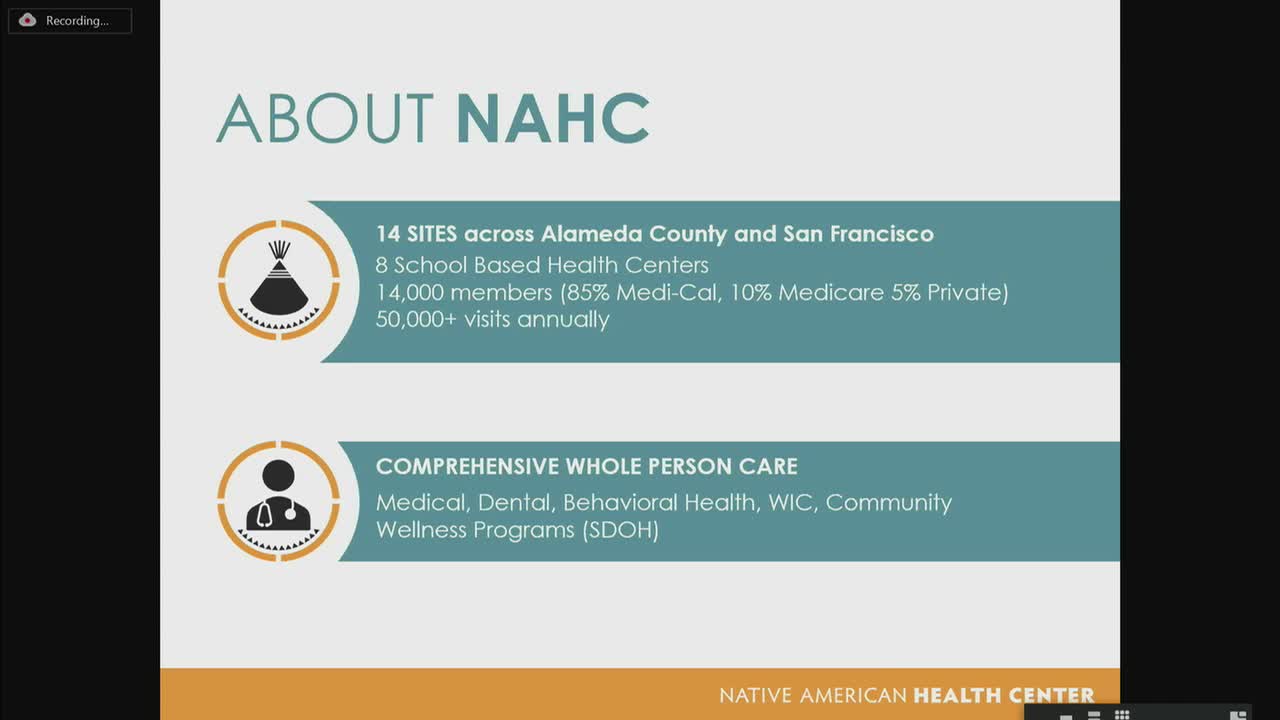
Natalie Aguilera, CEO of the Native American Health Center (NHC), and Chief Cultural Officer Anthony Guzman told the Health Committee the center operates 14 sites across Alameda and San Francisco counties, including eight school-based health centers, and serves roughly 14,000 members with about 50,000 visits annually.
Aguilera said a quarter of NHC’s staff are Native American, a deliberate hiring priority tied to employment, insurance coverage and culturally concordant care. "A quarter of our staff are Native American," she said, noting nearly 100 Native staff members work at the center. Guzman described culturally grounded prevention programs — from perinatal home-visiting to suicide and substance-abuse prevention — and said the center links cultural activities and contemporary expressions (music, art) to health outreach.
The presenters highlighted a suite of social-determinant and workforce programs: a 7 Directions Scholarship Fund, peer specialist networks, community wellness staffing, ESL classes tied to workforce development, and a network of traditional counselors. Guzman said the center is expanding programs that connect community members to housing, employment and clinical services and cited outcomes from last year’s behavioral-health work.
On facilities and housing, Aguilera described an ongoing transition to assume ownership of previously partnered affordable housing tied to the 7 Directions clinic and a groundbreaking for a new Native American campus building at 3050 International in Fruitvale. "By the end of this year, we'll be owners of affordable housing," she said, and the new facility will add clinic space and 20 dental operatories to reduce lengthy dental wait lists.
Aguilera and Guzman stressed culturally specific programming including a newly constructed sweat lodge and community ceremonies, which they link to improved social and mental health outcomes. They also recounted an individualized reentry case in which NHC coordinated benefits, workforce training and cultural supports that led to stable housing and employment for a formerly incarcerated member.
Supervisors asked for details about how NHC measured reported improvements in mental-health outcomes; Guzman said the center uses its electronic health record and internal quality-improvement processes and offered to supply more specifics to the committee.
Next steps: NHC requested continued sustained, flexible county funding, more workforce-development investment and county support for culturally tailored services. The committee did not vote on funding at the meeting.
Aguilera said a quarter of NHC’s staff are Native American, a deliberate hiring priority tied to employment, insurance coverage and culturally concordant care. "A quarter of our staff are Native American," she said, noting nearly 100 Native staff members work at the center. Guzman described culturally grounded prevention programs — from perinatal home-visiting to suicide and substance-abuse prevention — and said the center links cultural activities and contemporary expressions (music, art) to health outreach.
The presenters highlighted a suite of social-determinant and workforce programs: a 7 Directions Scholarship Fund, peer specialist networks, community wellness staffing, ESL classes tied to workforce development, and a network of traditional counselors. Guzman said the center is expanding programs that connect community members to housing, employment and clinical services and cited outcomes from last year’s behavioral-health work.
On facilities and housing, Aguilera described an ongoing transition to assume ownership of previously partnered affordable housing tied to the 7 Directions clinic and a groundbreaking for a new Native American campus building at 3050 International in Fruitvale. "By the end of this year, we'll be owners of affordable housing," she said, and the new facility will add clinic space and 20 dental operatories to reduce lengthy dental wait lists.
Aguilera and Guzman stressed culturally specific programming including a newly constructed sweat lodge and community ceremonies, which they link to improved social and mental health outcomes. They also recounted an individualized reentry case in which NHC coordinated benefits, workforce training and cultural supports that led to stable housing and employment for a formerly incarcerated member.
Supervisors asked for details about how NHC measured reported improvements in mental-health outcomes; Guzman said the center uses its electronic health record and internal quality-improvement processes and offered to supply more specifics to the committee.
Next steps: NHC requested continued sustained, flexible county funding, more workforce-development investment and county support for culturally tailored services. The committee did not vote on funding at the meeting.
View the Full Meeting & All Its Details
This article offers just a summary. Unlock complete video, transcripts, and insights as a Founder Member.
✓
Watch full, unedited meeting videos
✓
Search every word spoken in unlimited transcripts
✓
AI summaries & real-time alerts (all government levels)
✓
Permanent access to expanding government content
30-day money-back guarantee
