Howard County Council tightens rules for composting and natural wood‑waste recycling
May 13, 2026 | Howard County, Maryland
This article was created by AI summarizing key points discussed. AI makes mistakes, so for full details and context, please refer to the video of the full meeting. Please report any errors so we can fix them. Report an error »
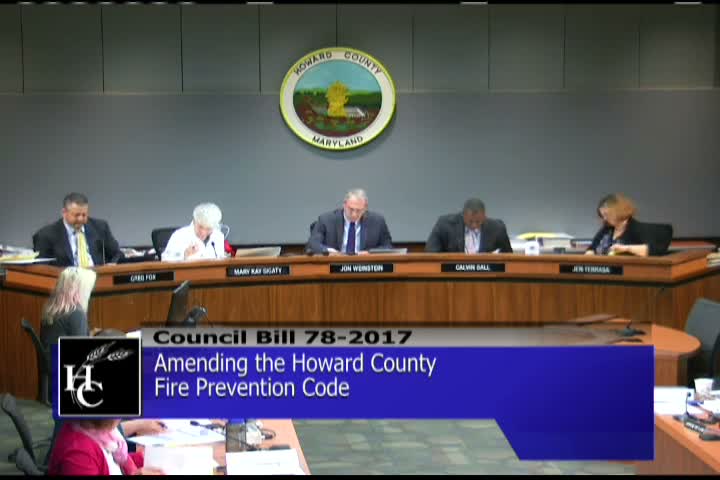
The Howard County Council voted to adopt ZRA 180 on Thursday, a zoning amendment that sets new limits on composting and natural wood‑waste recycling facilities across the county.
Proponents framed the measure as balancing farm operations and environmental safeguards. Lawmaker (S3), the bill sponsor during debate, said the changes “make it clear that composting is allowed as an accessory use if a permit is not required” while also defining natural wood‑waste recycling and restricting where large operations can locate. The council adopted a series of floor amendments that, among other things, limit accessory‑use area to 1 acre (or a modest percentage of production area), restrict wholesale and retail sales of recycled product on many farm parcels, limit truck sizes for on‑site activities and establish larger setbacks from residential lots.
A central theme in discussion was state permitting. Agency official (S10), answering members’ questions about preemption, told the council that Maryland Department of the Environment (MDE) regulates composting feedstocks and public‑health matters and that certain local prohibitions could be preempted by state law. “The state has not let go of those topics generally to charter counties,” the official said in explaining constraints on local authority. Several speakers urged care so local zoning did not duplicate technical permit requirements best handled by MDE.
Opponents raised health, dust and pathogen concerns and pressed for stricter operational controls such as covered piles and misting. Supporters, including L awmaker (S4) and others, said many of the suggested operational safeguards already appear in permit conditions and that overly prescriptive zoning could create conflicts or fire hazards. The council adopted targeted amendments to address immediate neighborhood concerns — restricting locations near residential subdivisions, clarifying definitions and adding size and truck‑traffic limits — and left technical permitting for MDE to enforce.
The bill passed on a recorded vote after several successive amendments were considered and adopted. Members who voted in favor said the package was substantially improved from its initial draft; members who voted against continued to express concerns about public‑health protections and local enforcement tools.
The zoning ordinance now goes to enrollment for final form and codification. Interested residents should watch the county’s posting for the enacted text and the county’s guidance about how the new provisions will be applied to special farm permits and conditional uses.
Proponents framed the measure as balancing farm operations and environmental safeguards. Lawmaker (S3), the bill sponsor during debate, said the changes “make it clear that composting is allowed as an accessory use if a permit is not required” while also defining natural wood‑waste recycling and restricting where large operations can locate. The council adopted a series of floor amendments that, among other things, limit accessory‑use area to 1 acre (or a modest percentage of production area), restrict wholesale and retail sales of recycled product on many farm parcels, limit truck sizes for on‑site activities and establish larger setbacks from residential lots.
A central theme in discussion was state permitting. Agency official (S10), answering members’ questions about preemption, told the council that Maryland Department of the Environment (MDE) regulates composting feedstocks and public‑health matters and that certain local prohibitions could be preempted by state law. “The state has not let go of those topics generally to charter counties,” the official said in explaining constraints on local authority. Several speakers urged care so local zoning did not duplicate technical permit requirements best handled by MDE.
Opponents raised health, dust and pathogen concerns and pressed for stricter operational controls such as covered piles and misting. Supporters, including L awmaker (S4) and others, said many of the suggested operational safeguards already appear in permit conditions and that overly prescriptive zoning could create conflicts or fire hazards. The council adopted targeted amendments to address immediate neighborhood concerns — restricting locations near residential subdivisions, clarifying definitions and adding size and truck‑traffic limits — and left technical permitting for MDE to enforce.
The bill passed on a recorded vote after several successive amendments were considered and adopted. Members who voted in favor said the package was substantially improved from its initial draft; members who voted against continued to express concerns about public‑health protections and local enforcement tools.
The zoning ordinance now goes to enrollment for final form and codification. Interested residents should watch the county’s posting for the enacted text and the county’s guidance about how the new provisions will be applied to special farm permits and conditional uses.
View the Full Meeting & All Its Details
This article offers just a summary. Unlock complete video, transcripts, and insights as a Founder Member.
✓
Watch full, unedited meeting videos
✓
Search every word spoken in unlimited transcripts
✓
AI summaries & real-time alerts (all government levels)
✓
Permanent access to expanding government content
30-day money-back guarantee
