Council adopts amended Adequate Public Facilities ordinance tightening school‑capacity tests
May 13, 2026 | Howard County, Maryland
This article was created by AI summarizing key points discussed. AI makes mistakes, so for full details and context, please refer to the video of the full meeting. Please report any errors so we can fix them. Report an error »
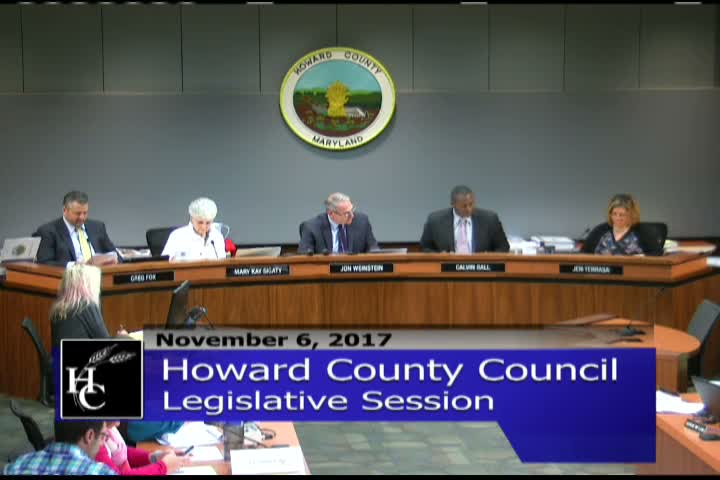
Howard County Council members voted to approve an amended Adequate Public Facilities Ordinance (CB61), a broad rewrite that ties new housing pacing rules to school capacity metrics and other staged tests.
The council debated multiple provisions, but the most consequential changes adopted were new capacity thresholds for elementary, middle and high schools (amendment 20) and a suite of procedural and exception rules for phased developments and projects claiming affordable‑housing or redevelopment status. Chair (S1) described the package as a compromise intended to slow development in the most crowded attendance areas while giving the Board of Education space to plan.
Lawmaker (S3) and other proponents argued capacity limits are necessary to preserve school quality and avoid uncontrolled growth; “we have to do something,” one supporter said as multiple speakers cited large numbers of relocatable classrooms already in use. Opponents, including Lawmaker (S2) and Lawmaker (S5), said the ordinance risks shutting down new housing, concentrating affordability, and shifting the cost of school capacity entirely onto local taxpayers. They warned some parts of the bill could depress development and thereby reduce the tax base needed to fund school construction.
Council adopted multiple targeted exceptions — for certain urban‑renewal or small affordable housing projects under specific conditions — but members warned those waivers are narrow and not a general carve‑out. The council also added procedural devices such as review committees and reporting requirements to increase transparency around capacity changes and mitigation discussions with the school system.
The bill was approved on a recorded vote after many hours of amendments and debate. Supporters said it gives the county more tools to pace growth and better align development with school‑capacity planning; detractors said it does not fully resolve regional imbalances and urged future collaboration with the Board of Education and state authorities.
Next steps: staff will prepare the final adopted text and a guidance package to explain how the new APFO tests will be applied to pending and future development proposals.
The council debated multiple provisions, but the most consequential changes adopted were new capacity thresholds for elementary, middle and high schools (amendment 20) and a suite of procedural and exception rules for phased developments and projects claiming affordable‑housing or redevelopment status. Chair (S1) described the package as a compromise intended to slow development in the most crowded attendance areas while giving the Board of Education space to plan.
Lawmaker (S3) and other proponents argued capacity limits are necessary to preserve school quality and avoid uncontrolled growth; “we have to do something,” one supporter said as multiple speakers cited large numbers of relocatable classrooms already in use. Opponents, including Lawmaker (S2) and Lawmaker (S5), said the ordinance risks shutting down new housing, concentrating affordability, and shifting the cost of school capacity entirely onto local taxpayers. They warned some parts of the bill could depress development and thereby reduce the tax base needed to fund school construction.
Council adopted multiple targeted exceptions — for certain urban‑renewal or small affordable housing projects under specific conditions — but members warned those waivers are narrow and not a general carve‑out. The council also added procedural devices such as review committees and reporting requirements to increase transparency around capacity changes and mitigation discussions with the school system.
The bill was approved on a recorded vote after many hours of amendments and debate. Supporters said it gives the county more tools to pace growth and better align development with school‑capacity planning; detractors said it does not fully resolve regional imbalances and urged future collaboration with the Board of Education and state authorities.
Next steps: staff will prepare the final adopted text and a guidance package to explain how the new APFO tests will be applied to pending and future development proposals.
View the Full Meeting & All Its Details
This article offers just a summary. Unlock complete video, transcripts, and insights as a Founder Member.
✓
Watch full, unedited meeting videos
✓
Search every word spoken in unlimited transcripts
✓
AI summaries & real-time alerts (all government levels)
✓
Permanent access to expanding government content
30-day money-back guarantee
