KDHE says source found, increases monitoring around Yoder water well
May 13, 2026 | Reno County, Kansas
This article was created by AI summarizing key points discussed. AI makes mistakes, so for full details and context, please refer to the video of the full meeting. Please report any errors so we can fix them. Report an error »
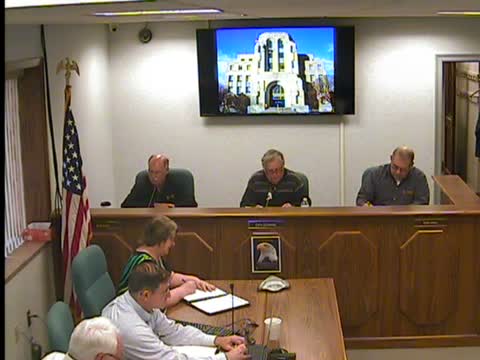
County staff updated the Reno County Commission on long-term groundwater monitoring around the Yoder public-supply well, saying the Kansas Department of Health and Environment (KDHE) identified a likely source of contamination and will increase sampling and instrumentation to better quantify any future risk.
"In 2013 they believe they found a source of the contamination," said the county staff member presenting the KDHE letter, describing an excavation where officials found a "burial pit that was really, really hot in the carbon tetrachloride," the contaminant of concern. The presenter said KDHE injected an in-situ oxidizing product at the site that has reduced contamination levels over time.
Why it matters: KDHE plans to increase monitoring frequency for several wells from annual to quarterly and to install transducers in four wells to continuously log water levels. The transducers will let staff see how pumping at the public-supply well (reported to pump about 120 gallons per minute) draws down the aquifer and how that movement might affect contaminant transport. The county presenter summarized KDHE’s assessment as saying there is currently a "very low likelihood" that contamination will be detected in the Rural Water District 101 public well but that the new monitoring will provide clearer, quantitative evidence.
Commissioners asked follow-up questions about which wells will be monitored, the distinct roles of monitoring versus irrigation wells and private well sampling, and whether the increased monitoring will require county funds. Staff said KDHE is handling the monitoring and remediation work to date and that the county has not had to put money into remediation at the site. The presenter said daily water-level logging and quarterly chemistry checks will improve the county’s ability to estimate contaminant concentrations "if it actually got there."
Next steps: County staff will continue to coordinate with KDHE, receive the updated monitoring data, and report findings to the commission. The presenter offered to stand for further questions and confirmed that KDHE’s increased monitoring and transducer installation are planned steps to refine risk estimates for the public supply.
"In 2013 they believe they found a source of the contamination," said the county staff member presenting the KDHE letter, describing an excavation where officials found a "burial pit that was really, really hot in the carbon tetrachloride," the contaminant of concern. The presenter said KDHE injected an in-situ oxidizing product at the site that has reduced contamination levels over time.
Why it matters: KDHE plans to increase monitoring frequency for several wells from annual to quarterly and to install transducers in four wells to continuously log water levels. The transducers will let staff see how pumping at the public-supply well (reported to pump about 120 gallons per minute) draws down the aquifer and how that movement might affect contaminant transport. The county presenter summarized KDHE’s assessment as saying there is currently a "very low likelihood" that contamination will be detected in the Rural Water District 101 public well but that the new monitoring will provide clearer, quantitative evidence.
Commissioners asked follow-up questions about which wells will be monitored, the distinct roles of monitoring versus irrigation wells and private well sampling, and whether the increased monitoring will require county funds. Staff said KDHE is handling the monitoring and remediation work to date and that the county has not had to put money into remediation at the site. The presenter said daily water-level logging and quarterly chemistry checks will improve the county’s ability to estimate contaminant concentrations "if it actually got there."
Next steps: County staff will continue to coordinate with KDHE, receive the updated monitoring data, and report findings to the commission. The presenter offered to stand for further questions and confirmed that KDHE’s increased monitoring and transducer installation are planned steps to refine risk estimates for the public supply.
Don't Miss a Word: See the Full Meeting!
Go beyond summaries. Unlock every video, transcript, and key insight with a Founder Membership.
✓
Get instant access to full meeting videos
✓
Search and clip any phrase from complete transcripts
✓
Receive AI-powered summaries & custom alerts
✓
Enjoy lifetime, unrestricted access to government data
30-day money-back guarantee
