After months of hearings, council declines Lavender Hill outdoor-events permit amid neighborhood noise, safety concerns
May 11, 2026 | Richmond City (Independent City), Virginia
This article was created by AI summarizing key points discussed. AI makes mistakes, so for full details and context, please refer to the video of the full meeting. Please report any errors so we can fix them. Report an error »
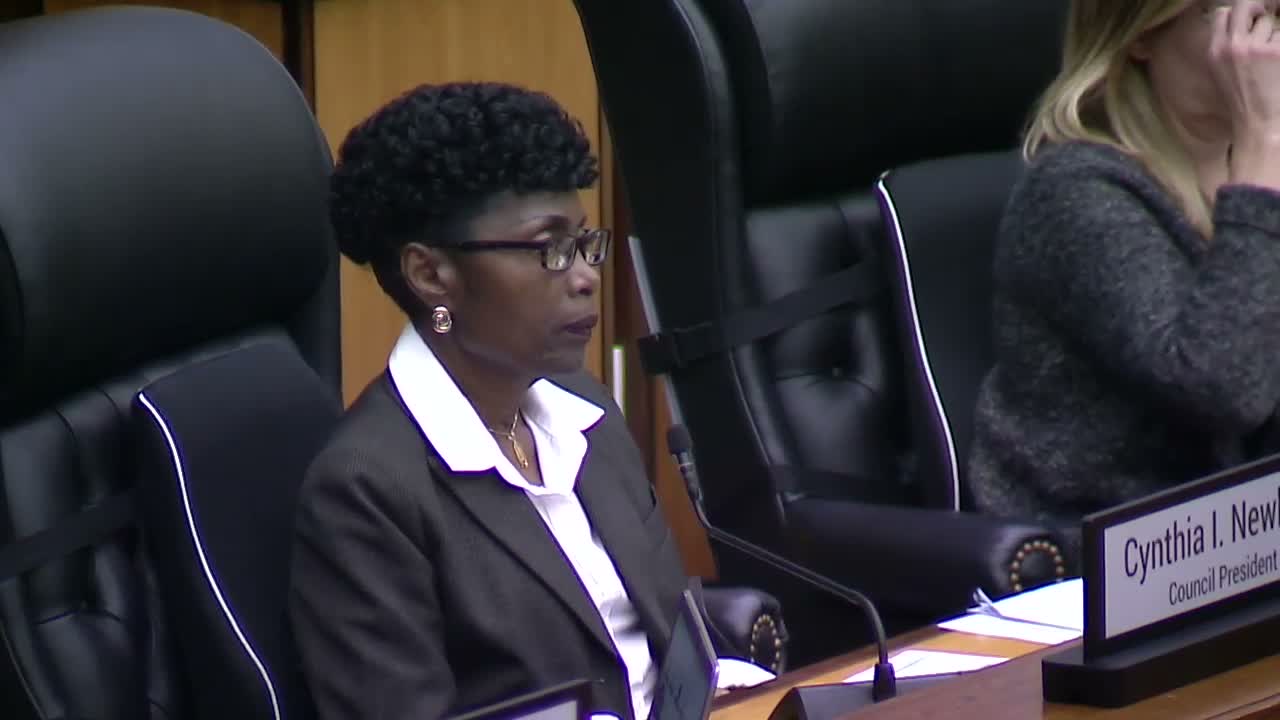
The Richmond City Council voted not to authorize a special‑use permit (SUP) that would have allowed extensive outdoor events at Lavender Hill, a private event and community space at 1705 Commonwealth Avenue. The item followed 20 months of review and a Planning Commission recommendation to deny the application by an 8–1 vote.
What was proposed: Planning staff described the SUP as written: up to 52 outdoor event days per year, maximum five per month, event hours 9 a.m.–10 p.m., a maximum of 120 attendees for outdoor events, and a staffing ratio of at least one staff member per 50 attendees; amplified music would end before 9 p.m. The planning commission recommended denial after considering neighborhood impacts.
Neighbors objected to scale, noise and enforcement: Residents who live within yards of Lavender Hill told the council the requested frequency, sound levels and attendee counts are incompatible with the nearby homes. “It’s impossible to have 120 people, amplified music, in a backyard 25 feet away and abide by the noise ordinance,” said Sydney Bragg, a neighbor, summarizing multiple attendees’ points about sleep disruption, safety risks from overflow parking and long‑term precedent for zoning near residences.
Supporters and the applicant argued for neighborhood value and fairness: Supporters testified that Lavender Hill provides community programming and economic opportunities, and that staff worked repeatedly with neighbors and planning staff to reduce impacts. Several supporters said the business had accepted multiple restrictions and was operating responsibly. One supporter described multiple meetings and adjustments offered by the applicant in good faith.
Negotiations and proposed compromise: Council members and neighborhood representatives reported multi‑hour negotiations that produced a potential compromise — described orally in council discussion but not adopted as an amendment on the floor — that would have reduced outdoor events to 20 per year (up to 50 people, with portable tabletop speakers), allowed up to 10 larger events per year (up to 100 people with amplified sound), and unlimited indoor events. The applicant told the council she would accept a reduced event count along those lines if it were adopted by ordinance or amendment, but neighbors and planning staff raised enforceability concerns.
Council decision and rationale: After public testimony and council debate about enforceability, noise standards and neighborhood protections, the council voted on the SUP as presented (the 52‑event proposal that had been before planning). The motion to adopt the SUP as written failed; the clerk announced that the paper was not adopted. Council members said that the lack of an enforceable mechanism for controlling amplified sound at such close proximity to residences and the Planning Commission’s recommendation influenced the outcome. Officials noted that the applicant may reapply with a narrower, enforceable proposal or pursue other regulatory paths.
Ending: The council closed the hearing and directed that any future proposal be processed through the usual SUP application path; the applicant and neighborhood groups were encouraged to continue negotiating off the dais and to file a revised application if agreement can be documented.
What was proposed: Planning staff described the SUP as written: up to 52 outdoor event days per year, maximum five per month, event hours 9 a.m.–10 p.m., a maximum of 120 attendees for outdoor events, and a staffing ratio of at least one staff member per 50 attendees; amplified music would end before 9 p.m. The planning commission recommended denial after considering neighborhood impacts.
Neighbors objected to scale, noise and enforcement: Residents who live within yards of Lavender Hill told the council the requested frequency, sound levels and attendee counts are incompatible with the nearby homes. “It’s impossible to have 120 people, amplified music, in a backyard 25 feet away and abide by the noise ordinance,” said Sydney Bragg, a neighbor, summarizing multiple attendees’ points about sleep disruption, safety risks from overflow parking and long‑term precedent for zoning near residences.
Supporters and the applicant argued for neighborhood value and fairness: Supporters testified that Lavender Hill provides community programming and economic opportunities, and that staff worked repeatedly with neighbors and planning staff to reduce impacts. Several supporters said the business had accepted multiple restrictions and was operating responsibly. One supporter described multiple meetings and adjustments offered by the applicant in good faith.
Negotiations and proposed compromise: Council members and neighborhood representatives reported multi‑hour negotiations that produced a potential compromise — described orally in council discussion but not adopted as an amendment on the floor — that would have reduced outdoor events to 20 per year (up to 50 people, with portable tabletop speakers), allowed up to 10 larger events per year (up to 100 people with amplified sound), and unlimited indoor events. The applicant told the council she would accept a reduced event count along those lines if it were adopted by ordinance or amendment, but neighbors and planning staff raised enforceability concerns.
Council decision and rationale: After public testimony and council debate about enforceability, noise standards and neighborhood protections, the council voted on the SUP as presented (the 52‑event proposal that had been before planning). The motion to adopt the SUP as written failed; the clerk announced that the paper was not adopted. Council members said that the lack of an enforceable mechanism for controlling amplified sound at such close proximity to residences and the Planning Commission’s recommendation influenced the outcome. Officials noted that the applicant may reapply with a narrower, enforceable proposal or pursue other regulatory paths.
Ending: The council closed the hearing and directed that any future proposal be processed through the usual SUP application path; the applicant and neighborhood groups were encouraged to continue negotiating off the dais and to file a revised application if agreement can be documented.
View the Full Meeting & All Its Details
This article offers just a summary. Unlock complete video, transcripts, and insights as a Founder Member.
✓
Watch full, unedited meeting videos
✓
Search every word spoken in unlimited transcripts
✓
AI summaries & real-time alerts (all government levels)
✓
Permanent access to expanding government content
30-day money-back guarantee
