Wildlife biologist details river otter recolonization on Long Island, urges culvert fixes to curb roadkill
May 11, 2026 | EAST HAMPTON UNION FREE SCHOOL DISTRICT, School Districts, New York
This article was created by AI summarizing key points discussed. AI makes mistakes, so for full details and context, please refer to the video of the full meeting. Please report any errors so we can fix them. Report an error »
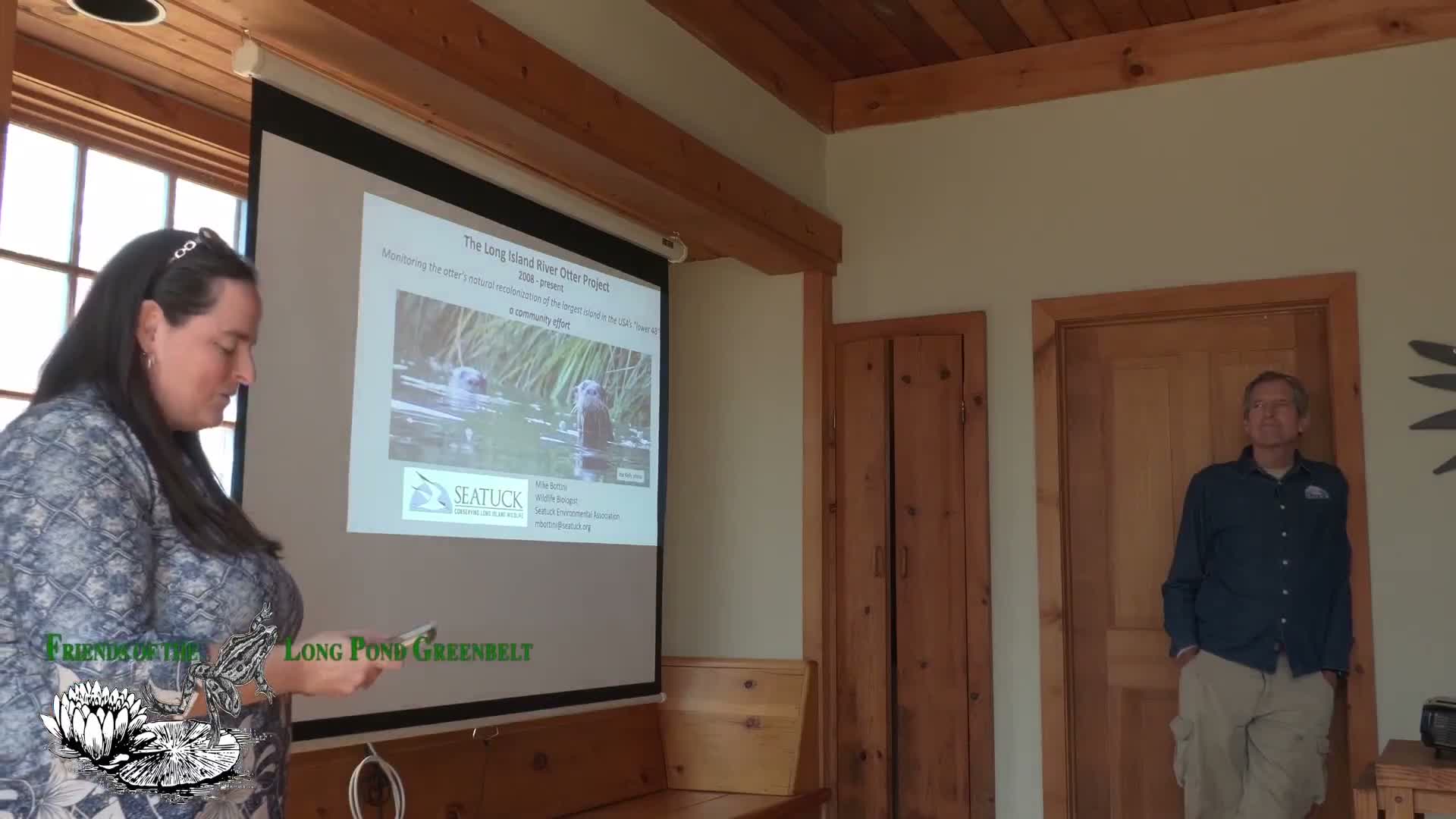
At a public program at the Long Pond Greenbelt Nature Center, wildlife biologist Mike Botini described years of surveys and volunteer reports indicating that river otters (Lontra canadensis) are reappearing in parts of Long Island and urged local authorities and volunteer groups to pursue low-cost passage fixes to reduce vehicle collisions.
Botini, introduced by the program moderator as a wildlife biologist working with CTEC, summarized his research history and the 2008 survey work that helped document latrine sites and occasional trail-camera photos across ponds and estuaries. "We documented latrines and trail-cam photos," he said, explaining that community volunteers, occasional photographs and systematic surveys are the primary evidence for otter presence.
The biologist told the audience that vehicle collisions appear to be the single largest cause of otter mortality on Long Island, citing recent roadkill photos and repeat reports at specific crossings. "Collisions in motor vehicles ... seem to be the main source of mortality on Long Island," he said, noting several sites where animals were struck while moving between wetland patches.
To reduce that mortality, Botini described a mix of practical mitigation experiments and planning steps: placing temporary stepping-stone ramps or cinder-block approaches in culverts, identifying low‑hanging culvert passes that otters can use, and pushing for targeted culvert repairs or streambed restoration where county or village ownership allows. He said some temporary designs are inexpensive and removable; in one example he recorded a mother with pups using a culvert passage under a busy road after placing simple blocks and a trail camera.
Botini noted permitting constraints: anyone modifying a stream or culvert needs authorization from the streambed or dam owner and must coordinate with permitting agencies. "You have to be the stream bottom owner," he said, describing one barrier to quick installs while also saying he has discussed temporary-install approaches with local highway and conservation staff.
He flagged funding and partnership opportunities, saying The Nature Conservancy and local preservation funds have offered technical input and that an EPA-funded competition for "safe wildlife passages" might provide grant support if successful. Jackie Fenlon of the Southampton Town Community Preservation Fund and local staff were cited as potential partners to help secure grants and implement larger restorations.
Botini stressed that accurate identification is critical for volunteer surveys and reviewed simple field cues—tail motion, body posture and latrine contents—to distinguish otters from muskrats or beavers. He also described otter life-history traits relevant to monitoring and management, including delayed implantation, the timing of pup emergence and typical home-range sizes, which affect how populations recolonize fragmented coastal habitats.
He closed by inviting attendees to a field trip to view otter latrine sites and urged continued volunteer reporting, trail-camera monitoring and discussions with highway and conservation agencies about targeted culvert fixes.
Next steps described at the program included continuing trail-cam surveys, compiling roadkill reports to prioritize crossings, pursuing small grants for pilot passage installations, and coordinating with county and town highway departments on sites where culvert repairs or stream restoration are feasible.
Botini, introduced by the program moderator as a wildlife biologist working with CTEC, summarized his research history and the 2008 survey work that helped document latrine sites and occasional trail-camera photos across ponds and estuaries. "We documented latrines and trail-cam photos," he said, explaining that community volunteers, occasional photographs and systematic surveys are the primary evidence for otter presence.
The biologist told the audience that vehicle collisions appear to be the single largest cause of otter mortality on Long Island, citing recent roadkill photos and repeat reports at specific crossings. "Collisions in motor vehicles ... seem to be the main source of mortality on Long Island," he said, noting several sites where animals were struck while moving between wetland patches.
To reduce that mortality, Botini described a mix of practical mitigation experiments and planning steps: placing temporary stepping-stone ramps or cinder-block approaches in culverts, identifying low‑hanging culvert passes that otters can use, and pushing for targeted culvert repairs or streambed restoration where county or village ownership allows. He said some temporary designs are inexpensive and removable; in one example he recorded a mother with pups using a culvert passage under a busy road after placing simple blocks and a trail camera.
Botini noted permitting constraints: anyone modifying a stream or culvert needs authorization from the streambed or dam owner and must coordinate with permitting agencies. "You have to be the stream bottom owner," he said, describing one barrier to quick installs while also saying he has discussed temporary-install approaches with local highway and conservation staff.
He flagged funding and partnership opportunities, saying The Nature Conservancy and local preservation funds have offered technical input and that an EPA-funded competition for "safe wildlife passages" might provide grant support if successful. Jackie Fenlon of the Southampton Town Community Preservation Fund and local staff were cited as potential partners to help secure grants and implement larger restorations.
Botini stressed that accurate identification is critical for volunteer surveys and reviewed simple field cues—tail motion, body posture and latrine contents—to distinguish otters from muskrats or beavers. He also described otter life-history traits relevant to monitoring and management, including delayed implantation, the timing of pup emergence and typical home-range sizes, which affect how populations recolonize fragmented coastal habitats.
He closed by inviting attendees to a field trip to view otter latrine sites and urged continued volunteer reporting, trail-camera monitoring and discussions with highway and conservation agencies about targeted culvert fixes.
Next steps described at the program included continuing trail-cam surveys, compiling roadkill reports to prioritize crossings, pursuing small grants for pilot passage installations, and coordinating with county and town highway departments on sites where culvert repairs or stream restoration are feasible.
View the Full Meeting & All Its Details
This article offers just a summary. Unlock complete video, transcripts, and insights as a Founder Member.
✓
Watch full, unedited meeting videos
✓
Search every word spoken in unlimited transcripts
✓
AI summaries & real-time alerts (all government levels)
✓
Permanent access to expanding government content
30-day money-back guarantee
