Lake Elmo council adopts short‑term rental licensing after heated public debate
May 12, 2026 | Lake Elmo City, Washington County, Minnesota
This article was created by AI summarizing key points discussed. AI makes mistakes, so for full details and context, please refer to the video of the full meeting. Please report any errors so we can fix them. Report an error »
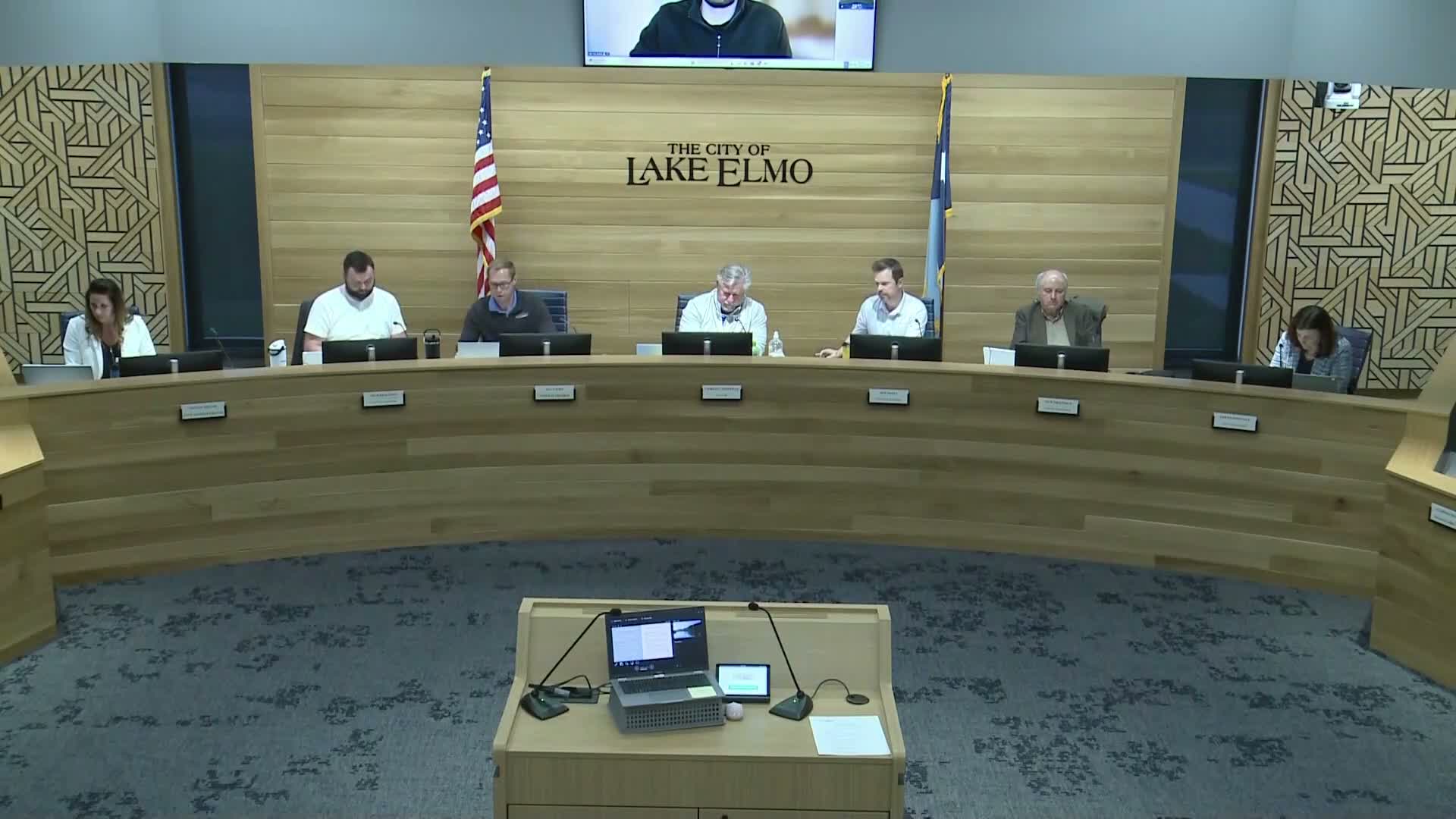
Lake Elmo’s City Council voted to adopt a short‑term rental ordinance on May 5, approving new licensing and enforcement rules aimed at regulating short‑term rentals while allowing limited host activity. The ordinance creates a three‑year license, caps the number of citywide licenses at 20, limits short‑term rentals to five guest rooms and 10 guests, and requires the applicant to provide 24‑hour contact information and at least one local manager within a 60‑mile radius.
The council debated and amended staff’s original proposal over roughly three hours of discussion and public comment. Several residents urged the council to deny or substantially change the ordinance. “Many of these housing units are owned by corporations who are not residents of our city,” said Anne Bootcheck, speaking during public comment, urging the council to reject the measure. In contrast, Peter Casler, who described operating a bed‑and‑breakfast and short‑term rental on family farmland, said rentals can be managed responsibly and help pay property taxes.
City staff and the planning commission described the ordinance as modeled on other local jurisdictions. Jason Stoppa, community development director, told the council the proposal aligns inspection frequency and the licensing framework with neighboring cities and with county public‑health considerations. He said staff identified seven active bed‑and‑breakfast licenses in Lake Elmo and roughly a dozen Airbnb listings, some of which staff believe should be reclassified under the proposed STR rules.
Legal counsel cautioned the council against certain owner‑occupancy restrictions. “Based on a federal appeals‑court decision, I would not recommend that the city adopt a short‑term rental regulation that would require it to be owner occupied,” the city attorney advised, citing Commerce Clause concerns raised in a Fifth Circuit decision and noting the city sits in the Eighth Circuit where the law could be interpreted differently.
Council amendments included shortening the local manager radius from 60 miles to 30 miles, adding a requirement for appropriate insurance comparable to the city’s bed‑and‑breakfast rules, and changing inspections from every three years to annual maintenance inspections while retaining a three‑year license term. The ordinance also includes revocation language: three substantiated complaints or violations within a 12‑month period can lead to license suspension or revocation.
The council voted to adopt the ordinance (motion carried; final roll vote recorded as 3–1 in favor). Council directed staff to publish the ordinance summary as required by state law. Staff said licensing revenue was not intended to fund large capital projects; licensing fees were estimated to generate up to $10,000 annually under the current cap and fee structure.
What happens next: staff will implement the licensing procedure, work with property owners who currently operate under other permits to transition them if necessary, and share license information with county agencies for compliance checks. The council also adopted a related resolution authorizing summary publication of the ordinance.
Sources: City staff presentations and the May 5 City Council meeting. Quotes and attributions come from speakers who addressed the council during the meeting, including Anne Bootcheck (public commenter), Peter Casler (public commenter), Jason Stoppa (Community Development Director), and the City Attorney.
The council debated and amended staff’s original proposal over roughly three hours of discussion and public comment. Several residents urged the council to deny or substantially change the ordinance. “Many of these housing units are owned by corporations who are not residents of our city,” said Anne Bootcheck, speaking during public comment, urging the council to reject the measure. In contrast, Peter Casler, who described operating a bed‑and‑breakfast and short‑term rental on family farmland, said rentals can be managed responsibly and help pay property taxes.
City staff and the planning commission described the ordinance as modeled on other local jurisdictions. Jason Stoppa, community development director, told the council the proposal aligns inspection frequency and the licensing framework with neighboring cities and with county public‑health considerations. He said staff identified seven active bed‑and‑breakfast licenses in Lake Elmo and roughly a dozen Airbnb listings, some of which staff believe should be reclassified under the proposed STR rules.
Legal counsel cautioned the council against certain owner‑occupancy restrictions. “Based on a federal appeals‑court decision, I would not recommend that the city adopt a short‑term rental regulation that would require it to be owner occupied,” the city attorney advised, citing Commerce Clause concerns raised in a Fifth Circuit decision and noting the city sits in the Eighth Circuit where the law could be interpreted differently.
Council amendments included shortening the local manager radius from 60 miles to 30 miles, adding a requirement for appropriate insurance comparable to the city’s bed‑and‑breakfast rules, and changing inspections from every three years to annual maintenance inspections while retaining a three‑year license term. The ordinance also includes revocation language: three substantiated complaints or violations within a 12‑month period can lead to license suspension or revocation.
The council voted to adopt the ordinance (motion carried; final roll vote recorded as 3–1 in favor). Council directed staff to publish the ordinance summary as required by state law. Staff said licensing revenue was not intended to fund large capital projects; licensing fees were estimated to generate up to $10,000 annually under the current cap and fee structure.
What happens next: staff will implement the licensing procedure, work with property owners who currently operate under other permits to transition them if necessary, and share license information with county agencies for compliance checks. The council also adopted a related resolution authorizing summary publication of the ordinance.
Sources: City staff presentations and the May 5 City Council meeting. Quotes and attributions come from speakers who addressed the council during the meeting, including Anne Bootcheck (public commenter), Peter Casler (public commenter), Jason Stoppa (Community Development Director), and the City Attorney.
View the Full Meeting & All Its Details
This article offers just a summary. Unlock complete video, transcripts, and insights as a Founder Member.
✓
Watch full, unedited meeting videos
✓
Search every word spoken in unlimited transcripts
✓
AI summaries & real-time alerts (all government levels)
✓
Permanent access to expanding government content
30-day money-back guarantee
