Long-serving electric staffer Tim to retire as Berlin grapples with steep purchase-power and equipment costs
May 12, 2026 | Berlin, Worcester County, Maryland
This article was created by AI summarizing key points discussed. AI makes mistakes, so for full details and context, please refer to the video of the full meeting. Please report any errors so we can fix them. Report an error »
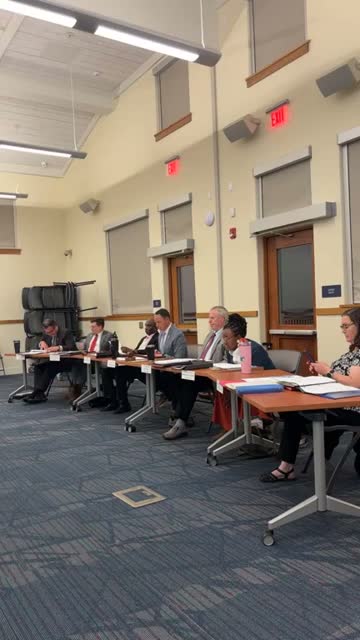
Berlin’s utility budget work session featured a farewell to Tim, an experienced electric utility staffer, and an extended review of pressures on the town’s electric fund: steep purchase-power cost increases, rising renewable portfolio compliance fees and aging generation equipment that will require carry-forwards or replacements.
Tim, who was acknowledged for roughly 16 years working with the town’s electric operations, spoke about equipment and market pressures as staff laid out the numbers behind the electric fund’s gap. "There's an increase of, $1,274,420, which is a 40.54% increase on the cost of purchase power," staff said, describing transmission- and market-driven charges that have driven the spike.
Why it matters: staff emphasized that electric rates have not been raised since a rate case in 2012 and that supply-chain inflation for parts and long lead times for equipment complicate repairs. Examples cited at the meeting included dramatic price increases for transformers and sleeves and much longer vendor lead times for critical components.
Rate study, regulatory options and capital plans
Staff urged a rate study to produce a data-driven case for capital recovery and to explore whether the town could pursue a different regulatory classification or arrangements with the Public Service Commission to allow better capital cost recovery. Staff said municipal assistance groups are being consulted about options.
Capital items and balancing steps
- Power-plant and distribution capital: staff listed major carry-forwards and purchases, including a bucket/digger truck carry-forward (about $330,000) and AMI meter bond carryover ($300,000) and identified transformer replacements and cooling-tower pump work.
- Balancing cuts: to balance the distribution side, staff proposed deferrals and small cuts (pump-house roof, enclosure replacements, miscellaneous equipment and rental arrangements) that together totaled about $146,900.
Operational detail and timeline
Staff said some transformer outages and equipment failures are test cases of the fund’s vulnerability: older engines (one dating to 1978) require maintenance and spare stock for quick storm responses. Staff also said procurement delays (lead times from suppliers) have put temporary fixes in place, such as running a diesel pump not intended for continuous use.
The session did not include a vote on restructuring or rate changes. Council and staff agreed to scope a rate study and continue to refine the budget. Tim’s retirement and the leadership transition were acknowledged as staff continue planning for capital replacements and the rate-study timeline.
Tim, who was acknowledged for roughly 16 years working with the town’s electric operations, spoke about equipment and market pressures as staff laid out the numbers behind the electric fund’s gap. "There's an increase of, $1,274,420, which is a 40.54% increase on the cost of purchase power," staff said, describing transmission- and market-driven charges that have driven the spike.
Why it matters: staff emphasized that electric rates have not been raised since a rate case in 2012 and that supply-chain inflation for parts and long lead times for equipment complicate repairs. Examples cited at the meeting included dramatic price increases for transformers and sleeves and much longer vendor lead times for critical components.
Rate study, regulatory options and capital plans
Staff urged a rate study to produce a data-driven case for capital recovery and to explore whether the town could pursue a different regulatory classification or arrangements with the Public Service Commission to allow better capital cost recovery. Staff said municipal assistance groups are being consulted about options.
Capital items and balancing steps
- Power-plant and distribution capital: staff listed major carry-forwards and purchases, including a bucket/digger truck carry-forward (about $330,000) and AMI meter bond carryover ($300,000) and identified transformer replacements and cooling-tower pump work.
- Balancing cuts: to balance the distribution side, staff proposed deferrals and small cuts (pump-house roof, enclosure replacements, miscellaneous equipment and rental arrangements) that together totaled about $146,900.
Operational detail and timeline
Staff said some transformer outages and equipment failures are test cases of the fund’s vulnerability: older engines (one dating to 1978) require maintenance and spare stock for quick storm responses. Staff also said procurement delays (lead times from suppliers) have put temporary fixes in place, such as running a diesel pump not intended for continuous use.
The session did not include a vote on restructuring or rate changes. Council and staff agreed to scope a rate study and continue to refine the budget. Tim’s retirement and the leadership transition were acknowledged as staff continue planning for capital replacements and the rate-study timeline.
View the Full Meeting & All Its Details
This article offers just a summary. Unlock complete video, transcripts, and insights as a Founder Member.
✓
Watch full, unedited meeting videos
✓
Search every word spoken in unlimited transcripts
✓
AI summaries & real-time alerts (all government levels)
✓
Permanent access to expanding government content
30-day money-back guarantee
