Noxious weed supervisor leans on grants and contracts; warns Forest Service proposal could exceed first‑year costs
May 11, 2026 | Lincoln County, Montana
This article was created by AI summarizing key points discussed. AI makes mistakes, so for full details and context, please refer to the video of the full meeting. Please report any errors so we can fix them. Report an error »
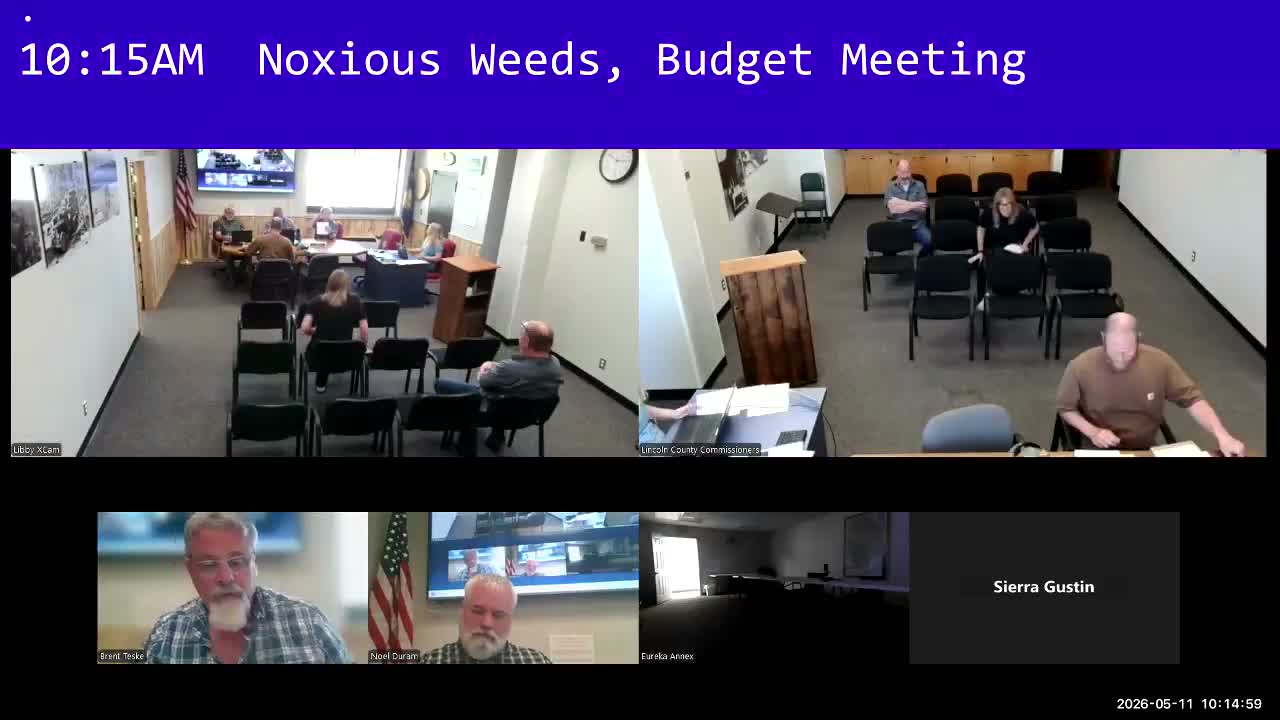
At 10:15 on May 11, 2026, Lincoln County moved to consider the noxious weed program budget. The program supervisor outlined modest increases, grant allocations and potential contract work, and cautioned that a large Forest Service contract would require significant staffing and equipment commitments.
The supervisor said he had factored a 4% increase for insurance and made small adjustments for chemicals, subscriptions and utility services. He allocated a $7,500 county reservation grant toward machinery and equipment and said some revenue items were initially omitted from the draft budget — for example, $3,900 in landfill revenues that he planned to move into machinery and equipment revenue.
The supervisor described existing contract work with neighboring counties (including a recent bid opportunity for about $3,100) and said the program derives revenue from spraying green box sites and some private contracts. He also said the program sometimes hires seasonal employees; grant cycles run multi‑year and support temporary staffing.
On a larger scale, the supervisor recounted a Forest Service approach that included an offer of roughly $250,000 to contract spraying over national forest land. He warned that the first year’s cost could be around $360,000 — including employees, vehicles, equipment and chemicals — and said a five‑year commitment would require the county to consider the program’s capacity and whether to hire additional staff. "They want me to spray the whole National Forest ... I think the first year, I spent, like, 360,000," the supervisor said.
Why this matters: the noxious weed program relies on a mix of county funds, grants and contract revenue. A sizable Forest Service contract could increase program revenue but would likely require up‑front investment and recurring operating costs that may exceed initial contract payments.
Staff noted they will adjust the revenue lines to include missed items and proceed with the budget process. The meeting recessed later to await the sheriff’s department; the sheriff’s presentation was rescheduled.
The supervisor said he had factored a 4% increase for insurance and made small adjustments for chemicals, subscriptions and utility services. He allocated a $7,500 county reservation grant toward machinery and equipment and said some revenue items were initially omitted from the draft budget — for example, $3,900 in landfill revenues that he planned to move into machinery and equipment revenue.
The supervisor described existing contract work with neighboring counties (including a recent bid opportunity for about $3,100) and said the program derives revenue from spraying green box sites and some private contracts. He also said the program sometimes hires seasonal employees; grant cycles run multi‑year and support temporary staffing.
On a larger scale, the supervisor recounted a Forest Service approach that included an offer of roughly $250,000 to contract spraying over national forest land. He warned that the first year’s cost could be around $360,000 — including employees, vehicles, equipment and chemicals — and said a five‑year commitment would require the county to consider the program’s capacity and whether to hire additional staff. "They want me to spray the whole National Forest ... I think the first year, I spent, like, 360,000," the supervisor said.
Why this matters: the noxious weed program relies on a mix of county funds, grants and contract revenue. A sizable Forest Service contract could increase program revenue but would likely require up‑front investment and recurring operating costs that may exceed initial contract payments.
Staff noted they will adjust the revenue lines to include missed items and proceed with the budget process. The meeting recessed later to await the sheriff’s department; the sheriff’s presentation was rescheduled.
Don't Miss a Word: See the Full Meeting!
Go beyond summaries. Unlock every video, transcript, and key insight with a Founder Membership.
✓
Get instant access to full meeting videos
✓
Search and clip any phrase from complete transcripts
✓
Receive AI-powered summaries & custom alerts
✓
Enjoy lifetime, unrestricted access to government data
30-day money-back guarantee
