Roswell council signs MOU to help fund state veterans home, council says city won’t carry operating costs
May 12, 2026 | Roswell, Fulton County, Georgia
This article was created by AI summarizing key points discussed. AI makes mistakes, so for full details and context, please refer to the video of the full meeting. Please report any errors so we can fix them. Report an error »
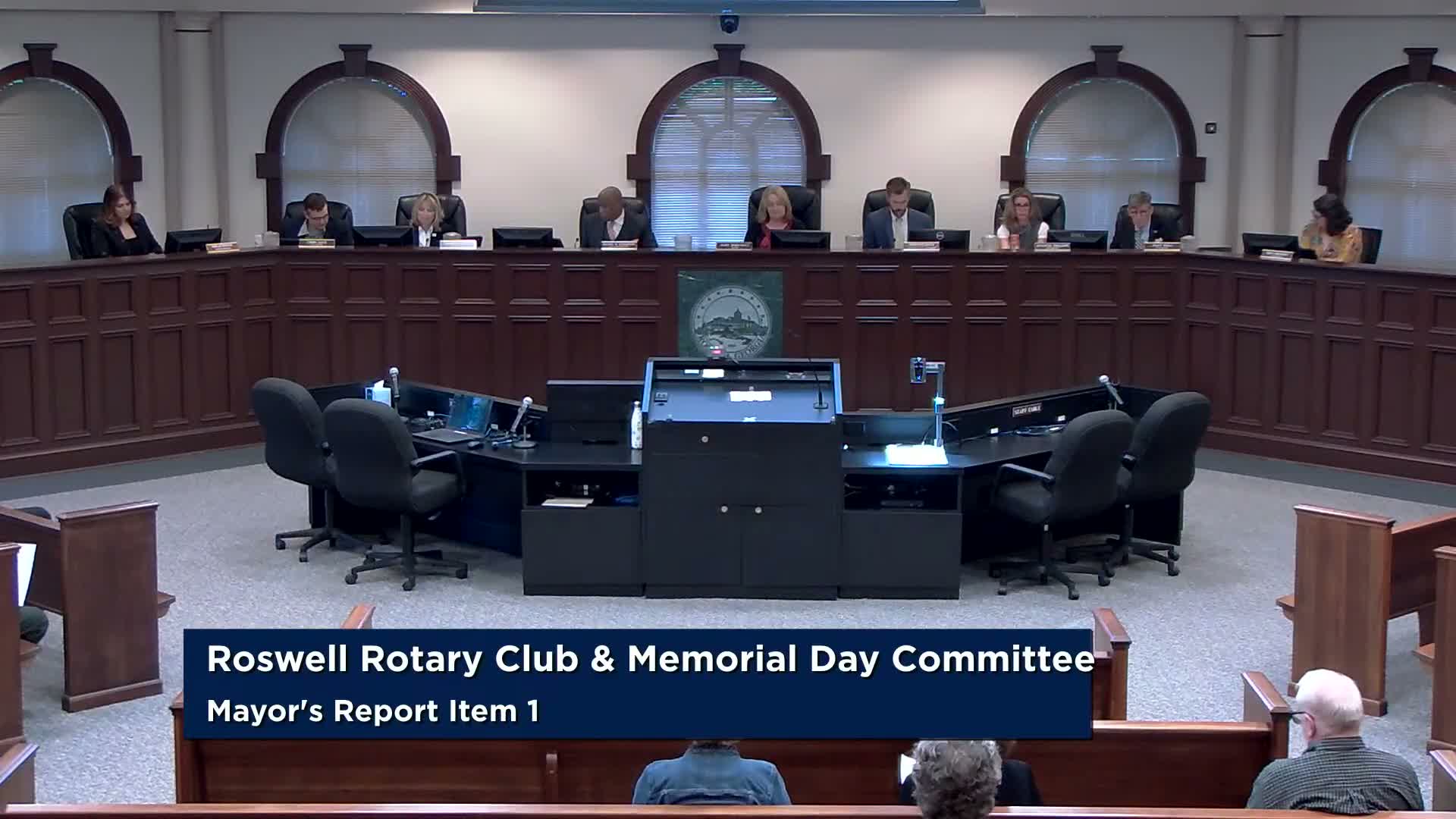
Mayor Mary Robichaux and the Roswell City Council on May 11 approved a memorandum of understanding with the Georgia Department of Veterans Services and the Georgia Veterans Service Foundation to support planning and fundraising for a veterans home to be sited in Roswell.
The MOU, read into the record by City Clerk Nancy Long, allows the Georgia Veterans Service Foundation to accept earmarked donations for a Roswell project through its 501(c)(3) account and sets a fundraising goal that must be met for the project to move forward. Assistant City Attorney Joe Cusack said donor funds will be returned if the fundraising goal is not met.
“The state of Georgia would operate the facility with support from the VA at no ongoing cost to the city of Roswell,” Mayor Robichaux said while introducing the item. The council’s action authorizes Roswell to enter the MOU; it does not commit city operating funds, the mayor and staff stressed.
Several speakers urged support for the project. Sean Henley, a member of the Georgia Department of Veterans Service Board, told the council Roswell has a chance to host a long‑term care facility that would serve veterans’ medical and mental‑health needs and could create jobs in the area. “We have to get this long‑term care home for veterans,” Henley said.
Council members asked staff and legal counsel to clarify the city’s obligations under the agreement. Mayor Pro Tem Sarah Beeson and other council members repeatedly emphasized that the city’s only potential financial contribution at this stage would be real estate (either donated or city‑owned property) and that the foundation—not the city—would collect donations.
Officials also discussed timing: staff said the fundraising window is tight and that there is a requirement to raise a large portion of the private match quickly so the state can proceed with site selection and final project approvals. Council members and staff discussed the federal and state funding components and the need to protect donors through the MOU’s refund provisions.
The motion to approve the MOU passed unanimously. The council’s approval is an early, nonbinding step to enable fundraising; any future site selection, zoning or construction approvals would come back to the council as required.
The MOU, read into the record by City Clerk Nancy Long, allows the Georgia Veterans Service Foundation to accept earmarked donations for a Roswell project through its 501(c)(3) account and sets a fundraising goal that must be met for the project to move forward. Assistant City Attorney Joe Cusack said donor funds will be returned if the fundraising goal is not met.
“The state of Georgia would operate the facility with support from the VA at no ongoing cost to the city of Roswell,” Mayor Robichaux said while introducing the item. The council’s action authorizes Roswell to enter the MOU; it does not commit city operating funds, the mayor and staff stressed.
Several speakers urged support for the project. Sean Henley, a member of the Georgia Department of Veterans Service Board, told the council Roswell has a chance to host a long‑term care facility that would serve veterans’ medical and mental‑health needs and could create jobs in the area. “We have to get this long‑term care home for veterans,” Henley said.
Council members asked staff and legal counsel to clarify the city’s obligations under the agreement. Mayor Pro Tem Sarah Beeson and other council members repeatedly emphasized that the city’s only potential financial contribution at this stage would be real estate (either donated or city‑owned property) and that the foundation—not the city—would collect donations.
Officials also discussed timing: staff said the fundraising window is tight and that there is a requirement to raise a large portion of the private match quickly so the state can proceed with site selection and final project approvals. Council members and staff discussed the federal and state funding components and the need to protect donors through the MOU’s refund provisions.
The motion to approve the MOU passed unanimously. The council’s approval is an early, nonbinding step to enable fundraising; any future site selection, zoning or construction approvals would come back to the council as required.
View the Full Meeting & All Its Details
This article offers just a summary. Unlock complete video, transcripts, and insights as a Founder Member.
✓
Watch full, unedited meeting videos
✓
Search every word spoken in unlimited transcripts
✓
AI summaries & real-time alerts (all government levels)
✓
Permanent access to expanding government content
30-day money-back guarantee
