Resident James Hyde urges Cameron Parish jury to press for transparency on coastal-use permits and public records
May 11, 2026 | Cameron Parish, Louisiana
This article was created by AI summarizing key points discussed. AI makes mistakes, so for full details and context, please refer to the video of the full meeting. Please report any errors so we can fix them. Report an error »
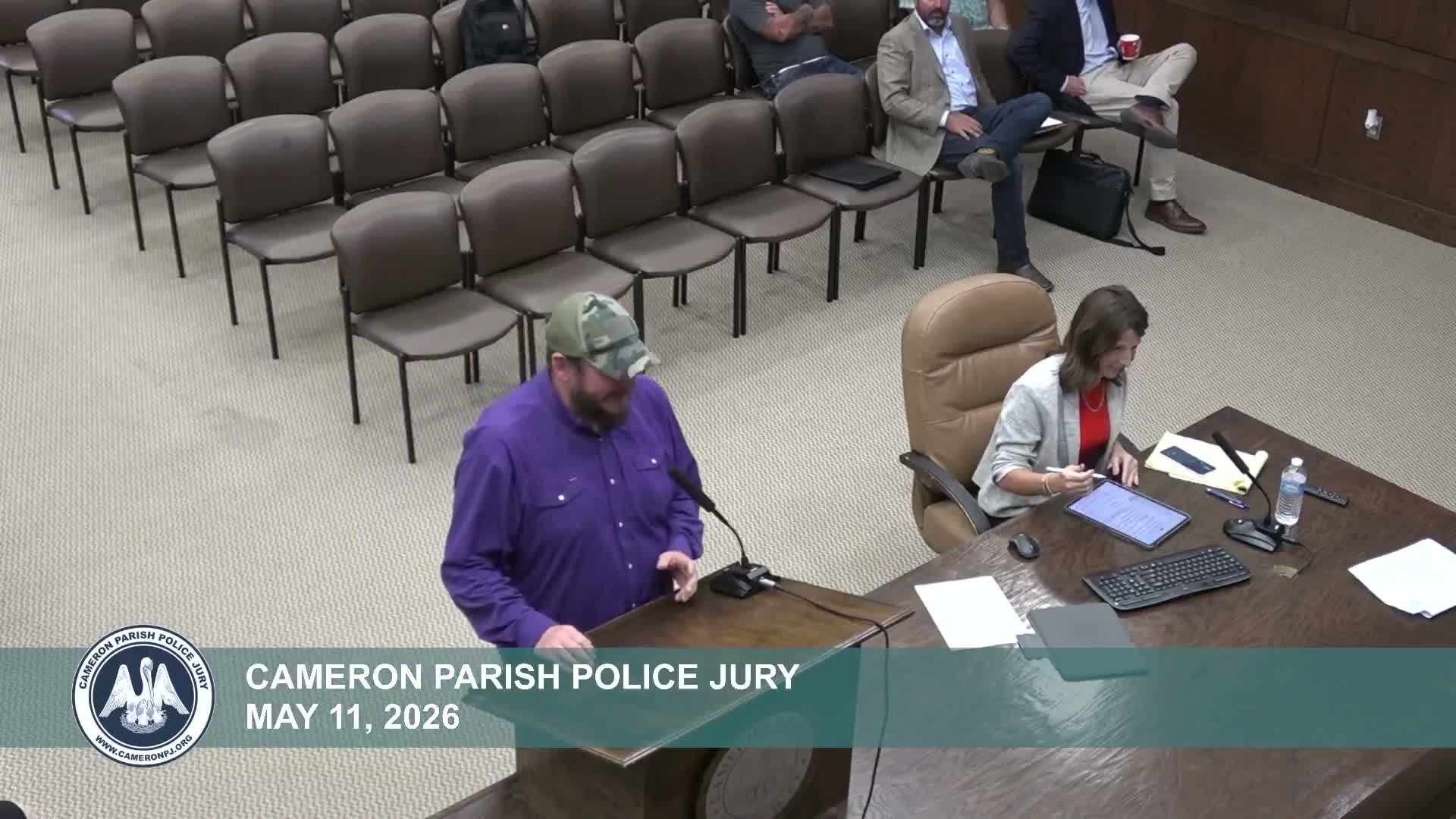
James Hyde, a Cameron Parish resident who identified himself at the meeting, told the police jury he had trouble locating a coastal-use permit (agenda listing shows permit number discrepancy) and raised health and transparency concerns about planned dredge and fill work.
"We've got 300 plus signatures asking for a public meeting so the public could know what is happening behind that," Hyde said, urging the jury to press state agencies for local hearings and to object on the public record to state-concern permits when appropriate.
Hyde said longtime local workers told him drums have been buried near a storage yard and asked who is testing soils and verifying materials moved into placement pits. He also complained that public notices were advertised in The Advocate instead of the Cameron Pilot, reducing local visibility, and urged that presentations and documents be posted online rather than provided only as printed copies for a fee.
The meeting president responded that the agenda had been revised to separate state-concern permits from local-concern items so jurors could register comments or objections on the record but noted that state permits typically remain under state jurisdiction. "These are all state concerned permits, so I think it doesn't even matter what y'all do," Hyde had said while expressing frustration; the president explained the procedural limits the jury faces when a matter is designated state concern.
Why it matters: Local residents said they want clear, local access to permit records and public meetings for major dredging and fill projects that could affect water wells, soils and community health. The jury did not adopt a new public-records policy at this meeting; Hyde's request for easier electronic access to materials and clearer local advertising remains a resident demand rather than an enacted change.
What to watch: Residents and jurors asked staff to note objections and to ensure strict compliance with coastal cleanup and restoration standards when local follow-ups occur. No change to statewide permitting authority was recorded in the minutes; any formal objections to state permits were recorded only as juror comments during the public-comment and state-concern permit readings.
"We've got 300 plus signatures asking for a public meeting so the public could know what is happening behind that," Hyde said, urging the jury to press state agencies for local hearings and to object on the public record to state-concern permits when appropriate.
Hyde said longtime local workers told him drums have been buried near a storage yard and asked who is testing soils and verifying materials moved into placement pits. He also complained that public notices were advertised in The Advocate instead of the Cameron Pilot, reducing local visibility, and urged that presentations and documents be posted online rather than provided only as printed copies for a fee.
The meeting president responded that the agenda had been revised to separate state-concern permits from local-concern items so jurors could register comments or objections on the record but noted that state permits typically remain under state jurisdiction. "These are all state concerned permits, so I think it doesn't even matter what y'all do," Hyde had said while expressing frustration; the president explained the procedural limits the jury faces when a matter is designated state concern.
Why it matters: Local residents said they want clear, local access to permit records and public meetings for major dredging and fill projects that could affect water wells, soils and community health. The jury did not adopt a new public-records policy at this meeting; Hyde's request for easier electronic access to materials and clearer local advertising remains a resident demand rather than an enacted change.
What to watch: Residents and jurors asked staff to note objections and to ensure strict compliance with coastal cleanup and restoration standards when local follow-ups occur. No change to statewide permitting authority was recorded in the minutes; any formal objections to state permits were recorded only as juror comments during the public-comment and state-concern permit readings.
View the Full Meeting & All Its Details
This article offers just a summary. Unlock complete video, transcripts, and insights as a Founder Member.
✓
Watch full, unedited meeting videos
✓
Search every word spoken in unlimited transcripts
✓
AI summaries & real-time alerts (all government levels)
✓
Permanent access to expanding government content
30-day money-back guarantee
