Board opens work session on sale of land near public health building; health board urges preservation
May 11, 2026 | Des Moines County, Iowa
This article was created by AI summarizing key points discussed. AI makes mistakes, so for full details and context, please refer to the video of the full meeting. Please report any errors so we can fix them. Report an error »
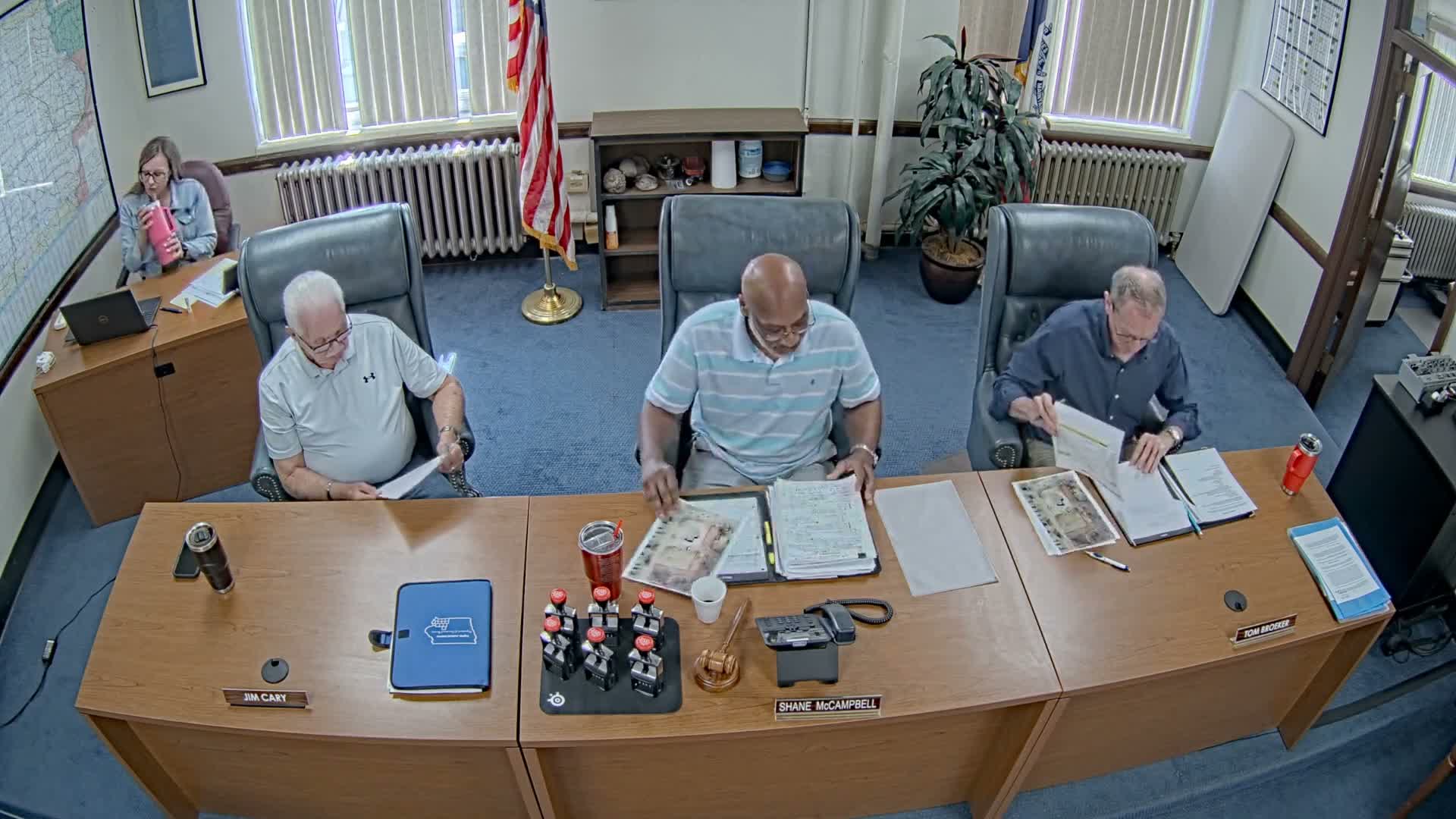
The Des Moines County Board of Supervisors used a May 12 work session to consider selling portions of county‑owned land adjacent to the public health building in Burlington.
County staff and city representatives described the parcel layout, preliminary measurements and potential access points (Agency Street, Curran and Pearson Court). Staff said roughly eight acres of developable land are on the west side and that a north strip and a western strip were being considered for sale. City staff said the city had reviewed preliminary plans and was generally supportive of development opportunities on the parcel.
Members of the county health board — described by staff as a group of volunteers with medical expertise — urged the supervisors not to sell land the health department set aside for future needs. The health board argued the land could provide parking expansion and space for drive‑through vaccination or testing in a future public‑health emergency. "We would like the board of supervisors not to sell any borrowed portion of the property to preserve it for future need," a health representative said.
Several supervisors disagreed. One supervisor said the county already owns substantial property and that undeveloped land could be used to expand tax base and housing. Another supervisor noted that major capital expansions (e.g., construction costing more than approximately $700,000 to $1,000,000) would require a countywide referendum. Board members discussed options to sell with deed restrictions or stipulations to protect public‑health uses, rezoning the property for multifamily (R4) or keeping utility and maintenance easements in place.
Practical questions addressed included: whether surveys would be paid by the county or by a buyer; how to structure a public, transparent sale (sealed bids versus realtor listing); drainage and sanitary sewer locations and necessary easements; generator protection near the health building; and whether the city or buyer could be asked to provide mitigation (e.g., screening around the generator).
The board agreed to proceed by sketching proposed boundary lines, arranging for a formal survey, and returning with a concrete proposal. Staff said they would coordinate with the county engineer and city staff on survey parameters and possible deed restrictions before presenting an RFP or listing approach.
Why it matters: Selling county land can produce one‑time revenue and increase the tax base but can also foreclose future public‑health options. The discussion highlighted competing priorities — immediate economic development and long‑term preparedness — and the board chose a measured path: more exact boundary work and a survey before any sale process is launched.
Next steps: Staff to produce more precise sketched boundaries, obtain a formal survey and discuss possible sale procedures and deed restrictions; the board will consider those materials at a future meeting.
County staff and city representatives described the parcel layout, preliminary measurements and potential access points (Agency Street, Curran and Pearson Court). Staff said roughly eight acres of developable land are on the west side and that a north strip and a western strip were being considered for sale. City staff said the city had reviewed preliminary plans and was generally supportive of development opportunities on the parcel.
Members of the county health board — described by staff as a group of volunteers with medical expertise — urged the supervisors not to sell land the health department set aside for future needs. The health board argued the land could provide parking expansion and space for drive‑through vaccination or testing in a future public‑health emergency. "We would like the board of supervisors not to sell any borrowed portion of the property to preserve it for future need," a health representative said.
Several supervisors disagreed. One supervisor said the county already owns substantial property and that undeveloped land could be used to expand tax base and housing. Another supervisor noted that major capital expansions (e.g., construction costing more than approximately $700,000 to $1,000,000) would require a countywide referendum. Board members discussed options to sell with deed restrictions or stipulations to protect public‑health uses, rezoning the property for multifamily (R4) or keeping utility and maintenance easements in place.
Practical questions addressed included: whether surveys would be paid by the county or by a buyer; how to structure a public, transparent sale (sealed bids versus realtor listing); drainage and sanitary sewer locations and necessary easements; generator protection near the health building; and whether the city or buyer could be asked to provide mitigation (e.g., screening around the generator).
The board agreed to proceed by sketching proposed boundary lines, arranging for a formal survey, and returning with a concrete proposal. Staff said they would coordinate with the county engineer and city staff on survey parameters and possible deed restrictions before presenting an RFP or listing approach.
Why it matters: Selling county land can produce one‑time revenue and increase the tax base but can also foreclose future public‑health options. The discussion highlighted competing priorities — immediate economic development and long‑term preparedness — and the board chose a measured path: more exact boundary work and a survey before any sale process is launched.
Next steps: Staff to produce more precise sketched boundaries, obtain a formal survey and discuss possible sale procedures and deed restrictions; the board will consider those materials at a future meeting.
View the Full Meeting & All Its Details
This article offers just a summary. Unlock complete video, transcripts, and insights as a Founder Member.
✓
Watch full, unedited meeting videos
✓
Search every word spoken in unlimited transcripts
✓
AI summaries & real-time alerts (all government levels)
✓
Permanent access to expanding government content
30-day money-back guarantee
