Drivers and unions warn Philadelphia could lose thousands of jobs to autonomous fleets
May 12, 2026 | Philadelphia City, Pennsylvania
This article was created by AI summarizing key points discussed. AI makes mistakes, so for full details and context, please refer to the video of the full meeting. Please report any errors so we can fix them. Report an error »
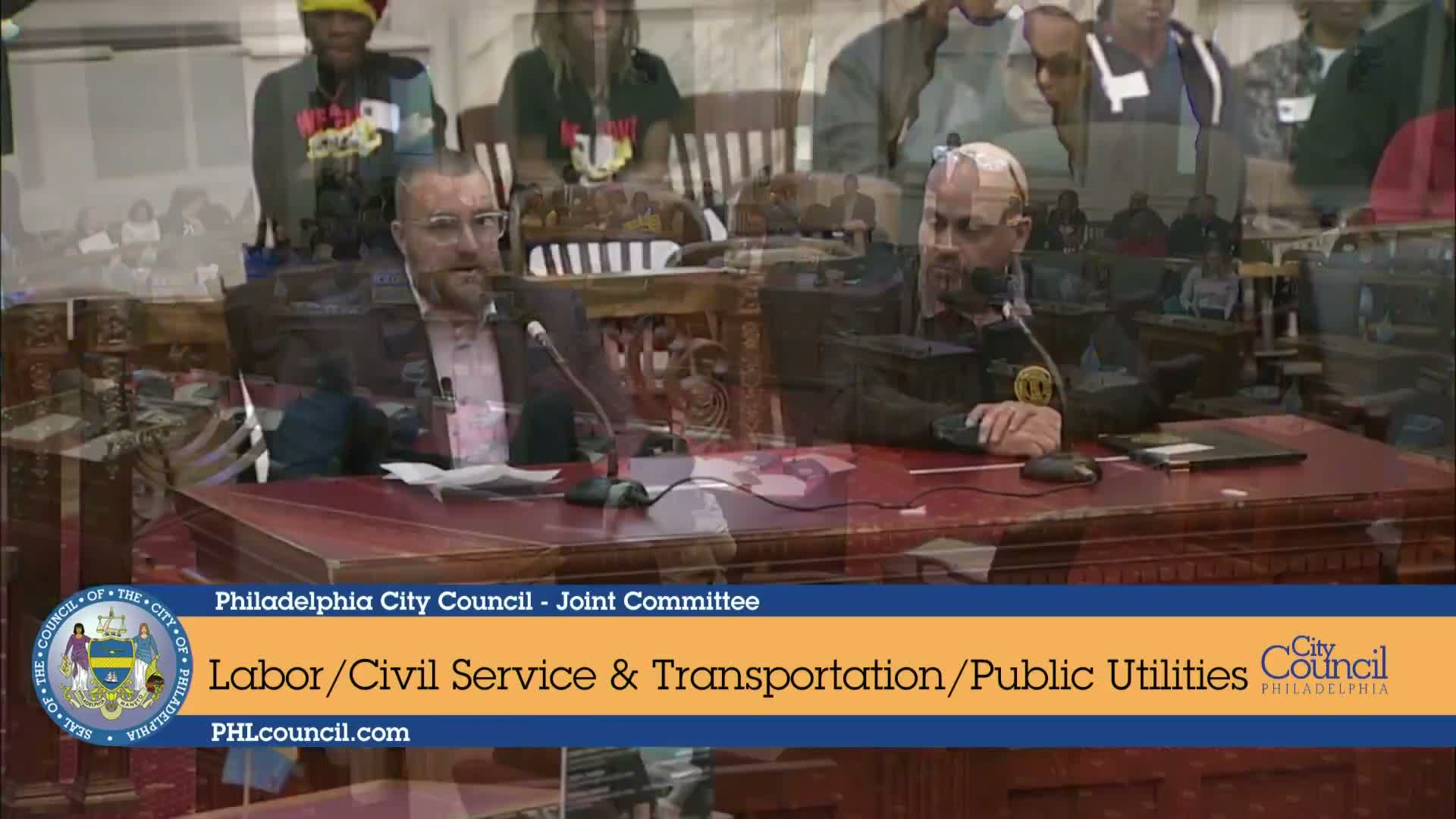
Labor leaders and full-time rideshare drivers told a Philadelphia City Council joint hearing that driverless rideshare fleets could displace thousands of workers and erode neighborhood economies that rely on driver wages.
Rob Burns, political director for SEIU 32BJ, said the economic model that supports thousands of local drivers pumps money into neighborhood businesses, and replacing those workers with corporate-owned fleets would shift earnings and tax revenue outside the city. "Instead of thousands of local workers circulating money through our neighborhoods, you're talking about revenue leaving the city and going to a handful of massive corporations," Burns said.
Will Vera, president of Transit Workers Union Local 234, argued that human operators also provide essential safety services and on-the-ground interventions that driverless systems cannot replicate. "We need human oversight and intervention," Vera told the committee, warning of incidents in other cities and the potential for vehicles to block emergency responses.
Drivers who testified described dependence on app-based driving as primary income. Stefan Hernandez said driving funds his household and plans to attend welding school; he said losing rides to driverless vehicles would threaten his family's stability. "Every ride that goes to a robot is a ride taken away from a real person," Hernandez said.
Council members pressed the administration for data and analysis to assess the local economic impact; some asked the city to request that PennDOT and Waymo provide detailed records of miles driven, incident reports and any permits or fees that affect local revenues such as port-trip surcharges. Council members requested a follow-up report identifying potential job counts affected, tax-revenue implications and mitigation strategies.
No formal economic analysis was presented at the hearing. Labor witnesses urged the council to require a transparent, city-specific study that would include job counts, small-business impacts, tax revenue projections and transition strategies for affected workers before any broad expansion of driverless fleets in Philadelphia.
Rob Burns, political director for SEIU 32BJ, said the economic model that supports thousands of local drivers pumps money into neighborhood businesses, and replacing those workers with corporate-owned fleets would shift earnings and tax revenue outside the city. "Instead of thousands of local workers circulating money through our neighborhoods, you're talking about revenue leaving the city and going to a handful of massive corporations," Burns said.
Will Vera, president of Transit Workers Union Local 234, argued that human operators also provide essential safety services and on-the-ground interventions that driverless systems cannot replicate. "We need human oversight and intervention," Vera told the committee, warning of incidents in other cities and the potential for vehicles to block emergency responses.
Drivers who testified described dependence on app-based driving as primary income. Stefan Hernandez said driving funds his household and plans to attend welding school; he said losing rides to driverless vehicles would threaten his family's stability. "Every ride that goes to a robot is a ride taken away from a real person," Hernandez said.
Council members pressed the administration for data and analysis to assess the local economic impact; some asked the city to request that PennDOT and Waymo provide detailed records of miles driven, incident reports and any permits or fees that affect local revenues such as port-trip surcharges. Council members requested a follow-up report identifying potential job counts affected, tax-revenue implications and mitigation strategies.
No formal economic analysis was presented at the hearing. Labor witnesses urged the council to require a transparent, city-specific study that would include job counts, small-business impacts, tax revenue projections and transition strategies for affected workers before any broad expansion of driverless fleets in Philadelphia.
View the Full Meeting & All Its Details
This article offers just a summary. Unlock complete video, transcripts, and insights as a Founder Member.
✓
Watch full, unedited meeting videos
✓
Search every word spoken in unlimited transcripts
✓
AI summaries & real-time alerts (all government levels)
✓
Permanent access to expanding government content
30-day money-back guarantee
