Davidson County residents press commissioners over Duke Energy NDAs and proposed gas plant
May 12, 2026 | Davidson County, North Carolina
This article was created by AI summarizing key points discussed. AI makes mistakes, so for full details and context, please refer to the video of the full meeting. Please report any errors so we can fix them. Report an error »
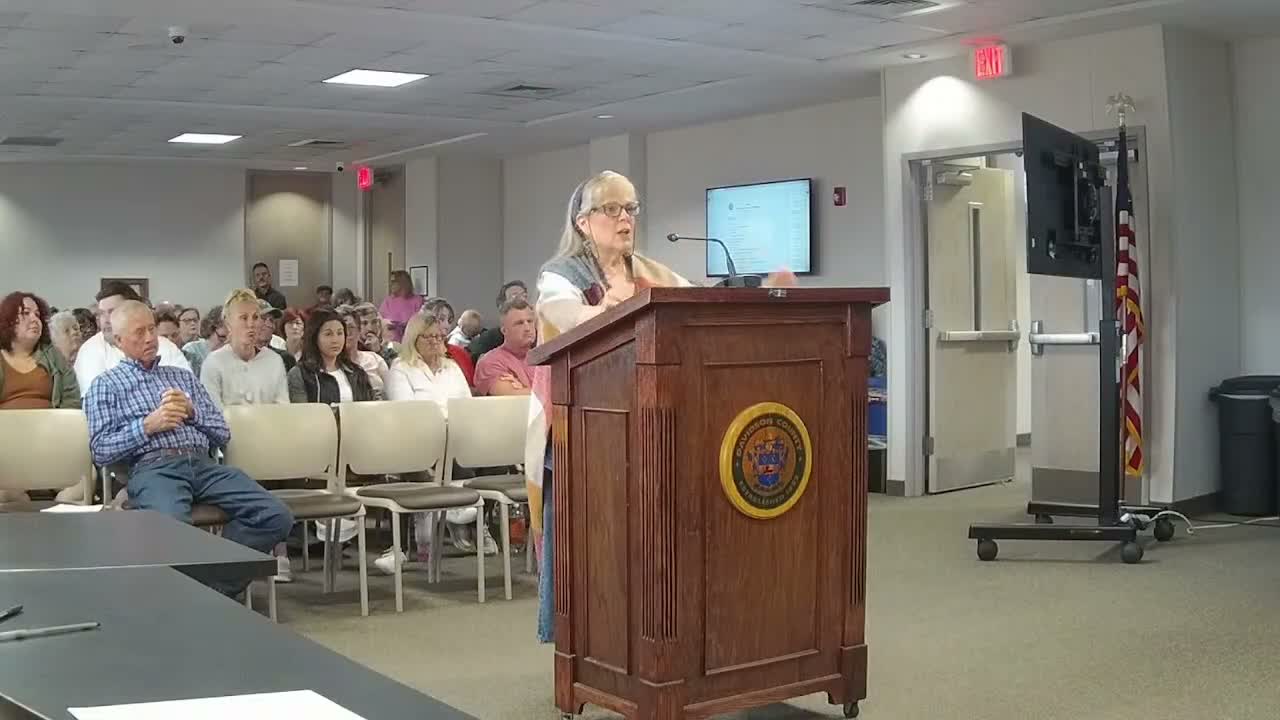
Dozens of Davidson County residents urged the Board of Commissioners on May 11 to reveal the terms of nondisclosure agreements with Duke Energy and to block any large gas-fired power plant they say could harm local water, air and farmland.
Public commenters repeatedly cited NDAs as a barrier to transparency. "This county should not be doing this for anything," Dawn Hash said during the public-comment period, arguing a nondisclosure would conceal "material facts" and depress property values. Lee Fowler warned of a "1,360-megawatt, $2,500,000,000" plant and said the proposal could withdraw "up to 600,000 gallons of water" a day from the Yadkin River, citing past spills by Duke Energy as a precedent for concern.
The comments fed into a formal policy discussion later in the meeting. Commissioner Mizell introduced a policy requiring immediate board awareness when staff or the economic-development commission signs an NDA; Mizell told colleagues the policy does not block legitimate trade-secret protections but ensures elected officials are notified at the next public meeting. After discussion about trade-secret rationales and the timing of potential future public hearings, the board adopted the notification policy by voice vote.
County staff and commissioners repeatedly said NDAs are often used during preliminary, pre-proposal talks and that any formal incentive agreement, land sale or rezoning would still require an open, public board action. "If such a company asked for an incentive, a land purchase or rezoning, then we would rule in public," a county official said during the exchange. Staff noted several steps that would bring any concrete requests back before the board and asserted that signed NDAs do not substitute for required public votes on incentives or zoning.
Residents framed their opposition in economic and public-health terms. Carol Bullard, a nurse practitioner, cited public-health research and told the board, "These risks are real. They are preventable. I say no." Josh Hedrick and other speakers also said they feared data-center demand—not homes—would be the primary driver of any new generation, and they asked commissioners to commit to oppose rezoning or incentive packages if the project threatened the county's rural character.
What happens next: The newly adopted policy requires staff to notify the board when an NDA is signed; the board reiterated that any incentive agreement, land purchase or rezoning related to a project would come back to the commissioners in a public meeting, at which time residents would have additional formal comment opportunities and staff detailed disclosures.
Public commenters repeatedly cited NDAs as a barrier to transparency. "This county should not be doing this for anything," Dawn Hash said during the public-comment period, arguing a nondisclosure would conceal "material facts" and depress property values. Lee Fowler warned of a "1,360-megawatt, $2,500,000,000" plant and said the proposal could withdraw "up to 600,000 gallons of water" a day from the Yadkin River, citing past spills by Duke Energy as a precedent for concern.
The comments fed into a formal policy discussion later in the meeting. Commissioner Mizell introduced a policy requiring immediate board awareness when staff or the economic-development commission signs an NDA; Mizell told colleagues the policy does not block legitimate trade-secret protections but ensures elected officials are notified at the next public meeting. After discussion about trade-secret rationales and the timing of potential future public hearings, the board adopted the notification policy by voice vote.
County staff and commissioners repeatedly said NDAs are often used during preliminary, pre-proposal talks and that any formal incentive agreement, land sale or rezoning would still require an open, public board action. "If such a company asked for an incentive, a land purchase or rezoning, then we would rule in public," a county official said during the exchange. Staff noted several steps that would bring any concrete requests back before the board and asserted that signed NDAs do not substitute for required public votes on incentives or zoning.
Residents framed their opposition in economic and public-health terms. Carol Bullard, a nurse practitioner, cited public-health research and told the board, "These risks are real. They are preventable. I say no." Josh Hedrick and other speakers also said they feared data-center demand—not homes—would be the primary driver of any new generation, and they asked commissioners to commit to oppose rezoning or incentive packages if the project threatened the county's rural character.
What happens next: The newly adopted policy requires staff to notify the board when an NDA is signed; the board reiterated that any incentive agreement, land purchase or rezoning related to a project would come back to the commissioners in a public meeting, at which time residents would have additional formal comment opportunities and staff detailed disclosures.
View the Full Meeting & All Its Details
This article offers just a summary. Unlock complete video, transcripts, and insights as a Founder Member.
✓
Watch full, unedited meeting videos
✓
Search every word spoken in unlimited transcripts
✓
AI summaries & real-time alerts (all government levels)
✓
Permanent access to expanding government content
30-day money-back guarantee
