Southfield council adopts Freeway Park master plan, council and residents press for lighting and safety measures
May 12, 2026 | Southfield, Oakland County, Michigan
This article was created by AI summarizing key points discussed. AI makes mistakes, so for full details and context, please refer to the video of the full meeting. Please report any errors so we can fix them. Report an error »
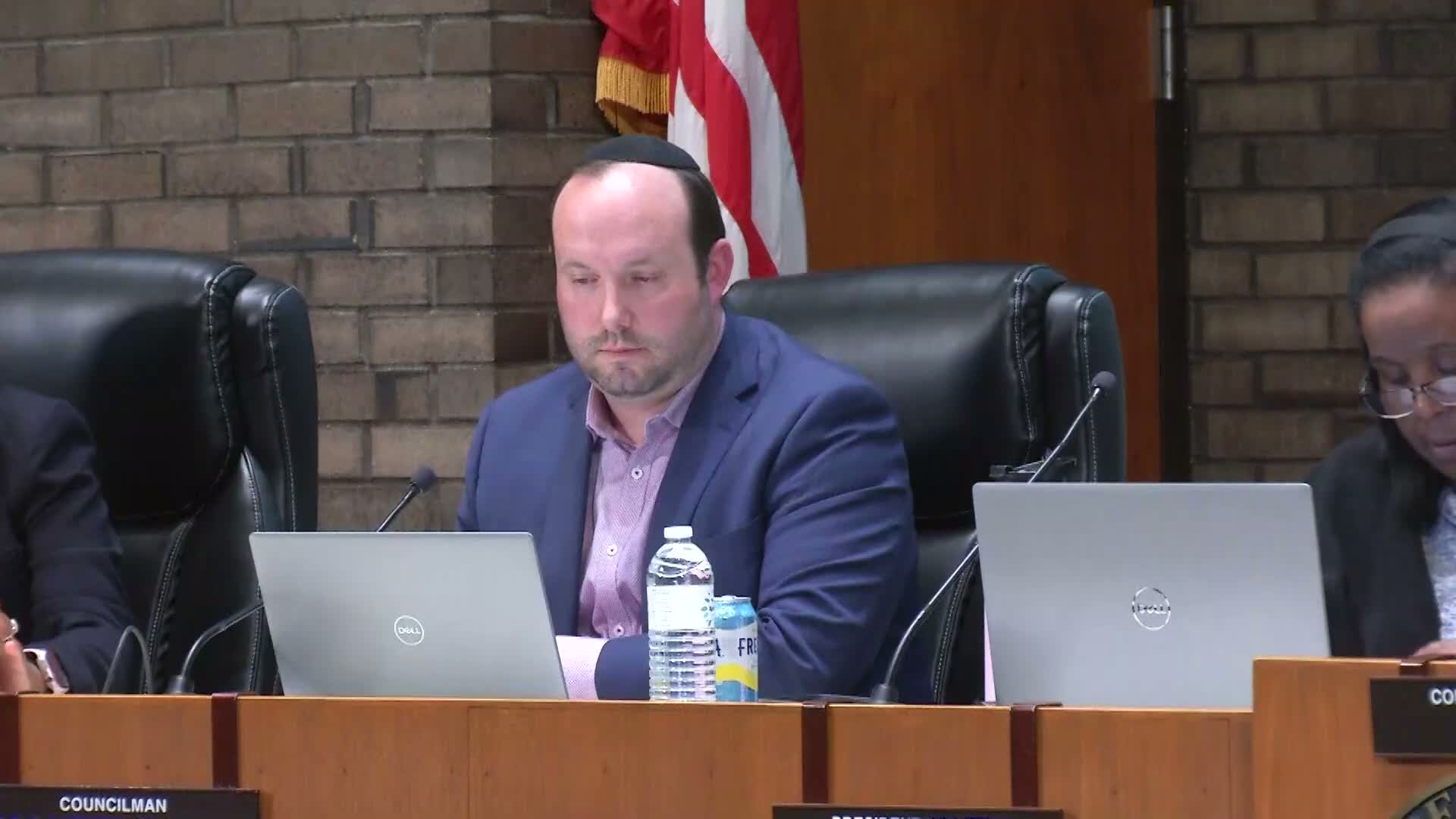
The Southfield City Council voted to adopt the Freeway Park master plan on May 11, following a detailed presentation from Parks and Recreation staff and consultants from OHM Advisors.
Parks Director Fields introduced the plan and said it reflected more than two years of community engagement, technical review and coordination with agencies. Rhett Groenebel of OHM summarized findings: the planning process produced three concept options that were refined into a single preferred concept, and staff developed phased implementation to address site constraints including drainage, limited public parking and the park’s deck over I-696.
Stacy Tobar, who presented the community-engagement summary, said the process included more than 100 open-house attendees, 108 survey responses and outreach to the immediate neighborhood. Top priorities identified by respondents were “better lighting,” an upgraded play structure, mitigation of flooded paths and improved maintenance; 70% of respondents said they walk to the park.
Council members framed the decision around safety and maintainability. Multiple council members and residents urged that lighting and pathways be treated as near-term priorities rather than deferred to later phases. Parks Director Fields said the department considers lighting and pathways high priorities and that some components of Phase 1 could be advanced depending on funding; she noted the city’s CIP currently did not include Freeway Park but staff is pursuing grant opportunities and can phase work as funds become available.
The plan proposes a mix of active and passive spaces, improved circulation, a multiuse court, a small expansion of the parking lot from 18 to 27 spaces, targeted drainage improvements and wetland restoration as a later phase. Staff noted constraints for permanent restrooms because of utilities on the deck; porta-potty testing and time‑limited “throne” units were discussed as interim approaches.
Council members also pressed on operational issues: maintenance burden, vandalism, camera coverage and the implications of constructing amenities on a deck that MDOT must approve. OHM and staff said conceptual amenities are sized to avoid excessive loading on the deck and that any final designs would require MDOT concurrence and agreements that the city would maintain installed amenities.
Public commenters and council members raised accessibility and inclusiveness: one resident asked for gravel and repairs to neighborhood walking tracks, and a council member stressed ADA‑compliant transfer areas and durable surfaces so people using wheelchairs and strollers can access play features. Parks staff said ADA compliance was embedded in planning and that future designs would include rubber play surfacing and proper transfer points to improve universal access.
The council adopted the master plan by voice vote. Following the vote, staff said the approved plan will be used to pursue grants, to coordinate with MDOT where necessary, and to develop a prioritized implementation schedule and cost estimates for the CIP process.
Parks Director Fields introduced the plan and said it reflected more than two years of community engagement, technical review and coordination with agencies. Rhett Groenebel of OHM summarized findings: the planning process produced three concept options that were refined into a single preferred concept, and staff developed phased implementation to address site constraints including drainage, limited public parking and the park’s deck over I-696.
Stacy Tobar, who presented the community-engagement summary, said the process included more than 100 open-house attendees, 108 survey responses and outreach to the immediate neighborhood. Top priorities identified by respondents were “better lighting,” an upgraded play structure, mitigation of flooded paths and improved maintenance; 70% of respondents said they walk to the park.
Council members framed the decision around safety and maintainability. Multiple council members and residents urged that lighting and pathways be treated as near-term priorities rather than deferred to later phases. Parks Director Fields said the department considers lighting and pathways high priorities and that some components of Phase 1 could be advanced depending on funding; she noted the city’s CIP currently did not include Freeway Park but staff is pursuing grant opportunities and can phase work as funds become available.
The plan proposes a mix of active and passive spaces, improved circulation, a multiuse court, a small expansion of the parking lot from 18 to 27 spaces, targeted drainage improvements and wetland restoration as a later phase. Staff noted constraints for permanent restrooms because of utilities on the deck; porta-potty testing and time‑limited “throne” units were discussed as interim approaches.
Council members also pressed on operational issues: maintenance burden, vandalism, camera coverage and the implications of constructing amenities on a deck that MDOT must approve. OHM and staff said conceptual amenities are sized to avoid excessive loading on the deck and that any final designs would require MDOT concurrence and agreements that the city would maintain installed amenities.
Public commenters and council members raised accessibility and inclusiveness: one resident asked for gravel and repairs to neighborhood walking tracks, and a council member stressed ADA‑compliant transfer areas and durable surfaces so people using wheelchairs and strollers can access play features. Parks staff said ADA compliance was embedded in planning and that future designs would include rubber play surfacing and proper transfer points to improve universal access.
The council adopted the master plan by voice vote. Following the vote, staff said the approved plan will be used to pursue grants, to coordinate with MDOT where necessary, and to develop a prioritized implementation schedule and cost estimates for the CIP process.
View the Full Meeting & All Its Details
This article offers just a summary. Unlock complete video, transcripts, and insights as a Founder Member.
✓
Watch full, unedited meeting videos
✓
Search every word spoken in unlimited transcripts
✓
AI summaries & real-time alerts (all government levels)
✓
Permanent access to expanding government content
30-day money-back guarantee
