Policy Analytics: Senate Bill 1 will shrink Perry Central’s taxable base, analyst says
May 12, 2026 | Perry Central Com Schools Corp, School Boards, Indiana
This article was created by AI summarizing key points discussed. AI makes mistakes, so for full details and context, please refer to the video of the full meeting. Please report any errors so we can fix them. Report an error »
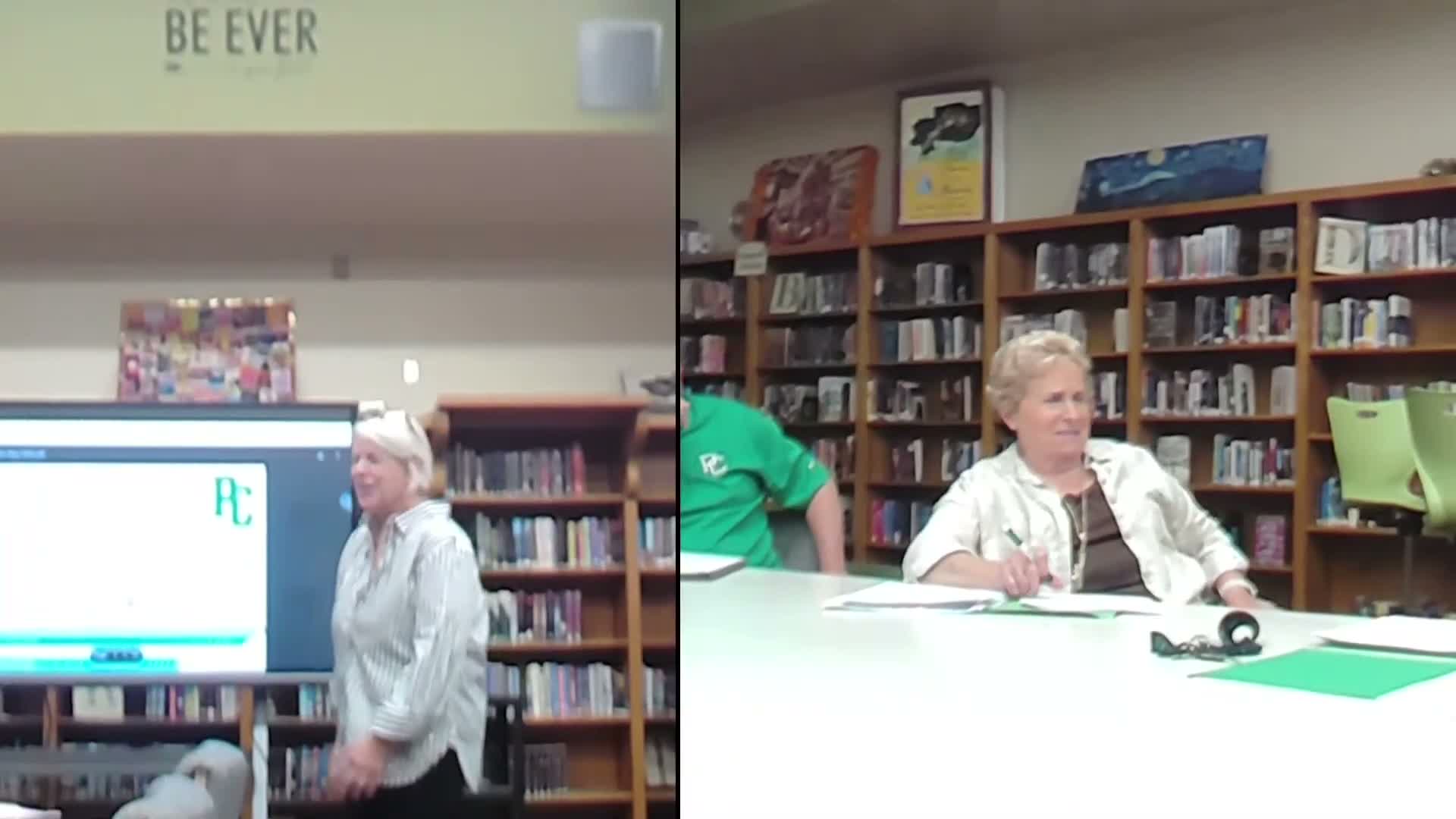
Jane Herndon of Policy Analytics told the Perry Central Com Schools Corp board that Indiana’s Senate Bill 1 will reduce the district’s taxable base and could force higher tax rates to raise the same revenue.
Herndon, introduced to the board as a former bond attorney and consultant, reviewed parcel‑level projections that factor new homestead credits, expanded deductions and a personal‑property exemption. She said Perry Central’s net assessed value (NAV) is projected to decline roughly 2.9% over the next five years and highlighted a larger, one‑year drop she modeled for 2027 when business personal property deductions take effect.
“The more deductions that come off the tax system, the less value you have to tax,” Herndon said. She showed statewide and local examples illustrating how a high‑value home receives larger dollar reductions under the law and how that changes the district’s tax base.
Why it matters: the district’s operations fund is capped by the state’s maximum levy growth quotient (MLGQ). If the board asks for the same dollar amount next year while taxable value falls, the tax rate must rise to produce the same revenue, Herndon warned — a dynamic that complicates planning because costs such as insurance, buses and utilities generally rise with inflation.
Herndon presented several district figures from the model: Perry Central’s assessed value per pupil was shown near $288,000; the district’s net levy revenue per pupil was modeled at about $3,281 compared with a state average she showed near $4,000 per pupil. She also noted statewide figures in the presentation, including an estimated $165 million in assessed‑value deductions shown in one slide (Herndon presented the total deductions shown across the model’s jurisdictions).
Board members followed with questions about the assumptions Herndon used — for example, assumed average annual property‑value growth and the levy‑growth percentage used in the model — and Herndon said her slides reflect a working set of assumptions that could be updated.
The presentation did not include a board vote. Superintendent‑level staff and board members said they would use the analysis in upcoming budget conversations and to discuss levy strategy with the district’s financial advisers.
Herndon, introduced to the board as a former bond attorney and consultant, reviewed parcel‑level projections that factor new homestead credits, expanded deductions and a personal‑property exemption. She said Perry Central’s net assessed value (NAV) is projected to decline roughly 2.9% over the next five years and highlighted a larger, one‑year drop she modeled for 2027 when business personal property deductions take effect.
“The more deductions that come off the tax system, the less value you have to tax,” Herndon said. She showed statewide and local examples illustrating how a high‑value home receives larger dollar reductions under the law and how that changes the district’s tax base.
Why it matters: the district’s operations fund is capped by the state’s maximum levy growth quotient (MLGQ). If the board asks for the same dollar amount next year while taxable value falls, the tax rate must rise to produce the same revenue, Herndon warned — a dynamic that complicates planning because costs such as insurance, buses and utilities generally rise with inflation.
Herndon presented several district figures from the model: Perry Central’s assessed value per pupil was shown near $288,000; the district’s net levy revenue per pupil was modeled at about $3,281 compared with a state average she showed near $4,000 per pupil. She also noted statewide figures in the presentation, including an estimated $165 million in assessed‑value deductions shown in one slide (Herndon presented the total deductions shown across the model’s jurisdictions).
Board members followed with questions about the assumptions Herndon used — for example, assumed average annual property‑value growth and the levy‑growth percentage used in the model — and Herndon said her slides reflect a working set of assumptions that could be updated.
The presentation did not include a board vote. Superintendent‑level staff and board members said they would use the analysis in upcoming budget conversations and to discuss levy strategy with the district’s financial advisers.
View the Full Meeting & All Its Details
This article offers just a summary. Unlock complete video, transcripts, and insights as a Founder Member.
✓
Watch full, unedited meeting videos
✓
Search every word spoken in unlimited transcripts
✓
AI summaries & real-time alerts (all government levels)
✓
Permanent access to expanding government content
30-day money-back guarantee
