Staff brief council on CIMD zoning overlay; questions raised about affordable housing yield and traffic
May 12, 2026 | Boca Raton, Palm Beach County, Florida
This article was created by AI summarizing key points discussed. AI makes mistakes, so for full details and context, please refer to the video of the full meeting. Please report any errors so we can fix them. Report an error »
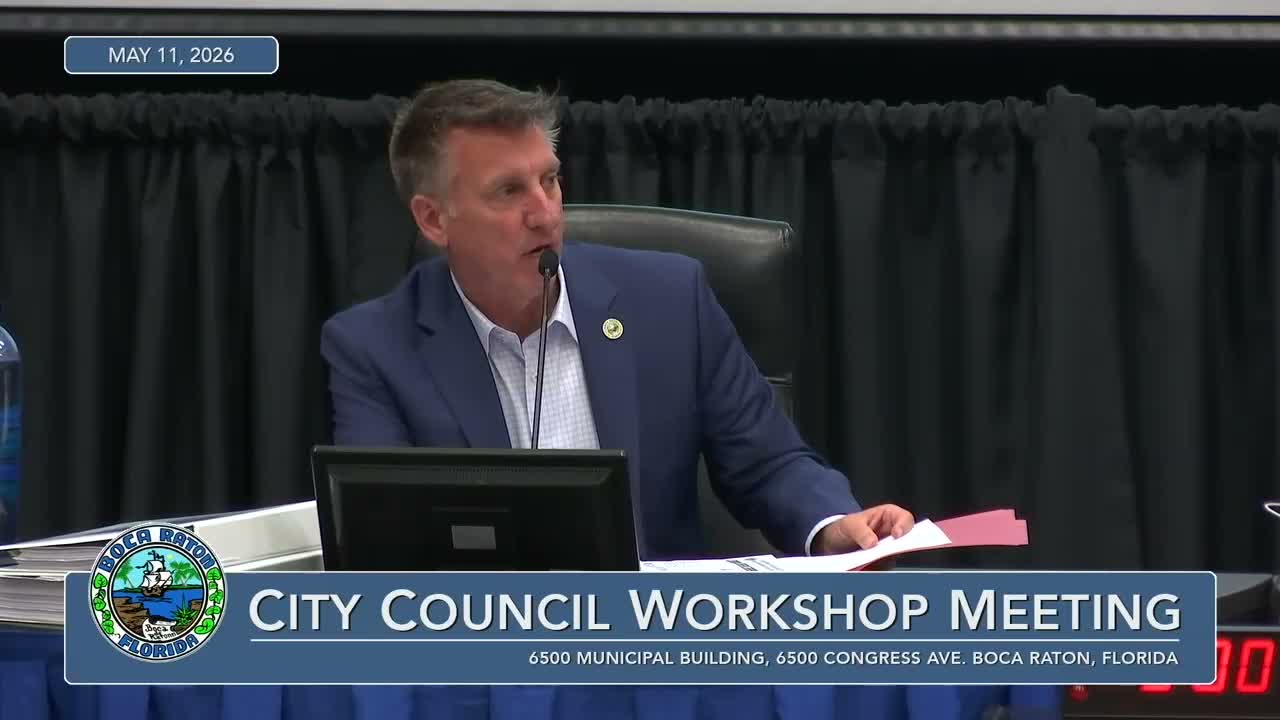
City planning staff presented an overview of the Commercial Industrial Multifamily Development (CIMD) overlay at the Boca Raton City Council workshop on May 15, summarizing how the ordinance implements parts of the Live Local Act and describing likely infrastructure and service impacts from additional units.
Planner Mr. Shadd said CIMD projects are eligible where the comprehensive plan shows planned‑mobility or enhanced‑mobility, the property is zoned commercial or industrial, and other adjacency constraints are met. He said the ordinance includes a 2,500‑unit cap (with projects at the Tri‑Rail station exempted from that cap), a maximum 1.0 FAR with limited exemptions, maximum building height of 85 feet, minimum 25% open/green space, and minimum on‑site retail requirements or proximity to existing nonresidential floor area.
On affordability, Shadd said the minimum affordable set‑aside under CIMD is 10% (for that tier the maximum density is 20 units per acre); if a developer provides an additional 5% of workforce units (total 15% affordable/workforce) the maximum density rises to 25 units per acre. Staff said affordability commitments are enforced by a 30‑year deed restriction and noted a template enforcement mechanism the city has used previously.
Shadd reviewed a recent analysis of adding 1,000 additional units under CIMD rules and said sanitary sewer and potable water capacity were sufficient at a system level, parks acreage would remain above existing standards, and police staffing would require roughly two additional officers at current service levels; traffic was the largest concern and staff described potential mitigations such as signal upgrades, multimodal network completions and additional transit investments.
Councilmember Perlman pressed staff on the difference between CIMD (10% affordable) and Live Local projects (statutorily higher affordable percentages), noting that if the pending CIMD projects had been Live Local projects the city would likely have produced many more affordable units.
Staff said the unit cap is a legislative decision and can be changed by future councils, but that the cap was introduced as a pilot to test the program. Shadd closed by noting the CIMD bank was fluid: as of the slide deck there were roughly 2,176 approved CIMD units with 517 pending at that moment, leaving an approximate balance under the cap (after excluding Tri‑Rail exemptions), but he emphasized numbers have continued to shift. Councilmembers asked to review the level‑of‑service analyses and consider follow‑up.
No policy votes occurred at the workshop; staff offered to provide additional data on service impacts and the scoping for polling/survey work to inform future decisions.
Planner Mr. Shadd said CIMD projects are eligible where the comprehensive plan shows planned‑mobility or enhanced‑mobility, the property is zoned commercial or industrial, and other adjacency constraints are met. He said the ordinance includes a 2,500‑unit cap (with projects at the Tri‑Rail station exempted from that cap), a maximum 1.0 FAR with limited exemptions, maximum building height of 85 feet, minimum 25% open/green space, and minimum on‑site retail requirements or proximity to existing nonresidential floor area.
On affordability, Shadd said the minimum affordable set‑aside under CIMD is 10% (for that tier the maximum density is 20 units per acre); if a developer provides an additional 5% of workforce units (total 15% affordable/workforce) the maximum density rises to 25 units per acre. Staff said affordability commitments are enforced by a 30‑year deed restriction and noted a template enforcement mechanism the city has used previously.
Shadd reviewed a recent analysis of adding 1,000 additional units under CIMD rules and said sanitary sewer and potable water capacity were sufficient at a system level, parks acreage would remain above existing standards, and police staffing would require roughly two additional officers at current service levels; traffic was the largest concern and staff described potential mitigations such as signal upgrades, multimodal network completions and additional transit investments.
Councilmember Perlman pressed staff on the difference between CIMD (10% affordable) and Live Local projects (statutorily higher affordable percentages), noting that if the pending CIMD projects had been Live Local projects the city would likely have produced many more affordable units.
Staff said the unit cap is a legislative decision and can be changed by future councils, but that the cap was introduced as a pilot to test the program. Shadd closed by noting the CIMD bank was fluid: as of the slide deck there were roughly 2,176 approved CIMD units with 517 pending at that moment, leaving an approximate balance under the cap (after excluding Tri‑Rail exemptions), but he emphasized numbers have continued to shift. Councilmembers asked to review the level‑of‑service analyses and consider follow‑up.
No policy votes occurred at the workshop; staff offered to provide additional data on service impacts and the scoping for polling/survey work to inform future decisions.
View the Full Meeting & All Its Details
This article offers just a summary. Unlock complete video, transcripts, and insights as a Founder Member.
✓
Watch full, unedited meeting videos
✓
Search every word spoken in unlimited transcripts
✓
AI summaries & real-time alerts (all government levels)
✓
Permanent access to expanding government content
30-day money-back guarantee
