Brentwood commission dismisses ethics complaint against city attorney
May 11, 2026 | Brentwood, Williamson County, Tennessee
This article was created by AI summarizing key points discussed. AI makes mistakes, so for full details and context, please refer to the video of the full meeting. Please report any errors so we can fix them. Report an error »
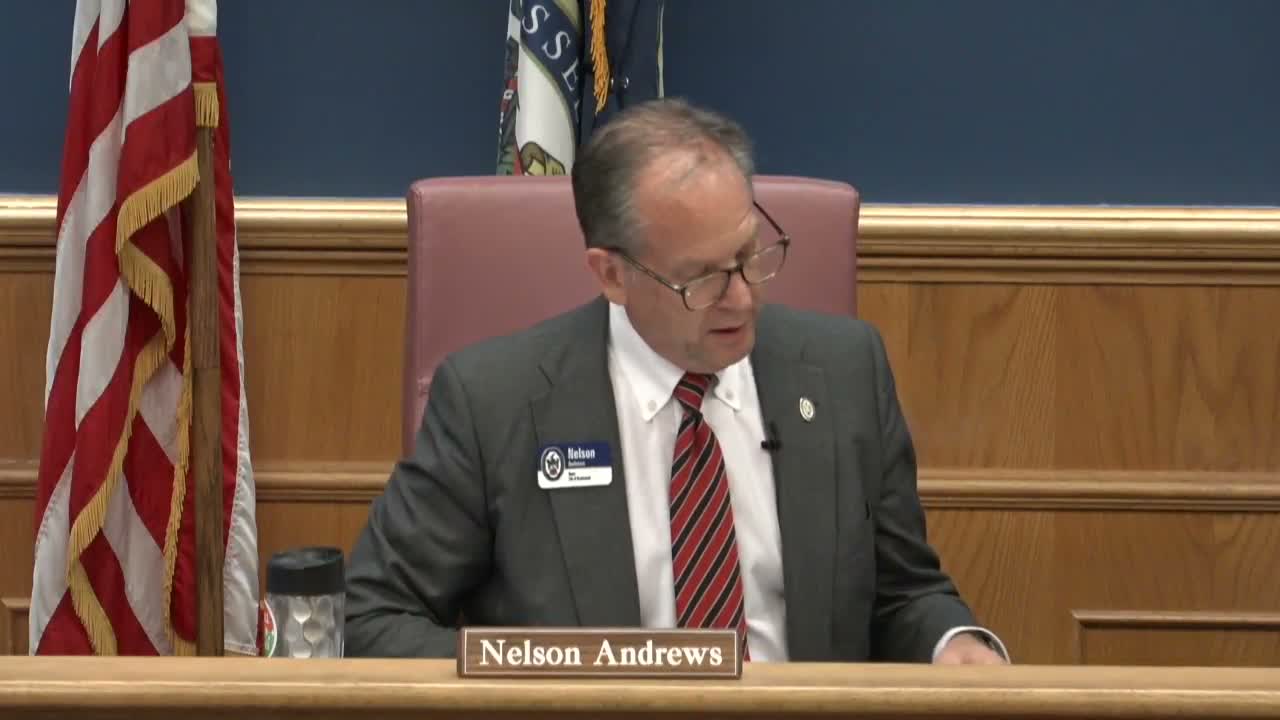
The Brentwood Board of Commissioners voted unanimously to dismiss an ethics complaint filed by resident Jerm (Jerm/Jerum) Betts that alleged violations of Brentwood Code of Ordinances section 2-233(b) by City Attorney Kristen Korn.
City Manager Jason Gage summarized the complaint and the city's review. He said the filing raised four principal allegations: that the city attorney declined to investigate a potential conflict of interest by the city engineer; that she obstructed access to public records; that she failed to refer code complaints as promised; and that she provided preferential treatment to the developer associated with the adjacent property. Gage reviewed steps staff had taken and noted legal limits such as attorney-client privilege and federal copyright protections for design plans.
Gage told the commission the written materials did not meet the ordinance's formal-filing requirements (written, signed complaint submitted to the proper officer) and that the city attorney had concluded the material she received did not constitute a formal ethics complaint requiring a self-initiated investigation. "I didn't consider it to be a formal ethics complaint," he said, summarizing the city attorney's view as presented in the packet.
Several commissioners said they read the packet and, while sympathetic to the resident's concerns, saw no evidence of an intentional ethical violation. One commissioner described the filing as "without merit" and the board voted to find the complaint not credible and dismiss it.
The vote was recorded as unanimous; the commission emphasized that the ethics process is serious and that staff had provided the full record for review. The dismissal determines only the commission's internal finding under the municipal ethics chapter; it does not foreclose the complainant from filing complaints with other regulatory bodies mentioned in the record (for example, the Tennessee State Board of Architects and Engineering Examiners for questions about engineering stamps), nor does it resolve substantive land-use or engineering disputes that may be addressed through other administrative channels.
City Manager Jason Gage summarized the complaint and the city's review. He said the filing raised four principal allegations: that the city attorney declined to investigate a potential conflict of interest by the city engineer; that she obstructed access to public records; that she failed to refer code complaints as promised; and that she provided preferential treatment to the developer associated with the adjacent property. Gage reviewed steps staff had taken and noted legal limits such as attorney-client privilege and federal copyright protections for design plans.
Gage told the commission the written materials did not meet the ordinance's formal-filing requirements (written, signed complaint submitted to the proper officer) and that the city attorney had concluded the material she received did not constitute a formal ethics complaint requiring a self-initiated investigation. "I didn't consider it to be a formal ethics complaint," he said, summarizing the city attorney's view as presented in the packet.
Several commissioners said they read the packet and, while sympathetic to the resident's concerns, saw no evidence of an intentional ethical violation. One commissioner described the filing as "without merit" and the board voted to find the complaint not credible and dismiss it.
The vote was recorded as unanimous; the commission emphasized that the ethics process is serious and that staff had provided the full record for review. The dismissal determines only the commission's internal finding under the municipal ethics chapter; it does not foreclose the complainant from filing complaints with other regulatory bodies mentioned in the record (for example, the Tennessee State Board of Architects and Engineering Examiners for questions about engineering stamps), nor does it resolve substantive land-use or engineering disputes that may be addressed through other administrative channels.
Don't Miss a Word: See the Full Meeting!
Go beyond summaries. Unlock every video, transcript, and key insight with a Founder Membership.
✓
Get instant access to full meeting videos
✓
Search and clip any phrase from complete transcripts
✓
Receive AI-powered summaries & custom alerts
✓
Enjoy lifetime, unrestricted access to government data
30-day money-back guarantee
