DOA seeks $14.3M to shore up staffing, modernize procurement and speed hiring in FY2027 budget hearing
May 11, 2026 | General Government Operations and Appropriations , Legislative, Guam, International
This article was created by AI summarizing key points discussed. AI makes mistakes, so for full details and context, please refer to the video of the full meeting. Please report any errors so we can fix them. Report an error »
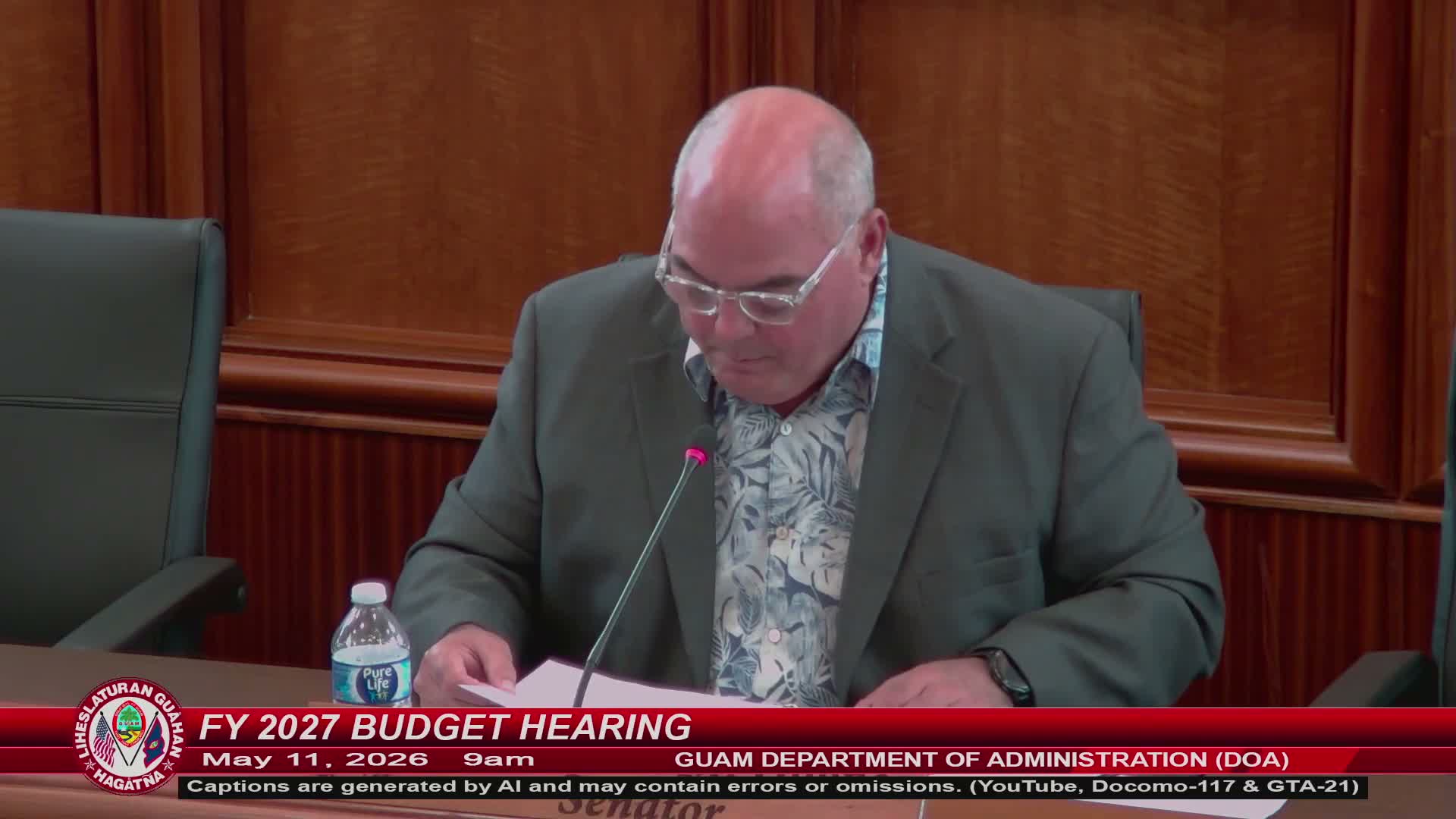
Winners and losers in government operations often hinge on the systems behind the scenes, Department of Administration Director Edward Byrne told the Committee on Finance and Government Operations on May 7 as he defended DOAbudget request.
"Department of Administration is at the heart of government," Byrne said, asking lawmakers to weigh the costs of under-resourcing DOAagainst the consequences for audits, grant compliance and payroll processing. The agency formalized a FY2027 operating request of about $14.3 million, up from an earlier $13.5 million ask, to fund new hires and operating costs tied to recruitment, procurement and financial systems.
Why it matters: DOA manages the governmentfinances and systems that touch every agency: accounting for more than $1.3 billion in local funds and roughly $600 million in federal funds, running payroll for about 3,500 employees, and operating the GFMIS accounting platform that consolidates those records. Lawmakers said they will follow up on audit findings and procedural gaps identified in the FY2024 audit.
What DOA proposed and why
DOA outlined four near-term priorities it said require staffing and operating funds:
- Finish and expand GFMIS modules: DOA plans to roll out a grants-management module and a recruitment module this month, and to add procurement, surplus management and tender modules that connect directly to accounting records. Byrne said tighter integration will reduce manual intervention and accelerate invoice and procurement processing.
- Modernize recruitment and hiring: Deputy Director Rina Borah described an AI-driven recruitment module intended to reduce the time required to score and sort applications. "What would now take four hours per application could take minutes," she said; DOA expects the module to speed administrative screening while agencies remain responsible for security checks and background investigations.
- Procurement upgrades and workforce: Acting Chief Procurement Officer Adriana Kiriboua ("Andy") said the procurement division has four buyers and a buyer supervisor and is seeking at least three additional buyer-1 positions and one buyer-2. She said buyer-1 starting pay is under $20 an hour (about $32,000 annually) and that low pay and a limited applicant pool have made hiring difficult.
- Health benefits and TPA procurement: DOA reported a self-funded insurance plan surplus of just over $6 million and said it intends to solicit separate TPA bids for medical, dental and pharmacy to access pharmacy rebates and cut costs. Byrne recommended a statutory change that would allow multi-year contracts for TPAs, though he said DOA is not procuring multi-year contracts under current law.
Questions from lawmakers
Senators pressed DOA on several operational points during extended Q&A:
- Recruitment for public safety: Senator Sean Gumatao cited large unspent recruitments from prior years for firefighters, corrections and police and asked how DOA can expedite onboarding without compromising required security and background checks. DOA acknowledged that security steps (polygraphs, federal background checks, psychological exams) are the main time drivers and said the recruitment module will accelerate administrative screening but cannot replace security clearances.
- Procurement delays and staffing: Lawmakers pressed why procurement vacancies have persisted for two years and whether higher pay or more positions are needed. Acting CPO Kiriboua said turnover has been low among current buyers but that more buyer-1s are required to meet workload; Byrne and staff said training for agencies to write clearer specifications would reduce rework and delays.
- Cybersecurity and recent attacks: Senators asked whether DOA's budget covers cybersecurity. DOA said cybersecurity budgets sit with Homeland Security and OTEC; GFMIS itself runs in the cloud (Microsoft) and benefits from provider protections. Byrne said DOAservices were not taken down in the recent attack, though other government agencies were affected.
- Audits, fund balance and payables: DOA reported an unassigned FY2024 fund balance of $40.5 million in the audited financials and noted that the figure does not reflect appropriations or encumbrances. The agency said it has improved vendor-payable turnaround and reduced over-90-day payables since the typhoon-related disruption.
Other operational steps and follow-up
DOA said it has already migrated payroll onto the new GFMIS platform (completed November 2025), is pursuing life-cycle cost evaluation in procurement, and is working with auditors (including Ernst & Young) to address recurrent findings. The committee signaled it will pursue follow-up oversight, including additional hearings with DOA and the public auditor, and asked DOA to provide more detailed claims and TPA data and a prioritized list of job-specification updates and salary-study timelines.
Quotes that capture the hearing
"Department of Administration is at the heart of government," Director Edward Byrne said while urging lawmakers not to under-resource compliance, audit and payroll functions. Deputy Director Rina Borah said the new recruitment module will "spit out" ratings in minutes to shorten administrative delays. Acting CPO Adriana Kiriboua noted, "We have four buyers and one buyer supervisor" and asked for additional buyer-1 positions to prevent staff burnout.
Next steps
No formal votes were taken. Lawmakers requested follow-up materials (detailed payables numbers, TPA/claims reports, prioritized job-specification lists and specific vacancy data) and said they will continue oversight work stemming from audit findings. The committee adjourned after directing staff to pursue clarifying documents and, if necessary, additional hearings.
Ending
The budget hearing closed with the chair thanking DOA staff for their testimony and reiterating the legislaturecommitment to pursue audit clarifications and additional oversight where appropriate.
"Department of Administration is at the heart of government," Byrne said, asking lawmakers to weigh the costs of under-resourcing DOAagainst the consequences for audits, grant compliance and payroll processing. The agency formalized a FY2027 operating request of about $14.3 million, up from an earlier $13.5 million ask, to fund new hires and operating costs tied to recruitment, procurement and financial systems.
Why it matters: DOA manages the governmentfinances and systems that touch every agency: accounting for more than $1.3 billion in local funds and roughly $600 million in federal funds, running payroll for about 3,500 employees, and operating the GFMIS accounting platform that consolidates those records. Lawmakers said they will follow up on audit findings and procedural gaps identified in the FY2024 audit.
What DOA proposed and why
DOA outlined four near-term priorities it said require staffing and operating funds:
- Finish and expand GFMIS modules: DOA plans to roll out a grants-management module and a recruitment module this month, and to add procurement, surplus management and tender modules that connect directly to accounting records. Byrne said tighter integration will reduce manual intervention and accelerate invoice and procurement processing.
- Modernize recruitment and hiring: Deputy Director Rina Borah described an AI-driven recruitment module intended to reduce the time required to score and sort applications. "What would now take four hours per application could take minutes," she said; DOA expects the module to speed administrative screening while agencies remain responsible for security checks and background investigations.
- Procurement upgrades and workforce: Acting Chief Procurement Officer Adriana Kiriboua ("Andy") said the procurement division has four buyers and a buyer supervisor and is seeking at least three additional buyer-1 positions and one buyer-2. She said buyer-1 starting pay is under $20 an hour (about $32,000 annually) and that low pay and a limited applicant pool have made hiring difficult.
- Health benefits and TPA procurement: DOA reported a self-funded insurance plan surplus of just over $6 million and said it intends to solicit separate TPA bids for medical, dental and pharmacy to access pharmacy rebates and cut costs. Byrne recommended a statutory change that would allow multi-year contracts for TPAs, though he said DOA is not procuring multi-year contracts under current law.
Questions from lawmakers
Senators pressed DOA on several operational points during extended Q&A:
- Recruitment for public safety: Senator Sean Gumatao cited large unspent recruitments from prior years for firefighters, corrections and police and asked how DOA can expedite onboarding without compromising required security and background checks. DOA acknowledged that security steps (polygraphs, federal background checks, psychological exams) are the main time drivers and said the recruitment module will accelerate administrative screening but cannot replace security clearances.
- Procurement delays and staffing: Lawmakers pressed why procurement vacancies have persisted for two years and whether higher pay or more positions are needed. Acting CPO Kiriboua said turnover has been low among current buyers but that more buyer-1s are required to meet workload; Byrne and staff said training for agencies to write clearer specifications would reduce rework and delays.
- Cybersecurity and recent attacks: Senators asked whether DOA's budget covers cybersecurity. DOA said cybersecurity budgets sit with Homeland Security and OTEC; GFMIS itself runs in the cloud (Microsoft) and benefits from provider protections. Byrne said DOAservices were not taken down in the recent attack, though other government agencies were affected.
- Audits, fund balance and payables: DOA reported an unassigned FY2024 fund balance of $40.5 million in the audited financials and noted that the figure does not reflect appropriations or encumbrances. The agency said it has improved vendor-payable turnaround and reduced over-90-day payables since the typhoon-related disruption.
Other operational steps and follow-up
DOA said it has already migrated payroll onto the new GFMIS platform (completed November 2025), is pursuing life-cycle cost evaluation in procurement, and is working with auditors (including Ernst & Young) to address recurrent findings. The committee signaled it will pursue follow-up oversight, including additional hearings with DOA and the public auditor, and asked DOA to provide more detailed claims and TPA data and a prioritized list of job-specification updates and salary-study timelines.
Quotes that capture the hearing
"Department of Administration is at the heart of government," Director Edward Byrne said while urging lawmakers not to under-resource compliance, audit and payroll functions. Deputy Director Rina Borah said the new recruitment module will "spit out" ratings in minutes to shorten administrative delays. Acting CPO Adriana Kiriboua noted, "We have four buyers and one buyer supervisor" and asked for additional buyer-1 positions to prevent staff burnout.
Next steps
No formal votes were taken. Lawmakers requested follow-up materials (detailed payables numbers, TPA/claims reports, prioritized job-specification lists and specific vacancy data) and said they will continue oversight work stemming from audit findings. The committee adjourned after directing staff to pursue clarifying documents and, if necessary, additional hearings.
Ending
The budget hearing closed with the chair thanking DOA staff for their testimony and reiterating the legislaturecommitment to pursue audit clarifications and additional oversight where appropriate.
Don't Miss a Word: See the Full Meeting!
Go beyond summaries. Unlock every video, transcript, and key insight with a Founder Membership.
✓
Get instant access to full meeting videos
✓
Search and clip any phrase from complete transcripts
✓
Receive AI-powered summaries & custom alerts
✓
Enjoy lifetime, unrestricted access to government data
30-day money-back guarantee
