Hawaii County Council approves ban on certain herbicides on county property after extended public testimony
May 12, 2026 | Hawaii County, Hawaii
This article was created by AI summarizing key points discussed. AI makes mistakes, so for full details and context, please refer to the video of the full meeting. Please report any errors so we can fix them. Report an error »
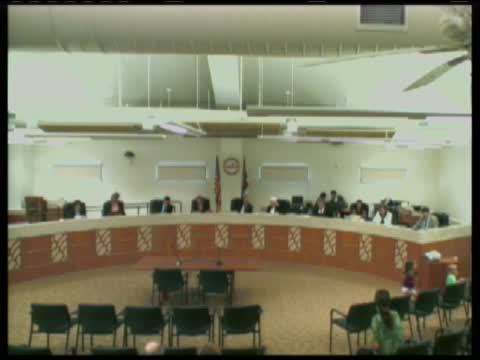
KAILUA‑KONA, Hawaii — The Hawaii County Council voted Nov. 20 to approve Bill 101 (Draft 2), a measure that prohibits specified herbicides on county‑owned and maintained parks, roadways, bikeways, sidewalks, trails, drainage ways and waterways and creates a transition committee to develop alternative vegetation‑management methods. The council approved the ordinance on second and final reading after a long public‑comment period and council debate.
Supporters — including emergency physician Misha Castle and beekeepers from across the island — framed the ordinance as a public‑health and environmental safeguard. "Kids, we don't do a lot of studies on kids or pregnant women because it's not really ethical," said Misha Castle, an ER doctor, urging the council to protect places where children are exposed. "So as a county, the least we can do is the spots that they're out the most: parks, the places that they're out." (Testimony at the Nov. 20 hearing.)
The bill as read into the record by the clerk would add a new article to Hawaii County Code chapter 14 to prevent use of certain herbicides on county property, set a transition period and create a committee to recommend alternatives. The clerk recorded the ordinance's effective date as Jan. 1, 2024. Councilmember Villegas moved the motion to approve the draft and Councilmember David seconded it.
Opponents — including local growers and nursery representatives — warned the council that the measure as written could increase costs for county maintenance, create staffing and equipment needs, and have unintended effects on agriculture. "This bill will increase cost for all our residents in this county," said Tong Ting Nia of the Hawaii Tropical Flower Council. "We are already living with high taxes." Other agricultural speakers urged the council to pilot nonchemical methods and warned about gaps in implementation details.
Council debate focused on the bill's scope, implementation costs and exemptions. Several council members said they supported the intent but not the bill in its present form; concerns included the long list of named active ingredients, whether selective products used on golf greens were affected, and how parks and public‑works crews would be trained and funded. Council members also cited examples from other jurisdictions and a voluntary program in Maui that replaced several herbicide applications with changed equipment and different maintenance practices.
Expert witnesses and advocates provided technical alternatives: Maui highway maintenance official Steven Rogers described equipment changes and a switch to non‑synthetic products that he said reduced his herbicide budget while keeping roadsides maintained. An advocate for organic maintenance and training programs said her organization could arrange no‑cost initial consulting and training funded by grants.
After debate the council held a roll call. The clerk recorded six affirmative votes; three council members were not present for the vote. The chair declared Bill 101 approved on second and final reading.
What the bill does and what comes next
Bill 101 prohibits county application of the listed herbicides on county property and creates a four‑year transition period during which the transition committee will coordinate with departments on cost, training and equipment changes. The ordinance text as read by the clerk lists a Jan. 1, 2024 effective date and establishes the committee to study alternatives and to recommend implementation details before that date.
Council members said the committee and the multi‑year transition are intended to manage fiscal and operational impacts, including pilot projects, training, and potential capital investments such as highway‑grade weed mats or steam‑weed equipment. Several members asked for regular reports from the transition committee so the council can monitor costs and adjust budgets if needed.
The vote and related actions
The motion to adopt Bill 101 (Draft 2) was made by Councilmember Villegas and seconded by Councilmember David. The clerk recorded six "aye" votes; three members were absent for the final vote. The chair declared the bill approved on second and final reading.
Why it mattered
The hearing drew dozens of speakers from across Hawaii Island and a wide mix of testimony: beekeepers and parents emphasized risks to pollinators and children; physicians and public‑health advocates highlighted gaps in evidence for vulnerable populations not included in some large cohort studies; farmers and nursery operators warned about costs, tool loss and potential effects on agriculture. The lengthy public record and the council's decision to establish a transition committee mean the debate is likely to continue as the county moves toward implementation.
The council also handled other business at the Nov. 20 meeting, including approval of Resolution 301 urging departments to study waste‑stream management and the adoption of several budget and appointment items. The council recessed for lunch and resumed to finish its agenda.
Supporters — including emergency physician Misha Castle and beekeepers from across the island — framed the ordinance as a public‑health and environmental safeguard. "Kids, we don't do a lot of studies on kids or pregnant women because it's not really ethical," said Misha Castle, an ER doctor, urging the council to protect places where children are exposed. "So as a county, the least we can do is the spots that they're out the most: parks, the places that they're out." (Testimony at the Nov. 20 hearing.)
The bill as read into the record by the clerk would add a new article to Hawaii County Code chapter 14 to prevent use of certain herbicides on county property, set a transition period and create a committee to recommend alternatives. The clerk recorded the ordinance's effective date as Jan. 1, 2024. Councilmember Villegas moved the motion to approve the draft and Councilmember David seconded it.
Opponents — including local growers and nursery representatives — warned the council that the measure as written could increase costs for county maintenance, create staffing and equipment needs, and have unintended effects on agriculture. "This bill will increase cost for all our residents in this county," said Tong Ting Nia of the Hawaii Tropical Flower Council. "We are already living with high taxes." Other agricultural speakers urged the council to pilot nonchemical methods and warned about gaps in implementation details.
Council debate focused on the bill's scope, implementation costs and exemptions. Several council members said they supported the intent but not the bill in its present form; concerns included the long list of named active ingredients, whether selective products used on golf greens were affected, and how parks and public‑works crews would be trained and funded. Council members also cited examples from other jurisdictions and a voluntary program in Maui that replaced several herbicide applications with changed equipment and different maintenance practices.
Expert witnesses and advocates provided technical alternatives: Maui highway maintenance official Steven Rogers described equipment changes and a switch to non‑synthetic products that he said reduced his herbicide budget while keeping roadsides maintained. An advocate for organic maintenance and training programs said her organization could arrange no‑cost initial consulting and training funded by grants.
After debate the council held a roll call. The clerk recorded six affirmative votes; three council members were not present for the vote. The chair declared Bill 101 approved on second and final reading.
What the bill does and what comes next
Bill 101 prohibits county application of the listed herbicides on county property and creates a four‑year transition period during which the transition committee will coordinate with departments on cost, training and equipment changes. The ordinance text as read by the clerk lists a Jan. 1, 2024 effective date and establishes the committee to study alternatives and to recommend implementation details before that date.
Council members said the committee and the multi‑year transition are intended to manage fiscal and operational impacts, including pilot projects, training, and potential capital investments such as highway‑grade weed mats or steam‑weed equipment. Several members asked for regular reports from the transition committee so the council can monitor costs and adjust budgets if needed.
The vote and related actions
The motion to adopt Bill 101 (Draft 2) was made by Councilmember Villegas and seconded by Councilmember David. The clerk recorded six "aye" votes; three members were absent for the final vote. The chair declared the bill approved on second and final reading.
Why it mattered
The hearing drew dozens of speakers from across Hawaii Island and a wide mix of testimony: beekeepers and parents emphasized risks to pollinators and children; physicians and public‑health advocates highlighted gaps in evidence for vulnerable populations not included in some large cohort studies; farmers and nursery operators warned about costs, tool loss and potential effects on agriculture. The lengthy public record and the council's decision to establish a transition committee mean the debate is likely to continue as the county moves toward implementation.
The council also handled other business at the Nov. 20 meeting, including approval of Resolution 301 urging departments to study waste‑stream management and the adoption of several budget and appointment items. The council recessed for lunch and resumed to finish its agenda.
View the Full Meeting & All Its Details
This article offers just a summary. Unlock complete video, transcripts, and insights as a Founder Member.
✓
Watch full, unedited meeting videos
✓
Search every word spoken in unlimited transcripts
✓
AI summaries & real-time alerts (all government levels)
✓
Permanent access to expanding government content
30-day money-back guarantee
